Dwarka Temple History: Origins, Legends, and Spiritual Significance
When you think of Dwarka temple, a revered Hindu pilgrimage site in Gujarat, believed to be the ancient capital of Lord Krishna’s kingdom. Also known as Dwarkadhish Temple, it stands as one of the Char Dham pilgrimage sites and draws millions seeking spiritual connection to Krishna’s divine legacy. This isn’t just another temple—it’s a living link to a time when myth and history blurred, and devotion shaped the landscape of India.
The temple’s story begins with Lord Krishna himself. According to the Mahabharata and Puranas, after leaving Mathura to escape King Kamsa’s wrath, Krishna founded Dwarka as a thriving coastal city on the western edge of India. He ruled from here for 36 years, turning it into a center of justice, culture, and divine play. The current temple structure, though rebuilt over centuries, sits on the same sacred ground where ancient texts say Krishna lived. Archaeological findings near the coast suggest a submerged city dating back over 2,000 years—fueling the belief that the original Dwarka was swallowed by the sea, just as legend says.
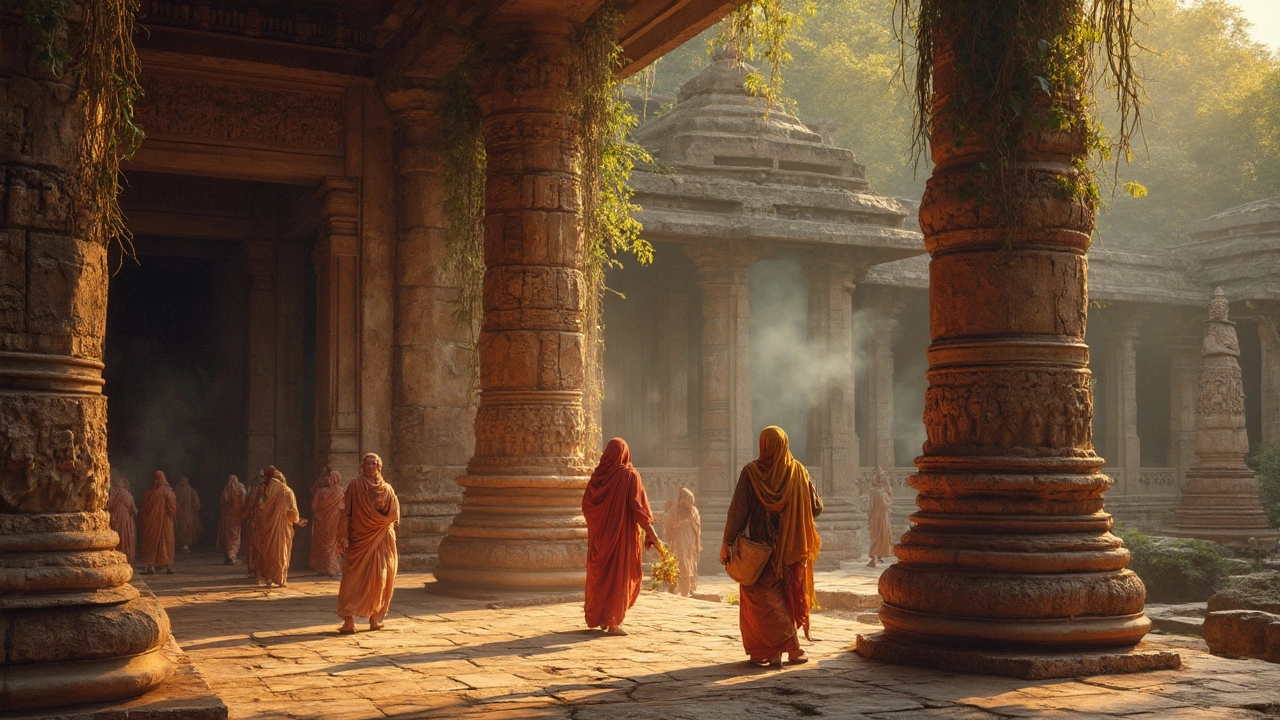
The temple’s architecture, with its towering spire and intricate carvings, reflects centuries of devotion. It was rebuilt in the 16th century by a Gujarati merchant after earlier versions were damaged by invasions and natural disasters. Each renovation carried the same purpose: to honor Krishna as Dwarkadhish, the Lord of Dwarka. Pilgrims don’t just come to pray—they come to walk in the footsteps of a god. The temple’s daily rituals, from the morning aarti to the evening shayan aarti, follow ancient traditions unchanged for generations. Nearby, the Nageshwar Jyotirlinga and the nearby beach where Krishna is said to have left his body add layers to the spiritual journey.
What makes Dwarka different from other temples is how deeply its history is woven into daily life. Locals still speak of Krishna’s presence in the wind over the Arabian Sea. Boatmen tell stories of seeing lights at sea where the city once stood. Even today, the temple doesn’t just house idols—it holds memory, identity, and faith that survived wars, floods, and time.
Below, you’ll find real stories and insights from travelers and scholars who’ve explored Dwarka’s past and present—from the hidden rituals inside the temple walls to the archaeological debates about its origins. Whether you’re planning a pilgrimage or just curious about one of India’s oldest living traditions, these posts will show you why Dwarka isn’t just a destination—it’s a revelation.