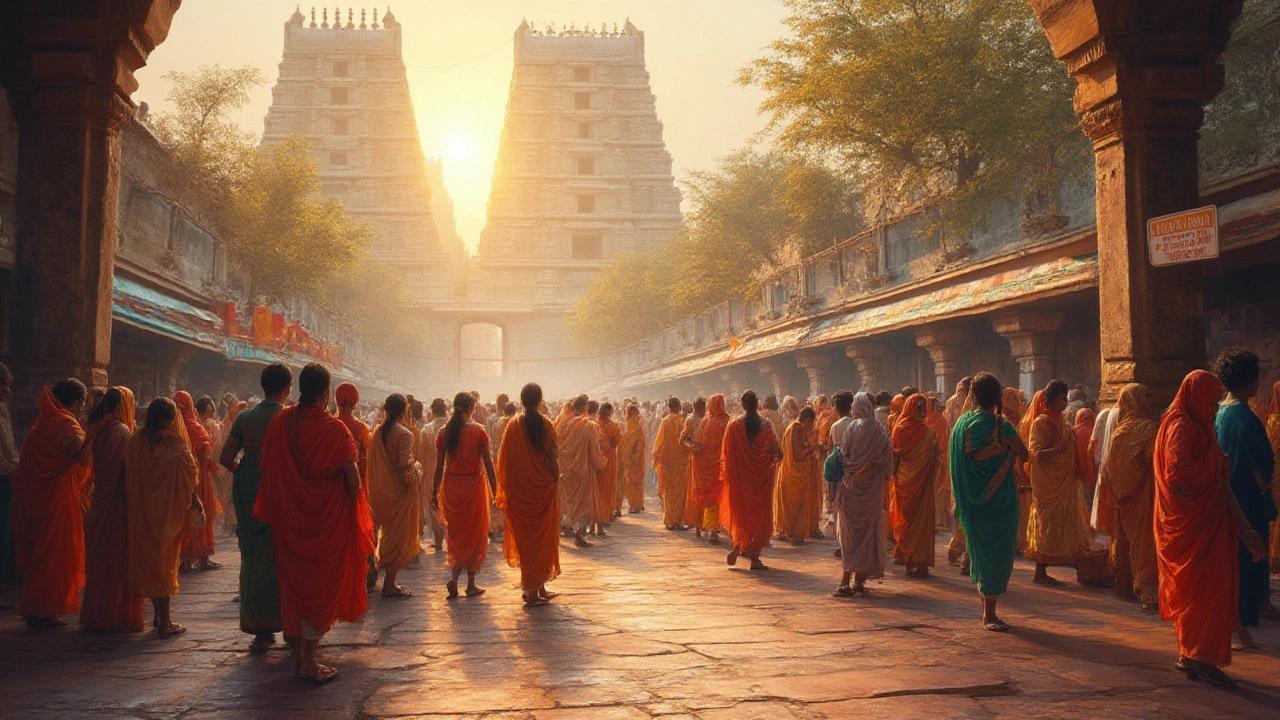
Entering a Temple in India: Rules, Respect, and What to Expect
When you’re entering a temple, a sacred space in India where devotion, tradition, and daily life blend. Also known as a mandir or devasthanam, it’s not just a building—it’s a living center of faith for millions. Whether you’re a tourist, a spiritual seeker, or just passing by, how you step inside matters. There are no vague signs or confusing instructions. The rules are simple, deeply rooted, and meant to honor the sacred space and those who worship there.
One of the first things you’ll notice: no shoes. It’s not a suggestion—it’s a requirement. You’ll see racks outside every temple, often guarded by volunteers or staff. Leaving your shoes behind isn’t about cleanliness; it’s about leaving the outside world at the door. Your bare feet touch the cool stone floor, grounding you in the moment. Inside, you’ll see people bowing, ringing bells, or offering flowers. These aren’t performances for visitors—they’re quiet acts of devotion. You don’t need to join in, but you do need to watch, wait, and move slowly. Talking loudly, pointing at deities with your finger, or taking photos without permission breaks the peace. Many temples, especially in South India, have strict no-photography rules inside the sanctum. Even if you don’t understand the prayers, silence is your best tool.
What you wear matters too. temple dress code India, a set of modest clothing expectations tied to cultural and religious norms. Also known as traditional temple attire, it means no shorts, tank tops, or revealing clothes for anyone, regardless of gender. Men often wear dhotis or long pants; women wear sarees, salwar kameez, or long skirts. You don’t need to buy new clothes—just cover your shoulders and knees. Some temples offer loaner shawls or wraps at the entrance, but don’t count on it. If you’re unsure, err on the side of modesty. And yes, that includes covering your head in some places, especially Sikh gurdwaras or certain South Indian temples. It’s not about restriction—it’s about respect.
There’s also the matter of food and touch. Hindu temple rules, the practices that define how devotees and visitors interact with sacred objects and spaces. Also known as temple customs, they often include avoiding meat, alcohol, or eggs near the temple grounds. You won’t see these items sold or consumed nearby. Even carrying them in your bag can draw stares. Some temples only allow Hindus inside the inner sanctum, but most welcome all visitors to the outer areas—just ask before stepping further. The priests won’t stop you, but they might gently guide you. Don’t take offense. They’re not being rude—they’re protecting the sanctity of the space.
What you’ll find in the posts below isn’t just a list of dos and don’ts. It’s real stories from people who’ve walked through temple gates—some confused, some moved, some even laughed when they forgot to take off their shoes. You’ll learn why Tirupati’s crowds move like a slow river, why Puri’s festivals turn streets into oceans of devotion, and how even a simple act like bowing can feel powerful when you understand why it’s done. These aren’t travel tips for tourists. They’re quiet lessons in how India’s spiritual heart beats—every day, in every temple, for everyone who walks in with an open mind.