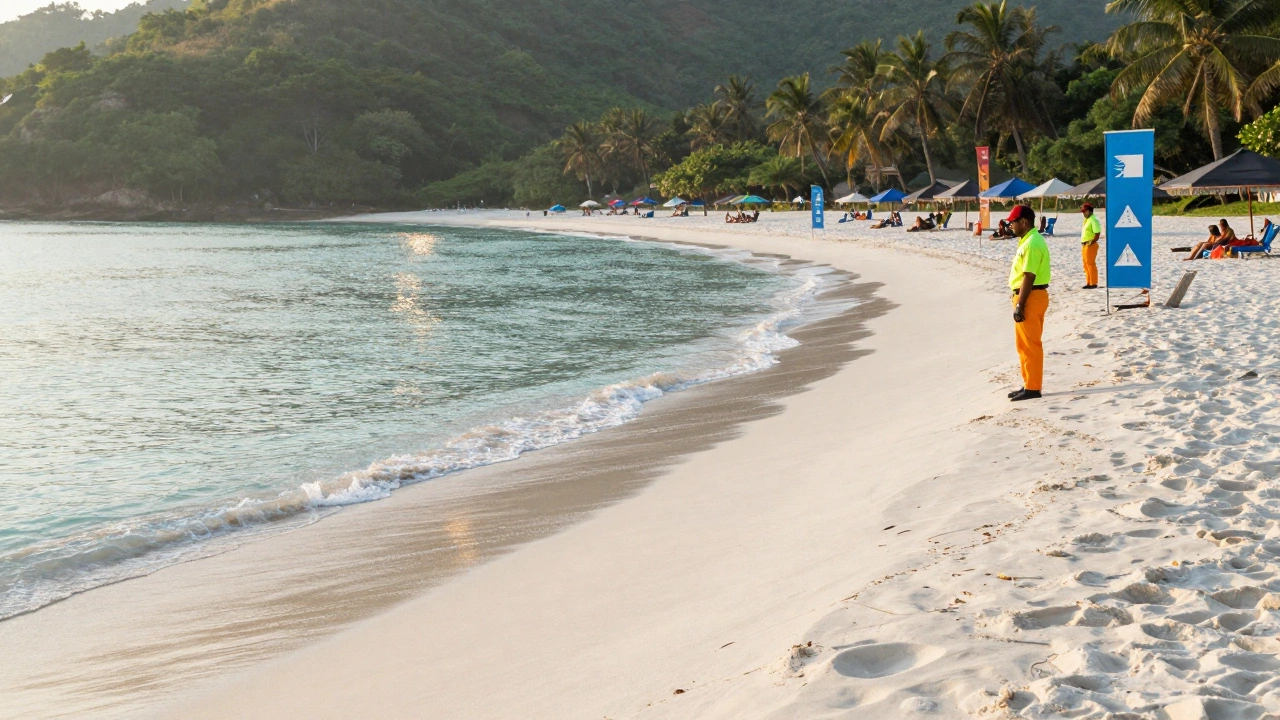
India Beach Safety: What You Need to Know Before You Swim
India beach safety, the set of practical precautions and local awareness needed to avoid danger while enjoying India’s coastline. Also known as beach safety India, it’s not just about watching out for waves—it’s understanding where the real risks hide, from hidden currents to unlicensed vendors. You might think India’s beaches are all sun, sand, and serenity, but the truth is, some spots have hidden dangers that catch tourists off guard.
One of the biggest threats isn’t the ocean—it’s ignorance. Rip currents, powerful channels of water pulling swimmers away from shore are common along Goa’s shores and in Kerala’s backwaters. They don’t look like danger; they often look like calm patches. If you get caught, don’t panic and don’t swim straight back. Swim parallel to the shore until you’re out of the pull, then head in. Local lifeguards often flag unsafe zones with red flags—always check for them.
Jellyfish, stinging sea creatures that wash ashore after storms, show up more than you’d expect, especially in the Andamans and parts of Tamil Nadu. A sting isn’t usually deadly, but it’s painful and can ruin your day. Wear water shoes when walking in shallow water, and never touch anything that looks like a translucent umbrella floating near the tide line. If you get stung, rinse with vinegar—not fresh water—and seek help. Many beachside clinics in popular areas carry sting relief kits.
Then there’s the human side of safety. Tourist scams, fake guides, overpriced rentals, and rigged photo ops thrive where crowds gather. In Goa, you might be approached by someone offering a ‘free’ beach massage, then demanding payment. In Pondicherry, someone might claim your camera is broken and offer to fix it—for a fee. Trust your gut. If it feels too good to be true, it probably is. Stick to licensed operators, ask for receipts, and never hand over your passport or ID.
Drinking water on the beach? Skip it. Even if the bottle says ‘purified,’ many vendors refill cheap bottles with tap water. Stick to sealed brands you recognize. And don’t assume a crowded beach means a safe one. Some of the most dangerous spots are the busiest because people feel safe just because others are there. Always check local news or ask hotel staff about recent incidents before heading out.
Weather changes fast. Monsoon season turns calm beaches into dangerous zones with sudden waves and strong winds. Even in summer, afternoon thunderstorms can roll in without warning. Always know the tide schedule—some beaches have areas that disappear under water during high tide. And yes, swimming at night? Don’t. Even in the most touristy spots, visibility drops, currents shift, and rescue services are minimal after dark.
You’ll find posts below that break down exactly which beaches are safest, what to pack for beach safety, how to spot a trustworthy guide, and which airports get you closest to the cleanest, most monitored shores. Whether you’re planning a solo trip, a family vacation, or a romantic getaway, the real key to enjoying India’s beaches isn’t luck—it’s knowing what to look for before you even step onto the sand.