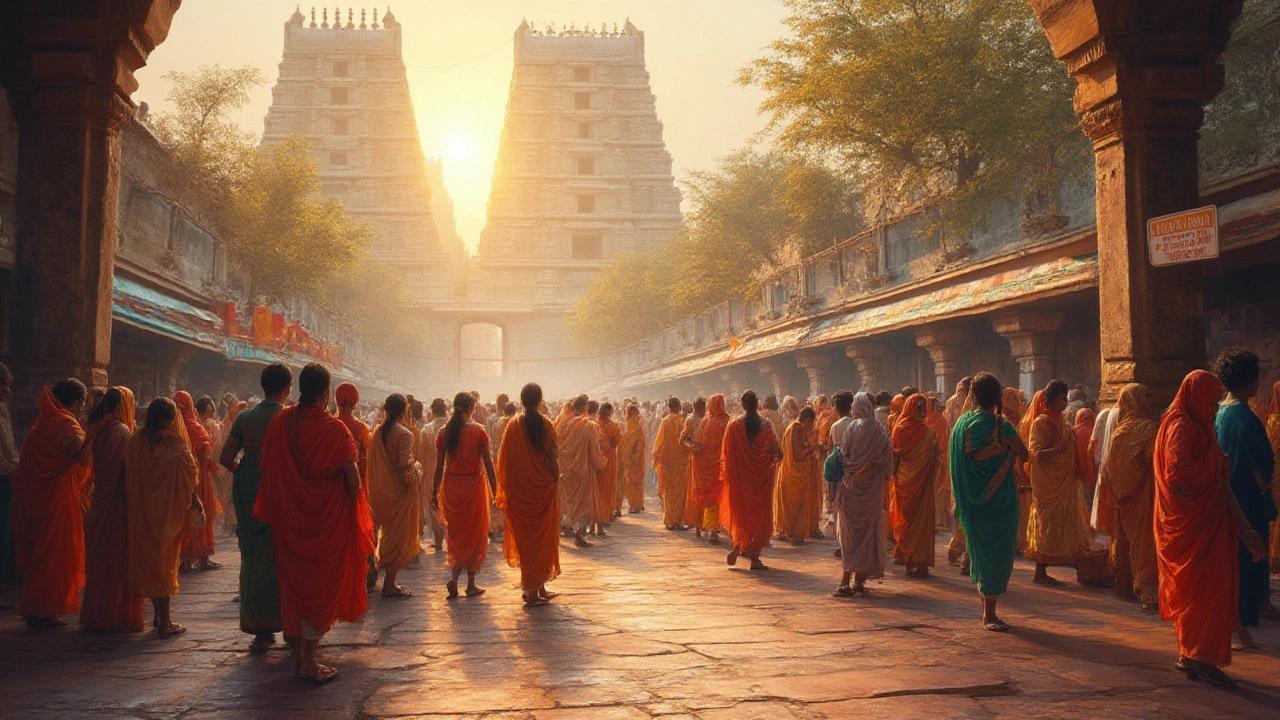
Temple Visit Do's and Don'ts: Essential Rules for Respecting India's Sacred Sites
When you step into a temple visit, a sacred space where millions come to pray, offer, and connect with the divine. Also known as puja site, it’s not just a building—it’s a living tradition that demands respect, not just curiosity. Whether you’re in Tirupati, Puri, or a quiet village shrine, every temple has its own rhythm, and ignoring the unwritten rules can offend deeply held beliefs—even if you meant no harm.
One of the biggest temple dress code, the expected attire for entering sacred spaces in India mistakes is showing too much skin. Men should wear shirts and long pants; women should avoid shorts, tank tops, or revealing dresses. Many temples require covering your head, especially in South India. You’ll often see bins near the entrance where visitors leave shoes—this isn’t just tradition, it’s about purity. Going barefoot or removing footwear is expected, and walking in with shoes on can get you asked to leave. Similarly, leather items like belts, wallets, or purses are often banned inside because they’re considered impure in Hindu rituals. If you’re unsure, watch what others do—or ask quietly.
temple etiquette, the behavioral norms followed by devotees during worship at Indian temples is just as important as what you wear. Never point your feet at the deity or altar—it’s considered disrespectful. Don’t take photos unless signs say it’s allowed. Many inner sanctums prohibit photography entirely, especially during aarti or rituals. Avoid loud talking, laughing, or using your phone. This isn’t a museum—it’s a place of prayer. If you’re unsure what to do, stand quietly at the back and observe. Locals will move with purpose: circling the sanctum, offering flowers, touching their forehead to the ground. You don’t need to copy them, but standing still and silent shows you understand the space.
Food and drink are another minefield. Most temples don’t allow eating or drinking inside, and carrying non-vegetarian items—even in your bag—is a hard no. In some places, like the Jagannath Temple in Puri, even bringing in eggs or meat from outside can trigger a security check. If you’re carrying water, keep it sealed and out of sight. Also, never touch the idol or offerings unless you’re a priest or have been explicitly invited. Even reaching out to take a blessing from a priest? Wait for them to come to you. Pushing forward in line or grabbing prasad too eagerly breaks the flow of devotion.
Some temples have gender restrictions too. The Sabarimala temple in Kerala, for example, had a long-standing rule barring women of menstruating age—though laws have changed, local customs still vary. Always check ahead if you’re unsure. And while many tourists think all temples are the same, they’re not. A small village shrine in Rajasthan operates differently from a massive pilgrimage center in Tamil Nadu. The more you learn, the less likely you are to accidentally step out of line.
At the heart of every temple visit is intention. You don’t need to believe in the gods to respect the space. But you do need to treat it like a quiet sanctuary—not a photo op, not a tourist stop, not a backdrop for your social media story. The millions who come here every year aren’t just sightseeing—they’re seeking peace, connection, or forgiveness. When you follow the do’s and don’ts, you’re not just avoiding trouble. You’re becoming part of something much bigger than yourself.
Below, you’ll find real stories and practical advice from travelers who’ve been there—what worked, what went wrong, and how to make your temple visit meaningful, not messy.