India's Wealth Comparison Tool
Select an entity to explore how their wealth differs from others in terms of assets and nature.
Mukesh Ambani
Modern Corporate Wealth
Gautam Adani
Industrial Scale Wealth
Padmanabhaswamy Temple
Divine Institutional Wealth
Select an Entity
Please click on one of the cards above to see the comparison details.
When you ask who the richest person in India is, your mind probably jumps straight to a high-tech skyscraper in Mumbai or a massive oil refinery. You're thinking of the billionaires who top the Forbes lists every year. But if we shift the perspective from individual bank accounts to the wealth held by institutions, the answer changes completely. In a surprising twist, the wealthiest "entity" in India isn't a human being at all-it's a deity in a gold-plated sanctuary in Kerala.
The Human Side: India's Billionaire Titans
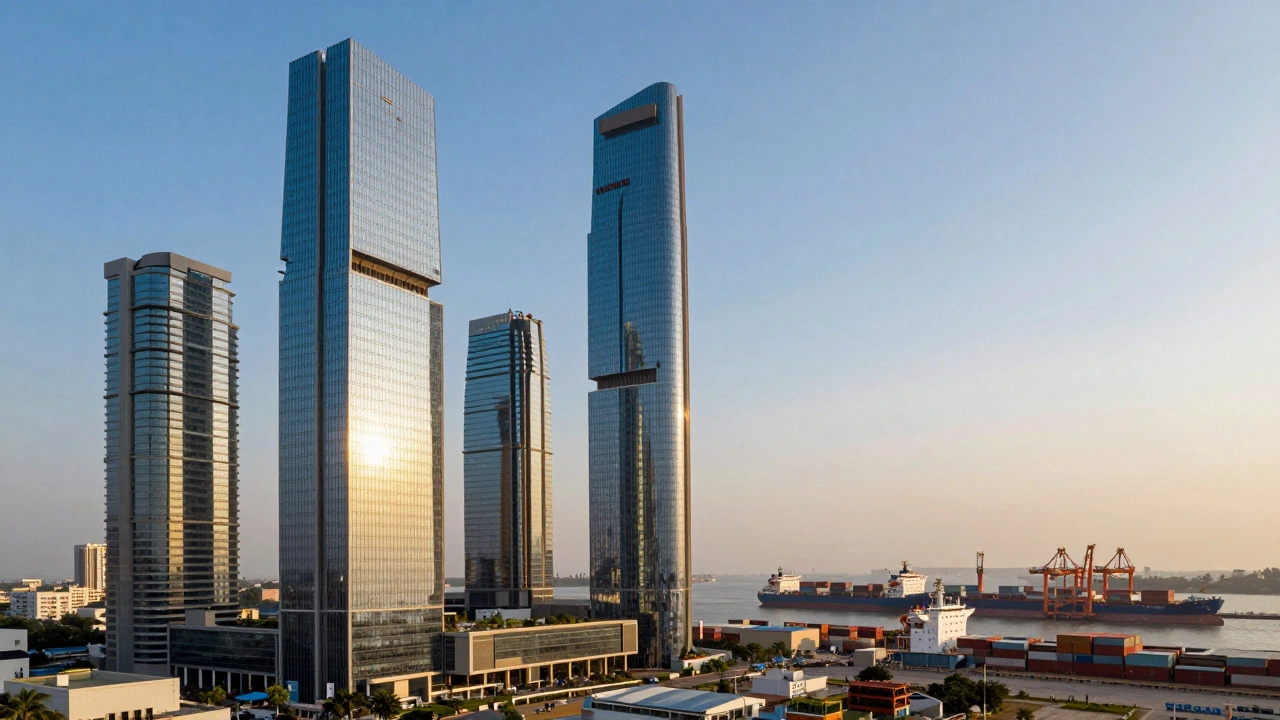
If we are talking about living, breathing people, the conversation usually starts and ends with Mukesh Ambani is the chairman and managing director of Reliance Industries, one of India's largest conglomerates. For years, he has vied for the top spot, owning a diversified empire that spans petrochemicals, retail, and telecommunications through Jio. His wealth isn't just a number; it's a reflection of India's shift toward digital connectivity and industrial scale.
Right beside him is Gautam Adani, the founder of Adani Group. While Ambani dominates the consumer and energy sectors, Adani's wealth is tied up in the physical bones of the country: ports, airports, and logistics. These two men often trade places at the top of the list depending on how the stock market behaves on any given Tuesday. Their fortunes are measured in the hundreds of billions, making them some of the wealthiest individuals on the planet.
The Divine Wealth: Padmanabhaswamy Temple
Now, let's pivot. If you look at wealth as assets-gold, diamonds, and precious stones-the richest person in India is technically the deity residing in the Padmanabhaswamy Temple in Thiruvananthapuram. This isn't just a place of worship; it's arguably the wealthiest place of worship in the entire world. While billionaires deal in shares and dividends, this temple deals in ancient treasures that would make a museum curator faint.
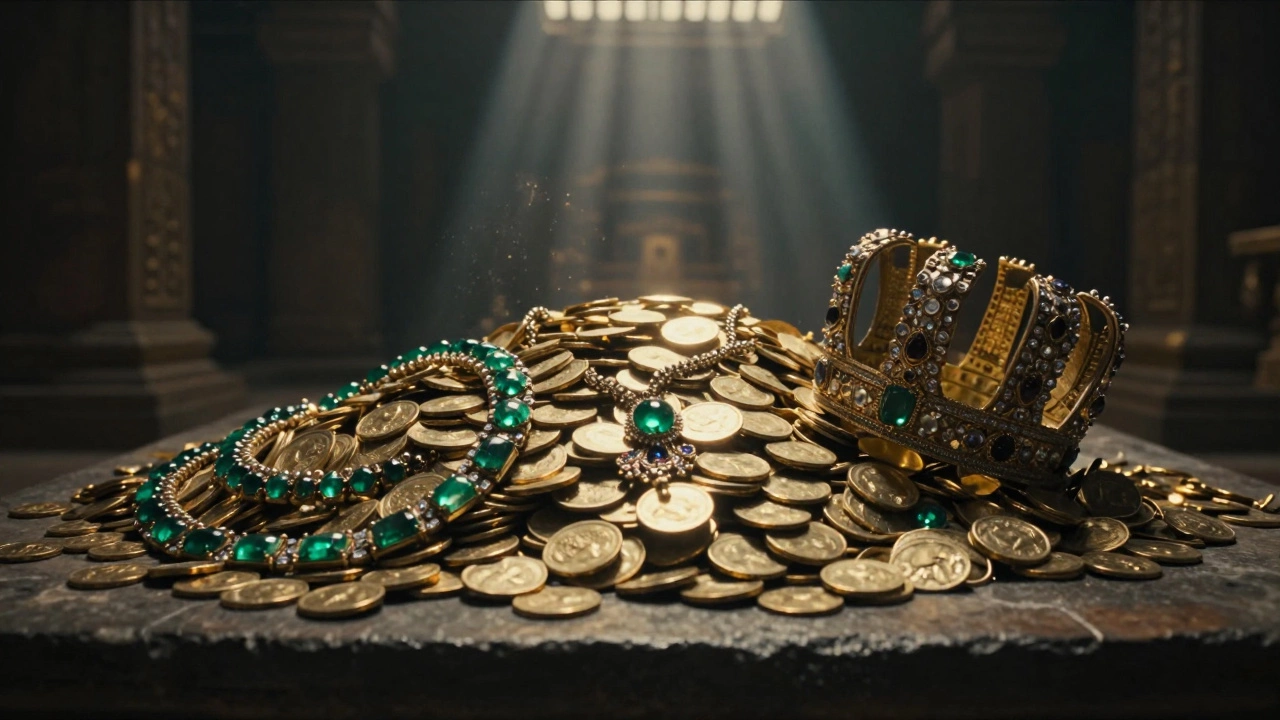
The temple is dedicated to Lord Vishnu, and for centuries, the royal family of Travancore served as the custodians of its vaults. When the Supreme Court of India ordered the opening of the temple's hidden vaults a few years back, the world saw a glimpse of unimaginable riches. We're talking about gold coins, emerald necklaces, and crowns encrusted with diamonds. Some estimates suggest the treasure in the vaults is worth over $20 billion, though many believe the actual value is far higher because it's impossible to price ancient, one-of-a-kind artifacts.
| Entity | Type of Wealth | Primary Asset | Nature of Holdings |
|---|---|---|---|
| Mukesh Ambani | Individual | Equity/Stocks | Liquid & Market-based |
| Gautam Adani | Individual | Infrastructure | Asset-heavy Industrial |
| Padmanabhaswamy Temple | Institutional/Deity | Precious Metals/Gems | Physical Gold & Artifacts |
Why the Temple's Wealth is Different
You might wonder why we don't just list the temple as the "richest person." It's because of how we define ownership. In the case of the Padmanabhaswamy Temple, the wealth belongs to the deity. In Indian law and tradition, the deity is considered a legal person capable of owning property. This creates a fascinating legal paradox where a statue of a god is technically wealthier than the most successful CEO in the country.
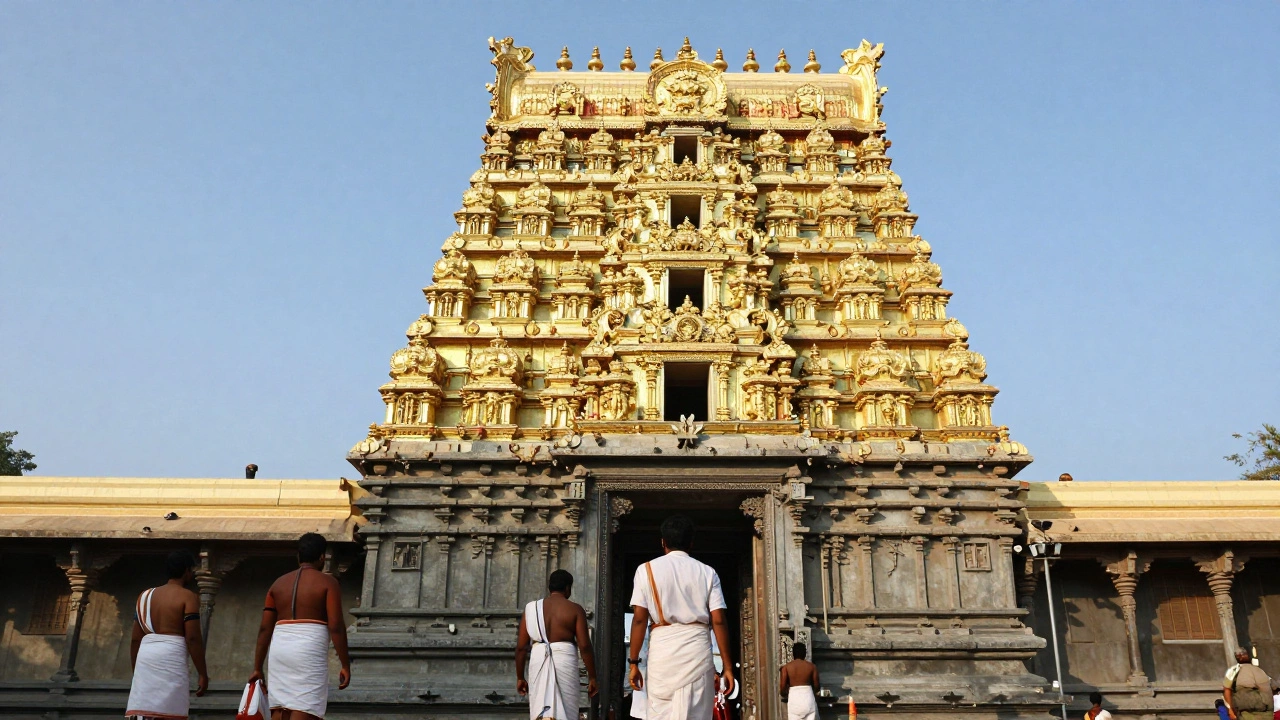
Unlike the wealth of the Adani or Ambani families, which is used for global expansion and venture capital, the temple's wealth is static. It sits in vaults, largely untouched, serving as a symbol of the divine's abundance. For travelers on temple tours in India, visiting this site isn't just about spirituality; it's about witnessing the sheer scale of historical accumulation. The architecture itself reflects this wealth, with intricate carvings and gold-plated surfaces that scream opulence.
The Influence of Wealth on Indian Culture and Tourism
This duality of wealth-the modern corporate empire and the ancient spiritual hoard-defines much of India's allure. When people visit Kerala, they aren't just looking for backwaters. They are drawn to the mystery of the "Vault B" at the Padmanabhaswamy Temple, which remained sealed for years, fueling legends about cursed treasures and ancient guardians. This kind of mythology drives massive tourism, turning a religious site into a global point of curiosity.
On the flip side, the wealth of the corporate titans has changed the landscape of Indian cities. Mumbai's skyline is dominated by Antilia, the private residence of the Ambani family. It's a 27-story skyscraper that serves as a monument to modern capitalism. If the temple represents the "old money" of spirituality and royalty, Antilia represents the "new money" of the globalized economy. Both are essential stops for anyone trying to understand how power and money work in India.
How to Visit the Wealthiest Temple in India
If you're planning a trip to see the Padmanabhaswamy Temple, you need to be aware that it's not like a typical tourist attraction. There is a very strict dress code. Men must wear a traditional Mundu (a white sarong), and women need to wear sarees or long skirts. If you show up in jeans or a t-shirt, you'll likely be turned away at the gate. This isn't just about tradition; it's about maintaining the sanctity of a place that holds billions of dollars in gold.
The best time to visit is during the early morning hours to avoid the heaviest crowds. While you won't be allowed into the treasure vaults-those are kept under tight security and judicial supervision-the experience of standing in the main courtyard and feeling the weight of centuries of history is powerful. It's a reminder that while humans come and go, and stock prices fluctuate, the institutional wealth of these temples often outlasts empires.
Who is officially the richest individual person in India?
Usually, it is either Mukesh Ambani or Gautam Adani. Depending on the current stock market valuation of their respective companies (Reliance Industries and Adani Group), the top spot frequently switches between the two.
Is the Padmanabhaswamy Temple really the richest in the world?
Many historians and financial analysts believe so. Because much of its wealth consists of gold and gemstones stored in ancient vaults, it is difficult to calculate a precise net worth, but estimates often exceed $20 billion, surpassing the known assets of the Vatican.
Can tourists see the gold inside the temple?
You can see the gold-plated architecture and some of the ornaments during public darshan (viewing), but the actual treasure vaults are sealed and only opened under the direction of the Supreme Court of India.
What is the dress code for the Padmanabhaswamy Temple?
The temple enforces a strict traditional dress code. Men must wear a Mundu (dhoti) and remove their shirts. Women must wear sarees or long ethnic skirts. Western attire like jeans or trousers is generally not permitted.
Why is the temple's wealth considered "divine"?
In the legal and spiritual tradition of the temple, the assets do not belong to a human priest or a government body, but to Lord Vishnu. Legally, the deity is the owner, and the royal family or temple board acts only as trustees.
Next Steps for Your Indian Adventure
If this intersection of wealth and spirituality interests you, don't stop at Kerala. Consider heading north to visit the Golden Temple in Amritsar, where the community spirit is as rich as the gold leaf on the walls. Or, if you prefer the corporate side of things, spend a few days in Mumbai exploring the contrast between the slums of Dharavi and the luxury of Altamount Road. Whether you're chasing ancient gold or modern billions, India offers a perspective on wealth that you won't find anywhere else on earth.