Indian Meat Taboo Checker
Check Meat Acceptability in India
Enter location and meat type to see cultural acceptability
When you travel through India, you’ll notice something unusual at many restaurants: no beef on the menu. Not just limited to beef - you won’t find pork in some homes, and in certain regions, even chicken is avoided. This isn’t about availability or cost. It’s about deep-rooted cultural and religious beliefs that shape what people eat - and what they refuse to touch.
Beef: The Most Forbidden Meat
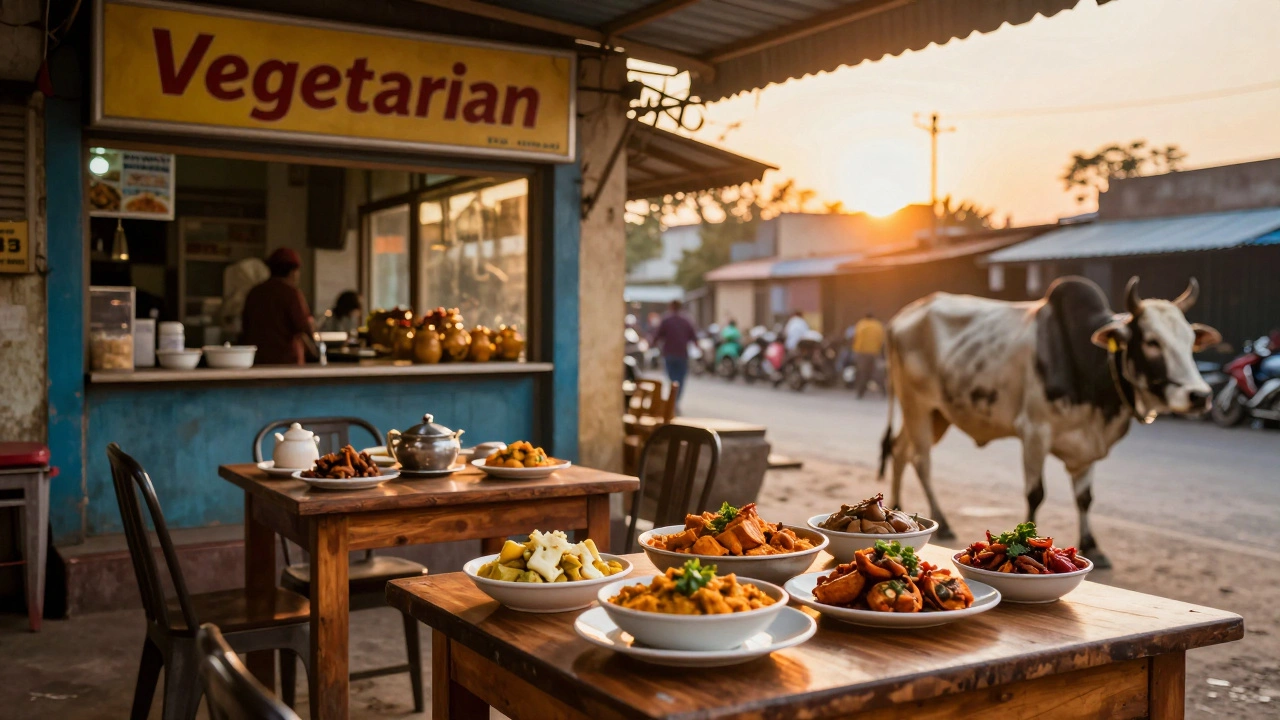
In India, beef is the most widely avoided meat. This isn’t a regional quirk - it’s a national norm in over 80% of the country. The reason is simple: cows are sacred in Hinduism, which is practiced by roughly 80% of Indians. Cows aren’t seen as livestock; they’re viewed as maternal figures, providers of milk, dung for fuel, and plowing power for farms. Killing a cow is considered deeply disrespectful, even immoral, by millions.
Most states have strict laws banning cow slaughter. In Uttar Pradesh, Gujarat, and Madhya Pradesh, you can face jail time for transporting or selling beef. Even in states without bans, like Kerala or West Bengal, beef is rarely sold openly. Restaurants that serve beef often operate discreetly, sometimes under different names or in minority neighborhoods. But for the average Indian family, the idea of eating beef simply doesn’t cross their minds.
Pork: Avoided in Some Communities
Pork is less universally banned than beef, but it’s still absent from many tables. In Muslim communities, pork is forbidden under Islamic dietary laws - halal rules prohibit it entirely. But even outside those communities, pork is uncommon. Why? Tradition. Many Hindu families, especially in North India, avoid pork not because of religion, but because of long-standing cultural habits. Pigs are seen as unclean animals, and their meat has historically been associated with lower castes or tribal groups. As a result, even non-Muslim Hindus often choose not to eat it.
In states like Rajasthan and Haryana, you’ll rarely find pork in local markets. In cities like Delhi or Jaipur, you might find a few pork dishes in hotels catering to tourists, but they’re the exception. In contrast, in Goa or parts of Northeast India, pork is common - roasted, cured, or in stews. But those areas have different cultural histories, shaped by Portuguese influence or tribal traditions.
Other Meats: Where the Rules Change
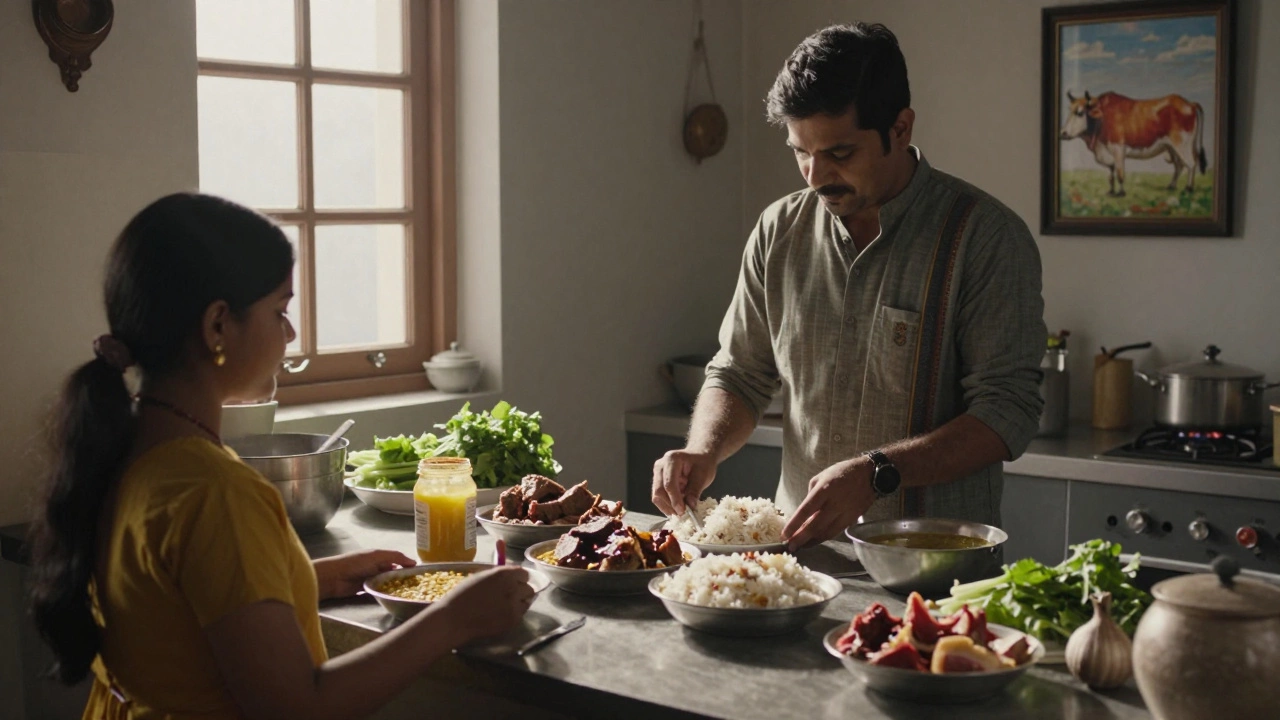
Chicken, goat, and fish are the most common meats across India - but even here, there are exceptions. In many Brahmin households, especially in South India, no meat at all is eaten. Vegetarianism isn’t just a diet choice - it’s a spiritual practice tied to non-violence (ahimsa). For these families, even eggs are avoided. The same is true for many Jain communities, who take vegetarianism to an extreme, avoiding root vegetables like potatoes and onions because harvesting them kills the plant.
On the flip side, in states like Kerala, Bengal, and the Northeast, meat consumption is high. Fish is a daily staple in Bengal. Goat meat (mutton) is popular in Hyderabad and Lucknow. In Nagaland and Manipur, fermented pork and beef are traditional dishes. But these are regional exceptions - not the national norm.
Why This Matters for Travelers
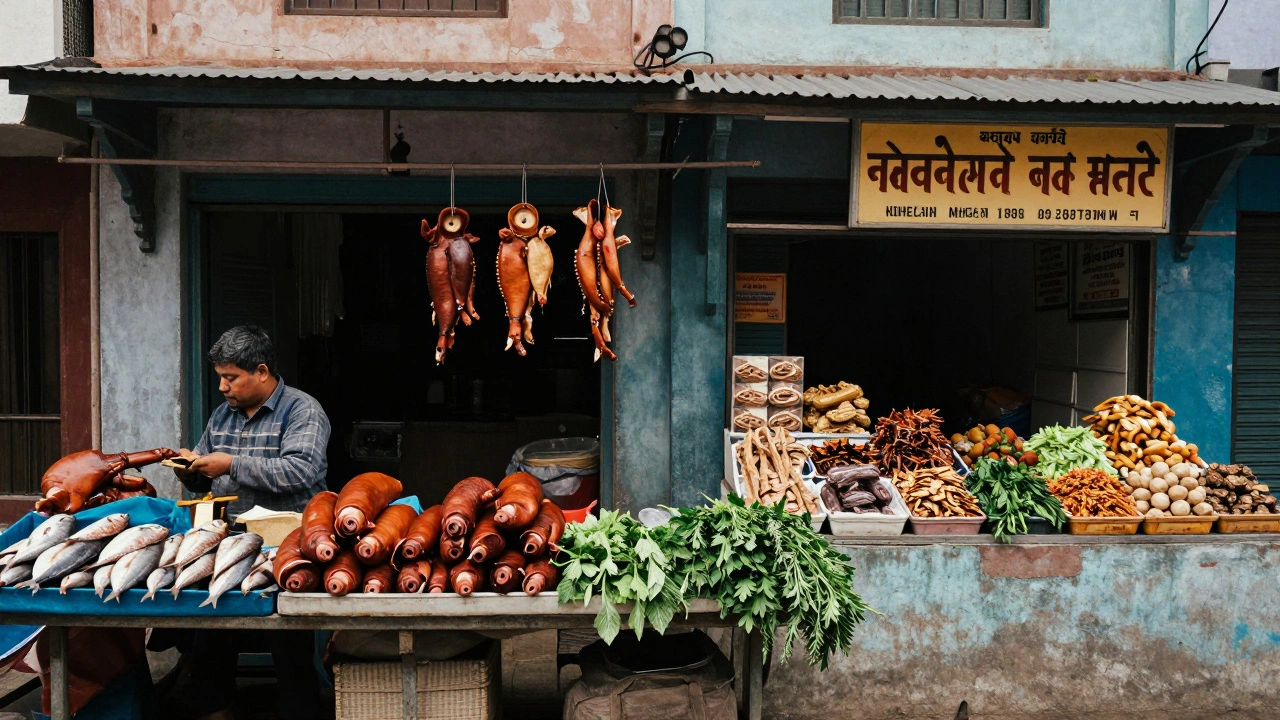
If you’re visiting India as a tourist, assuming all Indians eat meat will get you into trouble. You might order chicken curry in a small-town restaurant and be surprised when the waiter says, “We don’t serve meat here.” Or you might accidentally offend a host by offering a beef dish at dinner. Understanding these food taboos isn’t just polite - it’s essential.
Here’s what to do:
- Always ask before ordering meat: “Is this vegetarian?” - and mean vegetarian as in no meat, no eggs, no fish.
- Look for the green dot on packaging - it means vegetarian. A red dot means non-vegetarian.
- Don’t assume restaurants serve beef or pork. Even in metro cities, most menus avoid them.
- If you’re invited to someone’s home, it’s safer to bring a vegetarian gift - sweets or fruit - rather than meat.
Many travelers are shocked to find that vegetarian options in India are more varied than in any other country. From paneer tikka to jackfruit biryani, from lentil dosas to coconut chutney samosas, the food is rich, flavorful, and deeply rooted in centuries of tradition.
The Bigger Picture: Food as Identity
What you eat in India isn’t just about taste - it’s about identity. Your food choices reflect your religion, caste, region, and even your family history. For many, refusing beef isn’t about restriction - it’s about respect. For others, eating meat is a statement of independence or modernity.
There’s no single Indian diet. But there is a shared understanding: some foods are off-limits, not because they’re unhealthy, but because they carry meaning. To ignore that is to miss half the story of Indian culture.
When you sit down for a meal in Varanasi, Mumbai, or Chennai, you’re not just eating. You’re participating in a tradition older than most modern nations. And the most important thing you can do? Listen. Ask. And never assume.
Is beef completely banned in India?
No, beef isn’t banned nationwide. But 20 out of 28 Indian states have laws that restrict or ban cow slaughter. In states like Uttar Pradesh, Gujarat, and Haryana, the penalties include jail time. In states like Kerala, West Bengal, and Arunachal Pradesh, beef is legal and consumed, especially by Muslim, Christian, and tribal communities. So while it’s not illegal everywhere, it’s culturally unacceptable in most of the country.
Do all Hindus avoid meat?
No. While many Hindus are vegetarian - especially Brahmins and those in North India - not all are. In states like Kerala, Odisha, and West Bengal, meat-eating Hindus are common. Goat, chicken, and fish are regularly eaten. Vegetarianism is often tied to caste, region, and personal belief, not religion alone. About 30% of Hindus are strict vegetarians; the rest eat meat regularly.
Why is pork avoided even by non-Muslims?
In many parts of North and Central India, pork is avoided due to historical and cultural associations, not religion. Pigs were traditionally raised by lower-caste or tribal groups, and their meat was seen as unclean. Over time, this stigma spread beyond religious lines. Even families with no Islamic influence often choose not to serve pork at home. But in the Northeast and Goa, pork is a traditional part of the diet.
Can I find beef in Indian restaurants as a tourist?
In major cities like Delhi, Mumbai, or Bangalore, you might find a few restaurants that serve beef - usually targeting expats or tourists. These are rare and often not listed on public menus. In smaller towns, it’s nearly impossible. Even in Goa, where beef is culturally accepted, most restaurants avoid it to respect local sensibilities. It’s safer to assume beef isn’t available unless you’re in a known expat-heavy area.
Are eggs considered vegetarian in India?
Yes, in India, eggs are legally and culturally classified as non-vegetarian. That’s different from many Western countries. Restaurants use red dots for non-vegetarian food - and that includes eggs. Many Hindus, especially Jains and strict vegetarians, avoid eggs because they see them as potential life. If you’re ordering vegetarian food and want eggs, you’ll need to ask specifically.