Sleeper Train vs. Flight Cost & Value Calculator
✈️ Flight Option
🚆 Sleeper Train Option
✈️ Flight Total
🚆 Train Total
Difference: | Time Difference:
*This calculation assumes standard conditions. Prices may vary based on booking time and specific operators.
You pack your bag, check the departure time, and realize you’re leaving at 10 PM. You could fly, sure. But there’s another option that feels like a secret hack for reclaiming lost time: the sleeper train. It promises to turn dead hours into sleep, saving you a hotel night and getting you to your destination refreshed. Or so they say.
But here’s the thing nobody tells you in the glossy brochures. Not all sleeper trains are created equal. Some feel like floating hotels with champagne service; others feel like cramped metal boxes where the AC rattles louder than the tracks. If you’ve ever wondered whether paying extra for a berth is actually worth it compared to a cheap flight or a budget bus, you’re not alone. I’ve spent years testing everything from basic second-class coaches to high-end luxury carriages across Europe, Asia, and beyond. Let’s cut through the noise and look at the real costs, comforts, and quirks of sleeping on rails.
The Math: Is It Actually Cheaper?
The biggest selling point of sleeper trains is usually cost savings. On paper, it looks simple: buy one ticket instead of two (flight + hotel). But reality gets messy fast.
Let’s break it down. A red-eye flight from London to Paris might cost you $80 if you book weeks in advance. Add a budget hostel near Charles de Gaulle for $40, and you’re looking at $120 total. Now compare that to a Eurostar sleeper or an overnight Thalys alternative. Those tickets often run between $150 and $300 depending on how close to the date you book. Suddenly, the "savings" vanish.
However, the equation flips when distances get longer. Take the journey from Sydney to Melbourne. A flight takes two hours, but with airport security, transfers, and waiting times, you lose half a day. An overnight train saves you the need for a hotel entirely. In cities like Tokyo or New York, where downtown hotels can easily hit $300 a night, even a pricey sleeper cabin becomes a bargain. You aren’t just buying transport; you’re buying back a full day of sightseeing upon arrival.
| Route Type | Flight + Hotel | Sleeper Train | Time Saved/Lost |
|---|---|---|---|
| Short Haul (e.g., London-Paris) | $120 - $180 | $150 - $300 | Flight wins (2 hrs vs 8 hrs) |
| Medium Haul (e.g., Sydney-Melbourne) | $250 - $400 | $100 - $200 | Tie (Door-to-door similar) |
| Long Haul (e.g., Trans-Siberian segments) | $600+ (Multi-city flights) | $200 - $500 | Train wins significantly |
The hidden variable here is convenience fees. Flights charge for bags. Sleeper trains usually include them. If you’re traveling with gear-camera equipment, hiking boots, or just too much laundry-the train starts looking cheaper again. Always calculate the "door-to-door" cost, not just the ticket price.
Comfort Levels: From Bunk Beds to Suites
If you’ve never slept on a train, your first question is probably: "Will I actually sleep?" The answer depends entirely on what class you book. There is no single standard for "sleeper."
In many European countries, you’ll find three main tiers. First, there’s the couchette. This is basically a bench seat that folds out into a narrow bunk. It’s cheap, but it’s tight. You’re sharing a compartment with strangers, lights stay on until midnight, and privacy is non-existent. It’s fine for a quick nap, but don’t expect deep rest.
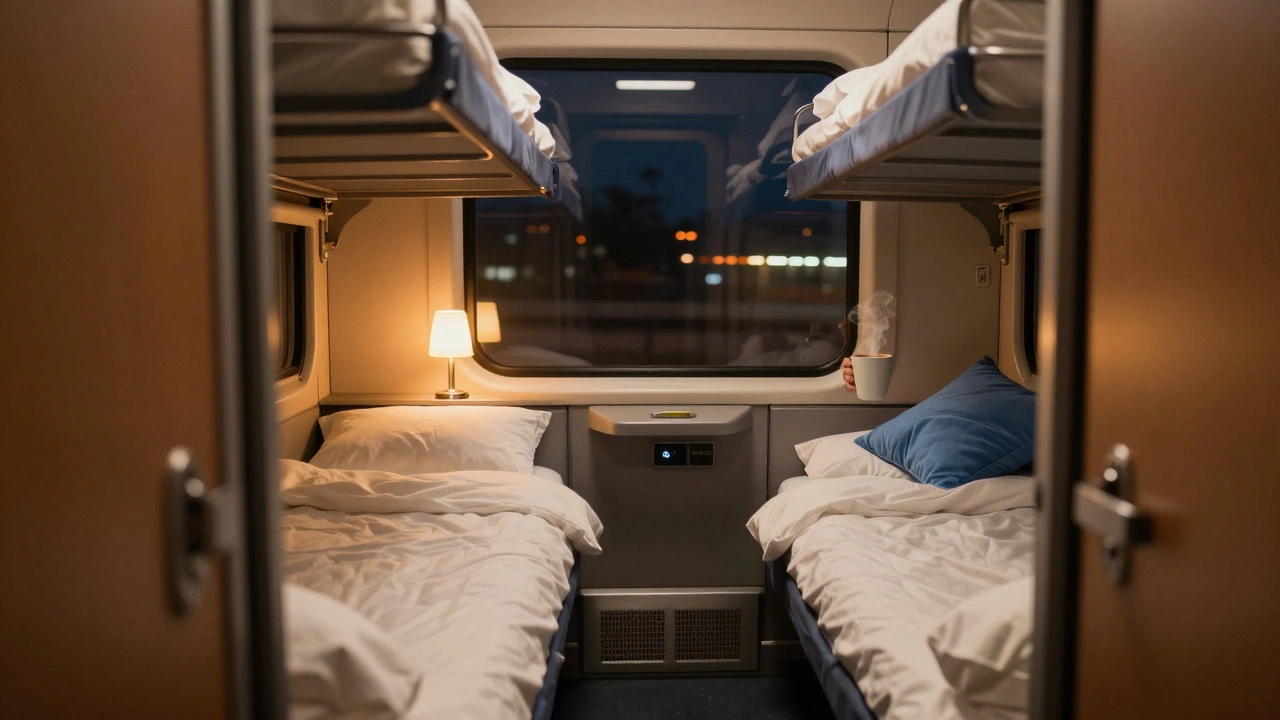
Next up is the standard sleeper cabin. These usually come in two-person or four-person configurations. You get a proper mattress, sheets, and pillows provided by the railway. There’s a lockable door, which changes everything. Being able to shut out the hallway light and noise makes a huge difference. Many modern trains also offer individual reading lights and power outlets at each berth.
Then there are the luxury options. Think of services like the Venice Simplon-Orient-Express or Japan’s Twilight Express Mizukaze. Here, you’re not just sleeping; you’re experiencing hospitality. Your cabin has en-suite bathrooms, plush bedding, and sometimes even a dedicated attendant. Yes, these cost as much as a business class flight, but they cater to a different desire: romance and nostalgia rather than efficiency.
One pro tip: always check the bedding policy. Some older trains require you to bring your own sleeping bag liner or pay a small fee for linens. It sounds minor, but waking up stiff because you forgot a pillow ruins the vibe instantly.
The Experience: More Than Just Transport
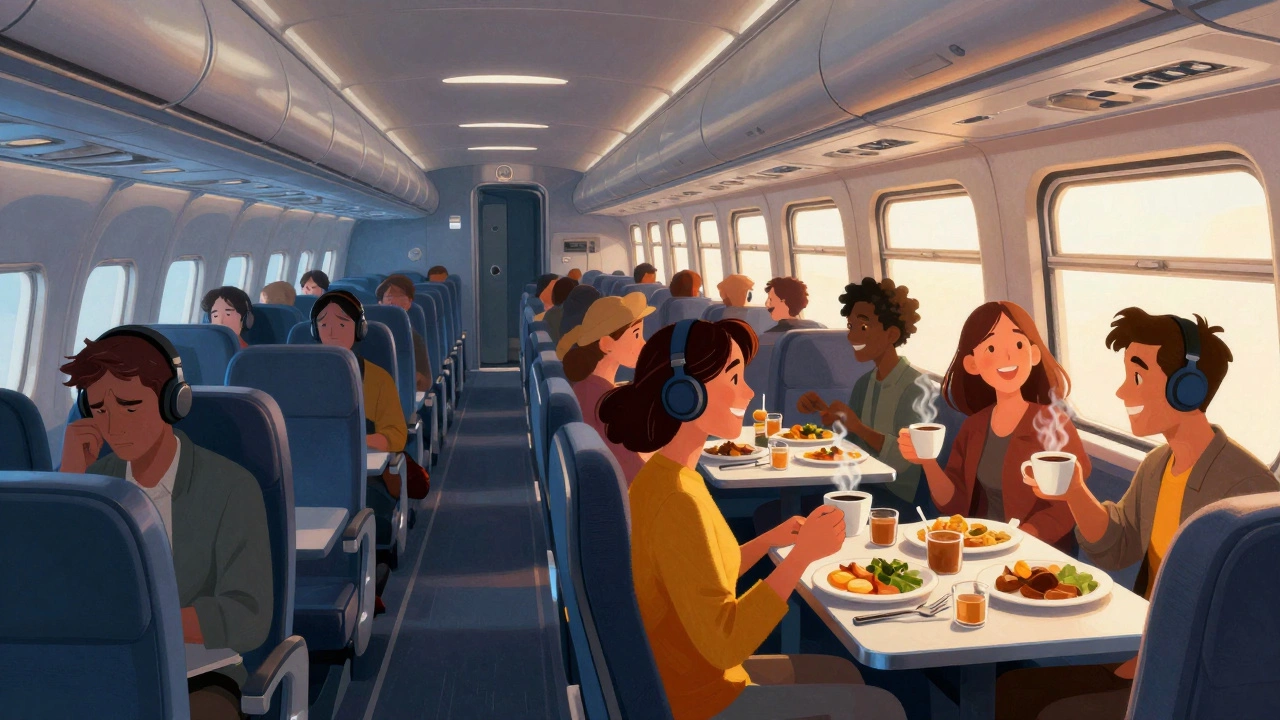
Why do people choose trains when planes are faster? Because trains sell an experience. When you fly, you’re cargo. You sit in a tube, eat stale crackers, and arrive stressed. On a sleeper train, the journey itself is part of the vacation.
Imagine watching the sun rise over the Swiss Alps from your window while sipping coffee from a dining car. Or drifting off to the rhythmic clack-clack of wheels crossing the Australian outback. There’s a meditative quality to rail travel that airplanes simply can’t match. You move at the speed of the landscape, not the speed of jet engines.
Socially, trains are fascinating. Compartments force interaction. You might end up sharing stories with a local historian, a backpacker from Brazil, or a retired engineer. It’s unpredictable. For solo travelers, this can be a highlight. For introverts who crave silence, it might be a drawback. That’s why booking a private cabin is worth the extra cash if solitude is your goal.
Dining is another factor. Most sleeper trains have a restaurant car. The food isn’t always Michelin-starred, but it’s hot, fresh, and served on real plates. Eating a proper dinner while the world rolls by outside feels indulgent compared to reheating a meal tray at 35,000 feet.
Pitfalls to Avoid Before You Book
Not every sleeper trip is a dream. Here are the common traps that catch first-timers:
- Timing mismatches: Some trains depart at inconvenient hours, like 11 AM, meaning you waste the morning sitting awake. Look for departures after 8 PM and arrivals before 7 AM to maximize sleep.
- Noisy neighbors: Even in locked cabins, sound travels through thin walls. Snoring partners or chatty companions can ruin your night. Earplugs are mandatory, not optional.
- Hygiene concerns: While most major railways maintain high standards, older networks may struggle with cleanliness. Check recent reviews specifically mentioning bathroom conditions.
- Late arrivals: Trains are generally more punctual than buses, but delays happen. If you have a strict connection the next morning, build in a buffer. Don’t book a 7 AM meeting after an overnight ride.
Also, consider the station location. Airports are often far from city centers, requiring expensive taxis or long metro rides. Train stations are usually right in the heart of the city. Arriving in central Berlin or Kyoto at 6 AM means you can walk straight to your hotel or start exploring immediately. That proximity adds value that doesn’t show up on the ticket price.
Who Should Take a Sleeper Train?
So, are sleeper trains worth it? For some, absolutely. For others, it’s a mistake. Here’s how to decide:
Take the train if:
- You’re traveling medium to long distances (4-12 hours).
- You want to save money on accommodation.
- You enjoy scenic views and slow travel.
- You’re visiting multiple cities and want to reduce packing/unpacking stress.
Stick to flying if:
- Time is your most precious resource.
- You suffer from severe anxiety about enclosed spaces or motion.
- The route is short (under 3 hours), where the hassle outweighs the benefit.
- You need guaranteed Wi-Fi for work (train connections are notoriously spotty).
In my experience, the sweet spot is routes like Milan to Venice, Seoul to Busan, or Los Angeles to San Francisco. These trips are too long to drive comfortably but too short to justify the hassle of flying. The sleeper train turns transit time into leisure time.
Final Thoughts on Rail Romance
Sleeper trains aren’t just about getting from A to B. They’re about changing how you think about travel. In a world obsessed with speed, choosing a train is a deliberate act of slowing down. You trade minutes for moments. You swap sterile terminals for warm compartments.
Yes, they can be noisy. Yes, they can be pricey if you book last minute. But when done right, arriving in a new city after a good night’s sleep, with your luggage already at your feet and the sunrise hitting your face, feels magical. It’s a reminder that the journey matters just as much as the destination.
Are sleeper trains safe?
Generally, yes. Sleeper trains are considered very safe, especially compared to driving or budget buses. Most modern trains have CCTV, onboard staff, and secure locking mechanisms for cabins. However, like any public transport, keep your valuables with you and use the lockers provided. Petty theft can occur in crowded stations, so stay vigilant during boarding and disembarking.
Do I need to bring my own bedding?
It depends on the railway operator. Major companies like Deutsche Bahn (Germany), SNCF (France), and JR (Japan) provide clean sheets, blankets, and pillows included in the ticket price. Smaller regional operators or budget services might require you to bring a sleeping bag or pay a small hygiene fee. Always check the specific terms before booking.
Can I cancel my sleeper train ticket?
Cancellation policies vary widely. Flexible fares usually allow free cancellation up to 24 hours before departure. Discounted or advance fares are often non-refundable. Some railways offer insurance that covers cancellations due to illness or emergencies. Read the fine print carefully, as rules differ significantly between countries and operators.
Is there Wi-Fi on sleeper trains?
Many modern sleeper trains offer Wi-Fi, but don’t count on it for video calls or heavy downloads. Connectivity is often weak in rural areas or tunnels. Treat it as a bonus for checking emails or browsing social media slowly. If you need reliable internet, download your content beforehand or rely on mobile data if coverage is good along the route.
What should I wear on a sleeper train?
Comfort is key. Wear loose, breathable layers since temperatures in cabins can fluctuate. Bring slippers or socks for walking around the corridor, as floors can be cold. Avoid strong perfumes or colognes since you’ll be sharing confined space with others. Pack a change of clothes for the morning so you can start your day fresh.