
Bali vs Maldives Cost Calculator
Compare costs for your ideal beach getaway. Enter your trip details to see how Bali and the Maldives stack up against each other for your specific travel style.
Why the Difference?
Bali offers more affordable accommodation ($80-$120/night), local food ($3-$5/meal), and activities ($200 for 3-day diving). The Maldives starts at $300-$400/night for basic accommodations with extra fees for everything.
When Indian travelers think of a perfect beach getaway, two names always come up: Bali and the Maldives. Both promise white sand, turquoise water, and sunsets that feel like they were painted just for you. But which one actually delivers the experience you’re looking for? It’s not just about photos on Instagram. It’s about what fits your budget, your vibe, and your travel style.
Cost: What You’ll Actually Pay
Bali is far more forgiving on your wallet. A mid-range villa with a private pool in Seminyak or Ubud starts around $80-$120 per night. Meals? You can eat well at a local warung for $3-$5. Even a 3-day scuba dive package with gear rental runs under $200. The Maldives? That’s a different league. Even the cheapest overwater bungalow from a budget resort like Meeru Island starts at $300-$400 per night-and that’s before taxes or meals. Most resorts charge extra for everything: Wi-Fi, water sports, even bottled water. A simple lunch at a Maldives resort can cost $40. For Indian travelers on a mid-range budget, Bali gives you more for less.
Activities: Beyond Just Lying on the Beach
Bali isn’t just about beaches. It’s a full cultural experience. You can hike up Mount Batur at sunrise, explore ancient temples like Uluwatu or Tirta Empul, take a Balinese cooking class, or meditate in rice terraces in Tegallalang. Surfing? Ubud has beginner-friendly waves. Diving? The coral reefs around Nusa Penida are teeming with manta rays. The Maldives, on the other hand, is mostly about the ocean. Snorkeling with turtles, diving with whale sharks, or relaxing on a sandbank. There’s no nightlife, no markets, no temples. If you want to explore culture, Bali wins. If you want to unplug completely, the Maldives wins.
Accessibility: How Easy Is It to Get There?
For Indian travelers, getting to Bali is simple. Direct flights from Delhi, Mumbai, Bangalore, and Hyderabad take just 5-6 hours. Airlines like Air India, IndiGo, and Vistara fly there regularly. The Maldives? You’ll need to fly to Male via a hub like Colombo, Singapore, or Dubai. That adds at least 2-3 hours of layover time. Even if you find a direct flight from Delhi (some seasonal ones exist), the ticket price is usually 30-50% higher than Bali. And don’t forget the airport tax in the Maldives-it’s $30 per person on arrival. Bali? No extra fees.

Accommodation: Private Villas vs Overwater Bungalows
Bali offers variety. You can stay in a rustic bamboo cottage for $30, a luxury villa with butler service for $500, or a boutique hotel in Canggu for $100. The choice is yours. The Maldives? Almost every resort is built on its own island, with overwater bungalows as the main attraction. These rooms are stunning, yes-but they’re also expensive and uniform. You’re paying for the view, not the experience. In Bali, you can wake up to a view of the jungle, the ocean, or a temple courtyard. In the Maldives? You wake up to water. Underneath you. That’s beautiful-but repetitive after a few days.
Food: Taste That Stays With You
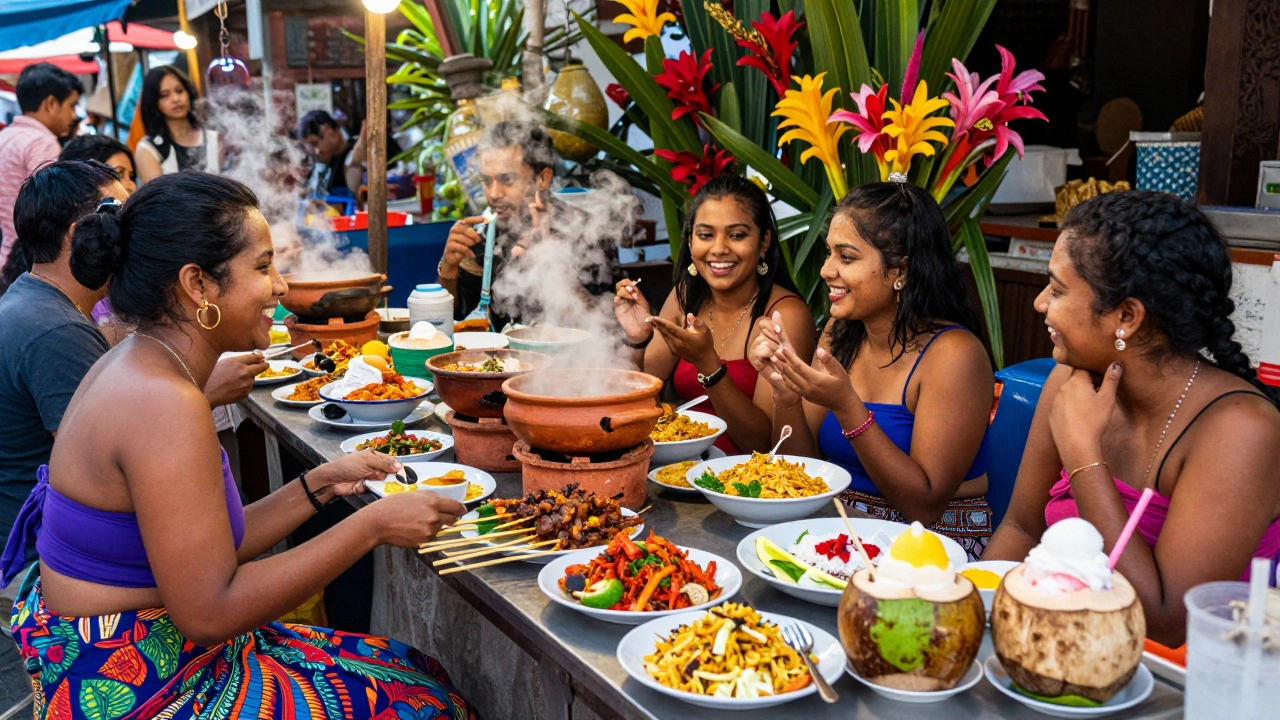
Bali’s food scene is wild. You’ll find Balinese satay, nasi goreng, babi guling (suckling pig), and fresh coconut ice cream. There are vegan cafes in Ubud, beach clubs in Seminyak with avocado toast, and hidden warungs serving spicy sambal that’ll make your eyes water. The Maldives? Most resorts offer international buffets: pasta, sushi, grilled fish. Local Maldivian food-like mas huni (tuna with coconut and chili)-is rarely served to tourists. You’ll get good food, but not memorable food. For Indian travelers who love bold flavors and street eats, Bali feels like home.
Privacy and Crowds: Who Gets the Beach?
Bali’s most popular beaches-Kuta, Seminyak, Canggu-can get crowded, especially in peak season (June-August). But head to Nusa Dua, Padang Padang, or the west coast of Nusa Lembongan, and you’ll find quiet stretches. The Maldives? Each resort owns its own island. You’ll likely have the beach to yourself. But that also means no local life, no markets, no chance to chat with a fisherman or buy a handmade sarong. If you want solitude, the Maldives wins. If you want to feel like you’re somewhere real, Bali wins.
Best for Honeymooners?
Many Indian couples pick the Maldives for romance. And it’s true: private dinners on the beach, sunset cruises, and spa treatments over the water are hard to beat. But Bali offers something deeper. Imagine a sunrise yoga session in Ubud, followed by a private temple blessing with a local priest. Or a candlelit dinner in a cliffside villa overlooking the Indian Ocean. Bali gives you romance with meaning. The Maldives gives you romance with luxury. Both are valid. But Bali leaves a mark on your soul. The Maldives leaves a mark on your credit card.
When to Go: Weather Matters
Bali has two seasons: dry (April-October) and wet (November-March). The dry season is peak time, so book early. The Maldives? Dry season runs from November to April. That’s when the skies are clear and the water is calm. But if you’re traveling in May-October, Bali’s weather is still fine-just expect occasional rain showers. The Maldives during its wet season? Rough seas, closed dive sites, and fewer flights. For Indian travelers, Bali’s shoulder seasons (April, October) are ideal: fewer crowds, lower prices, and still sunny.
Final Verdict: Who Should Choose What?
If you’re looking for:
- Value for money → Bali
- Culture, food, and adventure → Bali
- A quiet, all-inclusive escape → Maldives
- Snorkeling and marine life → Maldives
- A honeymoon with soul → Bali
- A honeymoon with luxury → Maldives
Most Indian travelers who’ve been to both say the same thing: Bali feels like a vacation. The Maldives feels like a dream. But dreams are expensive. Bali? You can have it again next year.
Is Bali cheaper than the Maldives for Indian travelers?
Yes, significantly. A 7-day trip to Bali can cost as little as $500-$800 per person, including flights, accommodation, food, and activities. The same trip to the Maldives starts at $1,500-$2,500 per person. Even budget resorts in the Maldives charge $300+ per night, while Bali offers luxury villas for under $120. Food, transport, and local experiences are also far more affordable in Bali.
Can I visit both Bali and the Maldives on one trip?
Technically yes, but it’s not practical. There are no direct flights between Bali and the Maldives. You’d need to fly via Dubai, Singapore, or Colombo, adding 12-18 hours of travel time. Most travelers pick one. Bali offers more variety; the Maldives offers more isolation. Trying to do both often feels rushed and expensive. Better to pick one and make it count.
Which destination is better for families with kids?
Bali is far more family-friendly. Many resorts have kids’ clubs, pools with shallow areas, and family villas with kitchens. You can find kid-safe food everywhere. The Maldives? Most resorts are adults-only. Those that allow children often have limited facilities. Plus, long flights with layovers are harder with young kids. Bali’s short flight time and cultural activities make it easier for families.
Is the water clearer in the Maldives than in Bali?
Generally, yes. The Maldives sits in the middle of the Indian Ocean with minimal runoff, so visibility often exceeds 30 meters. Bali’s waters are still beautiful, but closer to shore, sediment and human activity can reduce clarity-especially around popular beaches. For serious snorkeling or diving, the Maldives has the edge. But Bali’s reefs around Nusa Penida and Menjangan are world-class and far less crowded.
Do I need a visa for Bali or the Maldives as an Indian citizen?
No visa is required for either. Indian passport holders get 30 days visa-free in Bali. For the Maldives, you get 30 days on arrival with no visa fee. Just make sure your passport is valid for at least six months beyond your travel dates. Both destinations are very traveler-friendly in this regard.