Adventure Sport Personality Quiz
Find Your Perfect Thrill
Answer 4 questions to reveal your ideal adventure.What is your primary relationship with fear?
Your Match:
Paragliding
You seek a meditative yet dangerous challenge...
Best Location: Bir Billing, Himachal Pradesh
Fear Factor: Loss of Control / Wind
Everyone talks about skydiving as the ultimate adrenaline rush. You jump out of a plane, freefall for sixty seconds, and pull a cord to save your life. It’s exciting, sure. But is it actually the most thrilling thing you can do? If you’ve ever stood on the edge of a cliff or stared down white-water rapids, you know that fear comes in many flavors. Some thrills are about speed; others are about control, endurance, or sheer exposure to nature’s raw power.
If you’re looking for experiences that make your heart pound harder than a tandem skydive over Jaipur, India has plenty to offer. From the high-altitude winds of Himachal Pradesh to the deep blue waters of the Andamans, this country is a playground for those who want more than just a quick drop. Let’s look at what beats the classic parachute jump in terms of pure, unadulterated excitement.
Paragliding in Bir Billing: Flying Like a Bird
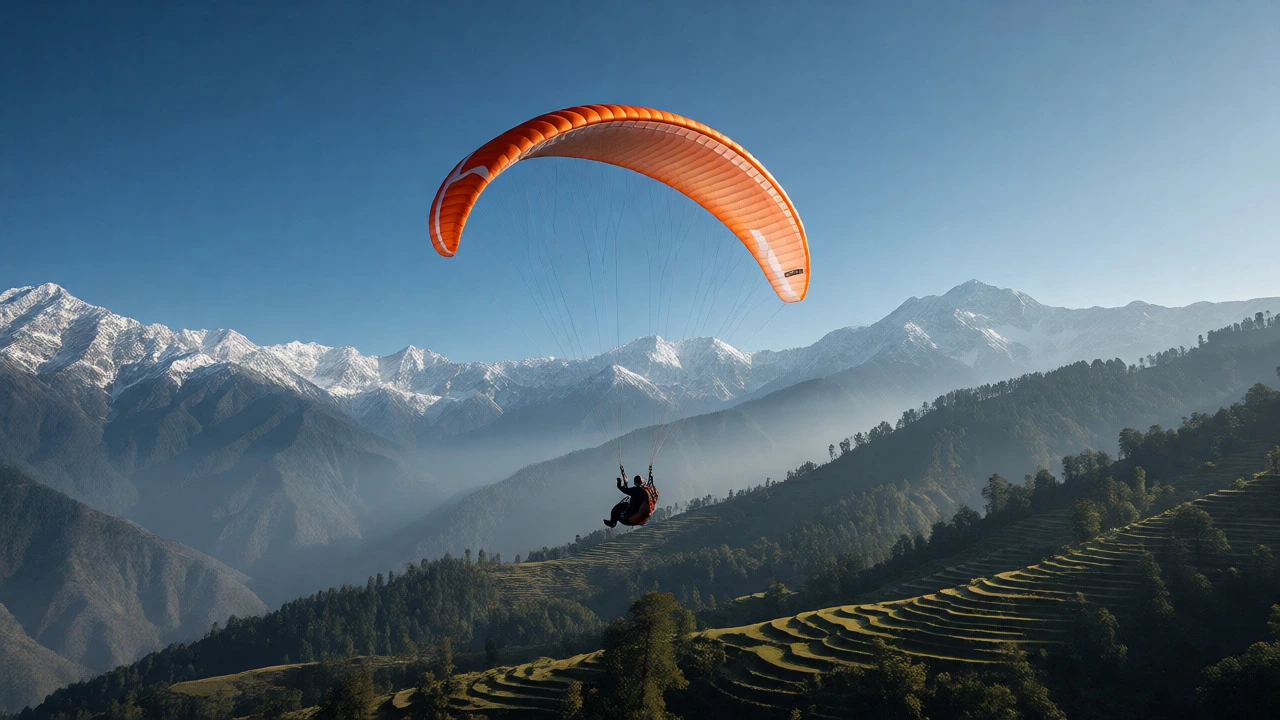
Skydiving gives you a minute of freefall. Paragliding gives you an hour of flight. In Bir Billing, located in Himachal Pradesh, you don’t just fall; you glide. The takeoff is from a steep slope, not a plane. One moment you’re standing on solid ground, and the next, you’re suspended in the air, relying entirely on wind currents and a nylon wing.
The thrill here isn’t just the height-it’s the vulnerability. You have no engine. No cockpit. Just you, the harness, and the mountain air. Pilots often report a sense of peace mixed with intense focus. Unlike skydiving, where the end goal is landing, paragliding is about staying up. Thermal currents can lift you thousands of feet higher without you doing anything but shifting your weight. For many, the anxiety of controlling your own fate in the open sky outweighs the passive experience of a skydive.
River Rafting in Rishikesh: Battling the Current
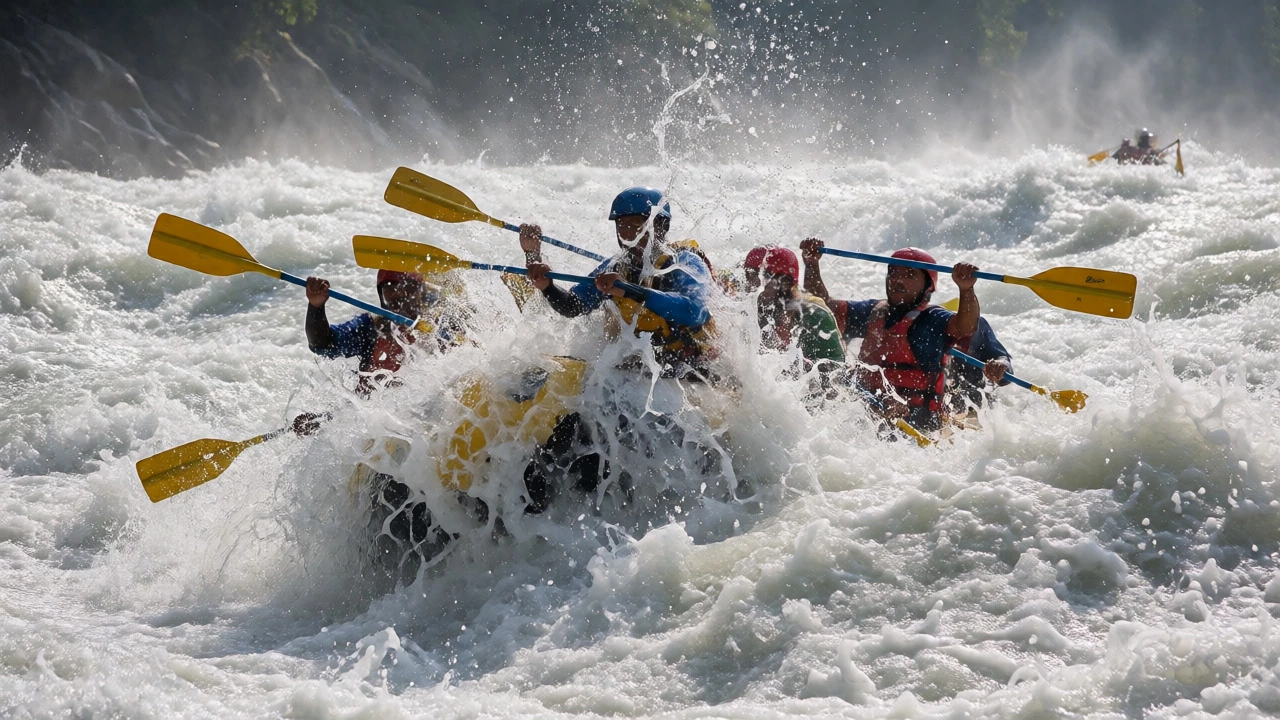
While skydiving happens in silence (until the wind roars), river rafting is loud, chaotic, and physical. Rishikesh, situated on the banks of the Ganges, offers Grade III to Grade V rapids depending on the season and route. This isn’t a gentle float down a lazy river. When you hit rapid number ten on the Shivpuri stretch, you’re getting thrown around like a ragdoll.
The difference between skydiving and rafting is agency. In a skydive, you follow instructions. In a raft, if you miss a paddle stroke during a hydraulic hole, you might get trapped underwater. The threat of drowning adds a primal layer of fear that freefall doesn’t quite match. Plus, the cold water shock of the Himalayan rivers keeps your senses sharp. You’re working with a team, shouting commands, and fighting gravity sideways rather than straight down. It’s a full-body workout that leaves you exhausted and exhilarated.
Bungee Jumping in Mohan Chatti: The Ultimate Drop
Some argue that skydiving is too long. You spend time waiting, boarding, and ascending. Bungee jumping cuts to the chase. At the Mohan Chatti bridge in Rishikesh, one of Asia’s highest bungee jumps at 83 meters, you stand on a platform, look down, and step off. That’s it.
The terror of bungee jumping is concentrated. There is no gradual acceleration. One second you are safe; the next, you are plummeting towards a river bed. The rebound-the snap back up when the cord tightens-is disorienting and visceral. Many people find the psychological barrier of voluntarily stepping off a ledge harder to overcome than the act of jumping out of a moving aircraft. The lack of a parachute safety net (other than the cord itself) creates a unique kind of panic that skydivers rarely feel after their first jump.
Scuba Diving in Havelock Island: Into the Abyss
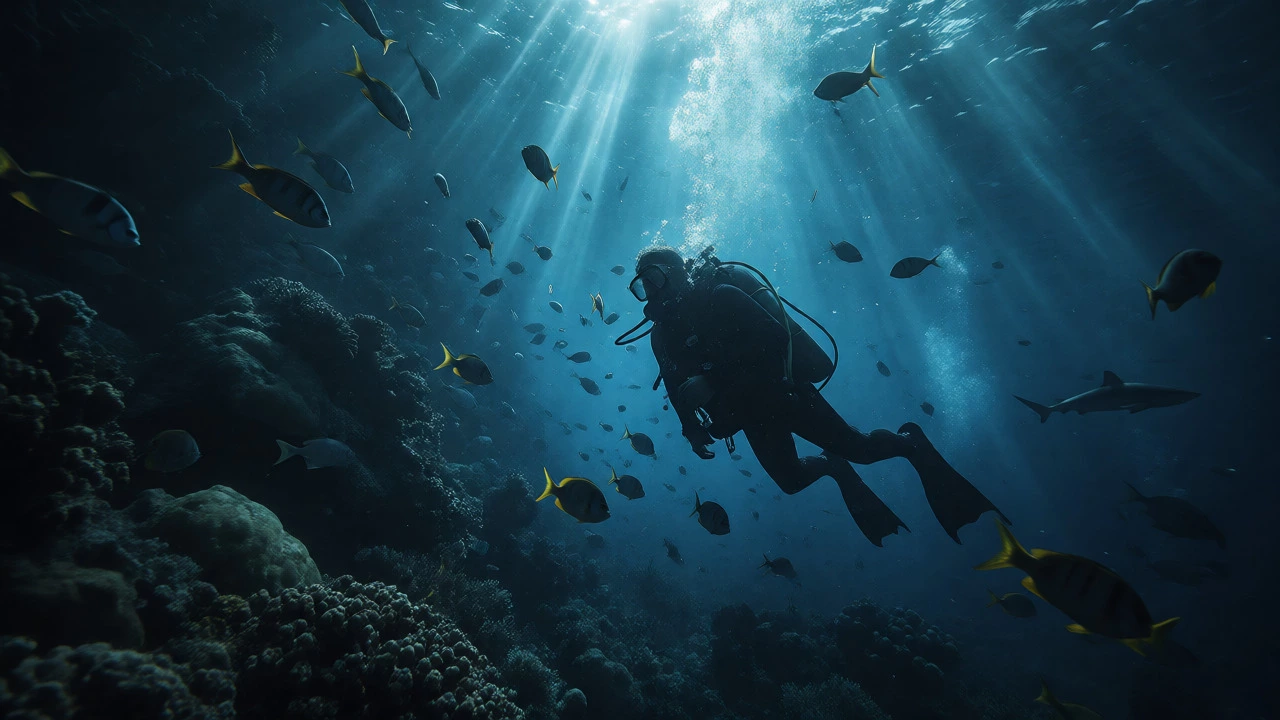
Skydiving takes you away from the earth. Scuba diving takes you beneath it. In the Andaman Islands, specifically Havelock, you descend into a world where sound disappears and light fades. The thrill here is claustrophobia versus agoraphobia. You are breathing compressed air in a suit, surrounded by vast emptiness.
Unlike the fast-paced nature of aerial sports, scuba diving forces you to slow down. Every movement must be deliberate. A sudden kick can stir up sediment and ruin visibility. The danger isn’t falling; it’s decompression sickness or equipment failure. Knowing that your life depends on a regulator in your mouth creates a tense intimacy with your gear. Watching a shark glide past in the blue void triggers a different kind of adrenaline-one rooted in respect for a hostile environment rather than speed.
Comparing the Thrills
How do these stack up against each other? It depends on what scares you most. Here is a breakdown of the key factors:
| Activity | Primary Fear Factor | Duration of Peak Thrill | Physical Effort | Best Location in India |
|---|---|---|---|---|
| Skydiving | Falling / Equipment Failure | ~60 Seconds | Low | Agra / Jaipur |
| Paragliding | Loss of Control / Wind | 15-60 Minutes | Moderate | Bir Billing |
| River Rafting | Drowning / Impact | Variable (Hours) | High | Rishikesh |
| Bungee Jumping | Impact / Cord Failure | ~10 Seconds | Low | Rishikesh |
| Scuba Diving | Suffocation / Pressure | Continuous | Moderate | Havelock Island |
Why Context Matters More Than Height
People often think "higher equals scarier." But consider trekking in the Himalayas. Walking along a narrow ridge with a thousand-foot drop on either side, carrying heavy gear, and dealing with altitude sickness can be more mentally draining than a controlled skydive. The thrill there is survival. You aren’t trusting a machine; you’re trusting your footing and your lungs.
Similarly, motorbike touring in Ladakh involves navigating treacherous mountain passes at 14,000 feet. One slip on loose gravel could mean sliding off the edge. There’s no instructor holding your hand. The isolation amplifies the risk. If something goes wrong, help is hours or days away. That level of self-reliance provides a sustained tension that a five-minute activity simply cannot replicate.
Choosing Your Next Rush
If you hate heights but love chaos, try rafting. If you want to conquer the fear of letting go, try bungee jumping. If you seek a meditative yet dangerous challenge, go scuba diving. And if you want to fly without a plane, paraglide in Bir Billing.
Skydiving is a great introduction to extreme sports, but it’s often the easiest to manage psychologically because the instructor handles everything. The activities listed above require more participation, more skill, and more acceptance of uncertainty. They leave a deeper mark because you didn’t just witness the thrill-you engineered it.
Is paragliding safer than skydiving?
Statistically, both are very safe when conducted with certified instructors. However, paragliding is more weather-dependent. Strong winds or turbulence can make paragliding risky, whereas skydiving operations usually cancel flights in bad weather before you even board. Paragliding requires more pilot skill if you are solo, but tandem flights are generally considered low-risk.
Which is scarier: bungee jumping or skydiving?
This is subjective, but many people find bungee jumping psychologically scarier. In skydiving, the exit is assisted, and the transition to freefall is gradual. In bungee jumping, you actively step off a ledge into empty space. The anticipation of the drop is intense, and the sudden stop/rebound can be jarring. Skydiving feels more like flying; bungee feels more like falling.
Do I need training for river rafting in Rishikesh?
No prior training is required for commercial rafting trips in Rishikesh. Guides provide a brief safety orientation and teach basic paddling techniques before you enter the water. However, knowing how to swim is highly recommended, especially for Grade IV and V rapids, although life jackets are mandatory and keep you afloat regardless.
What is the best time for adventure sports in India?
It varies by activity. For paragliding in Bir Billing, March to June and September to November are ideal due to stable thermals. River rafting in Rishikesh is best from September to June, avoiding the monsoon months (July-August) when rivers are too dangerous. Scuba diving in the Andamans is possible year-round, but October to May offers the clearest waters.
Can I combine multiple adventure sports in one trip?
Yes, especially in North India. Rishikesh allows you to do bungee jumping and river rafting on the same day. From there, you can travel to Bir Billing for paragliding within a few hours. This makes for an excellent multi-day adventure circuit focusing on adrenaline.