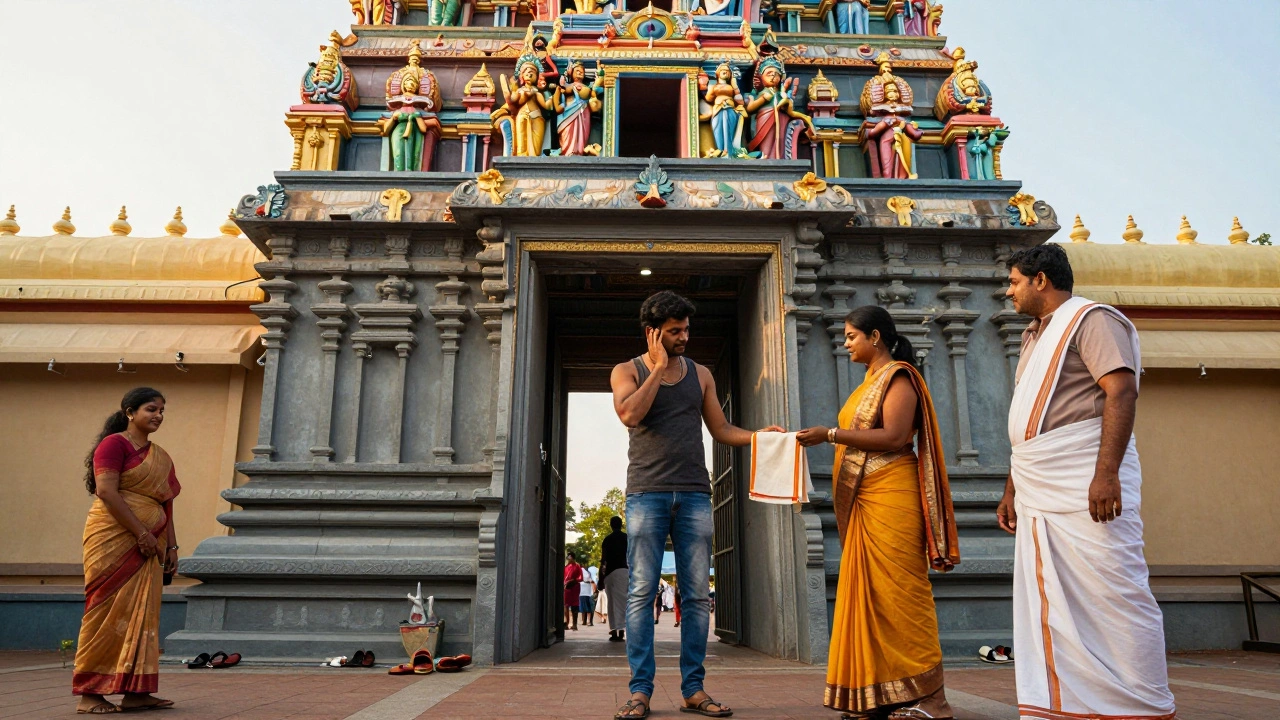
Walking into a Hindu temple in India, you might feel a mix of awe and uncertainty. You’ve packed your favorite jeans, they’re comfortable, and you’re ready to explore. But then you pause. Can I wear jeans to a Hindu temple? The answer isn’t yes or no-it’s more about respect, context, and local customs.
It Depends on the Temple
Not all Hindu temples have the same rules. In rural villages or smaller neighborhood shrines, you’ll often see locals wearing jeans, t-shirts, and even flip-flops. The focus there is on devotion, not attire. But in major pilgrimage sites like Tirupati, Varanasi, or the Golden Temple in Amritsar, the expectations are stricter. These places see millions of visitors every year, and they’ve developed clear dress codes to preserve sanctity and cultural norms.At the famous Sri Padmanabhaswamy Temple in Kerala, men must wear dhotis and women are expected to wear saris or long skirts with blouses. At the Jagannath Temple in Puri, bare shoulders and shorts are banned for everyone. These aren’t arbitrary rules-they’re rooted in centuries of tradition that treat the temple as a sacred space, not just a tourist attraction.
Why Does Dress Matter in a Hindu Temple?
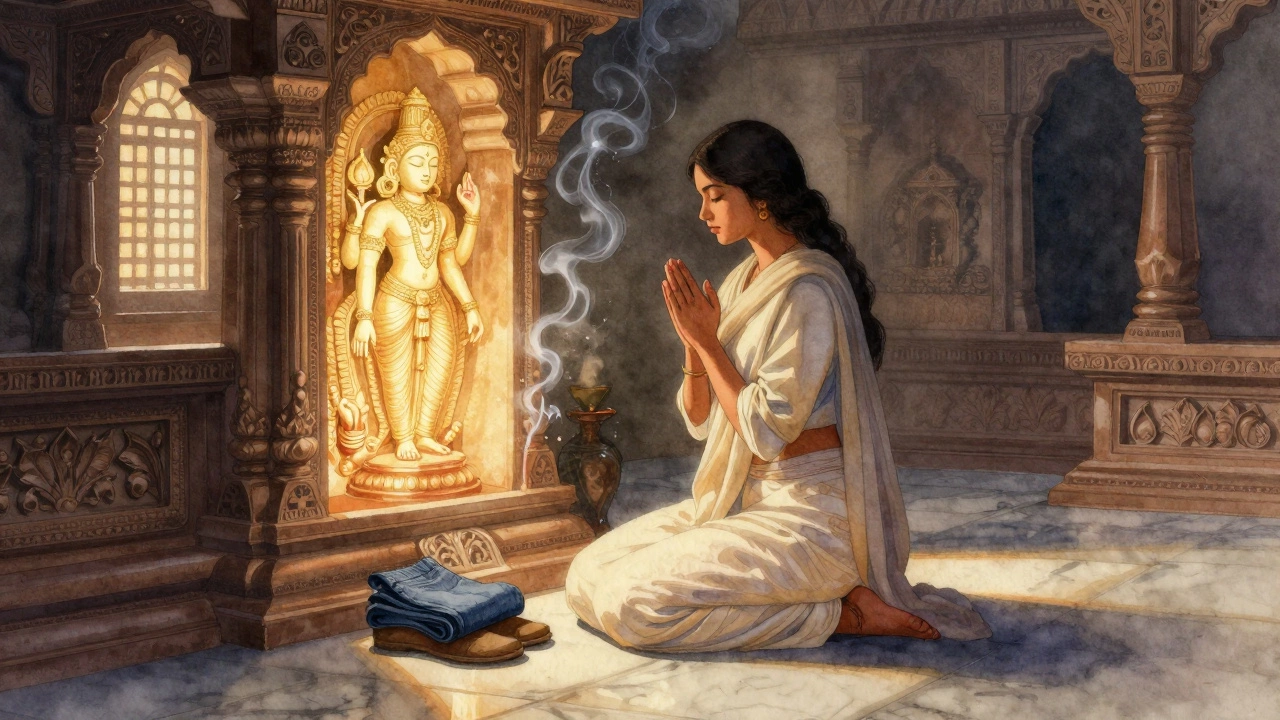
In Hinduism, the temple is considered the earthly home of the deity. Every action inside-how you walk, speak, or even what you wear-is seen as a form of offering. Covering your body isn’t about modesty in a Western sense; it’s about showing reverence. Bare shoulders, tight clothing, or short shorts are viewed as distracting or disrespectful because they draw attention to the body instead of the divine.Many temples also require visitors to remove their shoes before entering. This practice isn’t just about cleanliness-it symbolizes leaving behind the outside world, including its casualness, to step into a sacred space. Wearing jeans, which are everyday wear outside, can feel out of place in that context. Think of it like walking into a church in a swimsuit. You might not be breaking a law, but you’d feel out of sync with the environment.
What’s Acceptable Instead of Jeans?
You don’t need to buy a sari or dhoti to visit a temple. There are practical, respectful alternatives that work for most travelers:- For women: Long skirts or pants that cover the knees, paired with a top that covers the shoulders. A light shawl or scarf can easily cover bare arms if needed.
- For men: Long pants (not shorts) and a t-shirt or button-down shirt that covers the chest. Avoid tank tops or sleeveless shirts.
- Both genders: Closed-toe shoes are fine, but you’ll need to take them off before entering the inner sanctum. Keep them easy to slip on and off.
Many temples in tourist-heavy areas like Jaipur, Udaipur, or Hampi have rental counters near the entrance. You can borrow a dhoti for men or a shawl for women for a few rupees. It’s a small cost for peace of mind-and a sign you’re making an effort to honor local customs.
What About Modern Temples and Urban Centers?
In cities like Bangalore, Hyderabad, or Mumbai, you’ll find temples that are more relaxed. The Sri Venkateswara Temple in Bangalore, for example, doesn’t enforce strict dress codes for casual visitors. But even there, you’ll notice most locals are dressed modestly. If you’re unsure, look around. If everyone else is wearing long pants or skirts, follow suit.There’s a difference between being tolerated and being welcomed. Wearing jeans might not get you turned away from the temple gates, but it might make you stand out in a way that draws unwanted attention-or worse, make locals feel uncomfortable. The goal isn’t to police your wardrobe, but to help you blend in respectfully.
What Happens If You Show Up in Jeans?
In most cases, nothing dramatic. You won’t be arrested or fined. But you might be asked to cover up. At some temples, staff will hand you a cloth to drape over your shoulders or legs. At others, you might be politely redirected to a nearby shop to buy or rent something appropriate. In rare cases, especially during major festivals or rituals, security guards may deny entry to those not dressed properly.There’s one exception: temples that are part of active religious communities. If you’re visiting a temple where daily rituals are performed by priests and devotees, the rules are stricter. These aren’t museums-they’re living places of worship. Dressing respectfully isn’t optional; it’s part of participating in the space.
What About Women on Their Periods?
This is a common follow-up question. Some temples in India, especially in South India, have restrictions on women entering during menstruation. These rules are based on old interpretations of purity, not science. Many modern temples have dropped these policies, but others still follow them. If you’re unsure, it’s best to check ahead or ask quietly at the entrance. Don’t feel pressured to disclose personal details-just observe what others are doing.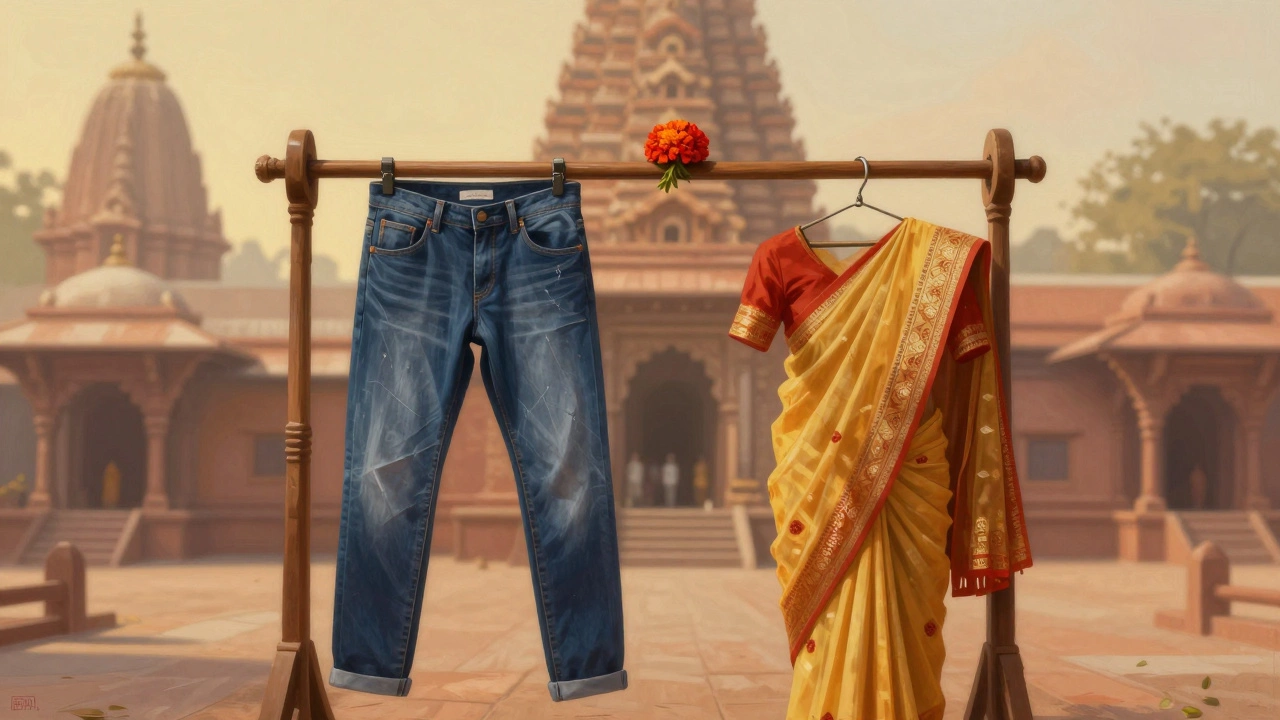
Pro Tips for Travelers
- Always carry a lightweight scarf or shawl. It’s small, packs easily, and solves 90% of dress code issues.
- Wear slip-on shoes. You’ll be taking them off often, and laces are a hassle.
- Check the temple’s official website if it has one. Some post dress code rules clearly.
- When in doubt, dress one level more covered than you think you need to. It’s better to be over-prepared than embarrassed.
- Respect local customs even if they seem outdated. Your behavior reflects not just on you, but on all visitors.
It’s Not About Rules-It’s About Respect
Wearing jeans to a Hindu temple isn’t inherently wrong. But if you’re traveling to India to experience its culture, then dressing with awareness becomes part of that experience. It’s not about fitting into someone else’s idea of propriety-it’s about recognizing that this place matters deeply to millions of people. When you dress respectfully, you’re not just following a rule. You’re saying: I see your faith. I honor your space.Many travelers who initially resisted modest dress codes end up feeling more connected after doing so. One visitor from Australia told me she bought a simple cotton skirt in Varanasi and wore it for the rest of her trip. "I felt like I belonged," she said. "Not because I was dressed like them, but because I tried."
Can I wear jeans to a Hindu temple in India?
It depends on the temple. In major pilgrimage sites like Tirupati or Varanasi, jeans are often discouraged or not allowed, especially if they’re tight or ripped. In smaller or urban temples, they may be tolerated-but long pants and covered shoulders are always safer. When in doubt, opt for modest clothing.
What should women wear to a Hindu temple?
Women should wear clothing that covers the shoulders and knees. A long skirt, palazzo pants, or salwar kameez paired with a top that covers the upper arms works well. A scarf can be used to cover shoulders if needed. Avoid shorts, crop tops, or sleeveless blouses.
What should men wear to a Hindu temple?
Men should avoid shorts, tank tops, or sleeveless shirts. Long pants and a t-shirt or collared shirt are ideal. In some temples, especially in South India, men are expected to wear a dhoti or lungi. These can often be rented at the temple entrance for a small fee.
Are sandals allowed in Hindu temples?
Yes, sandals are fine and even preferred because you’ll need to remove your footwear before entering the inner areas. Choose easy-to-slip-on styles. Avoid flip-flops if you’re walking long distances-many temple grounds are large and uneven.
Do I need to cover my head in a Hindu temple?
Covering your head is not required in most Hindu temples, unlike in some Sikh or Muslim places of worship. However, in certain temples like the Golden Temple in Amritsar (which is Sikh, not Hindu), head coverings are mandatory. Always check the specific temple’s rules.
Can I wear jeans to a temple during a festival?
During major festivals like Diwali, Navaratri, or Maha Shivaratri, dress codes are stricter. Temples see huge crowds, and traditional attire is expected. Jeans, especially with holes or logos, are often frowned upon. Wear modest, clean clothing-preferably cotton-and avoid flashy accessories.
What if I’m traveling with kids? Do they need to follow the dress code too?
Yes. Children are expected to follow the same dress rules as adults. Avoid shorts, tank tops, or revealing clothing for kids. A simple t-shirt and long pants or skirt are enough. Many temples have free cloth rentals for families, so don’t worry if you didn’t pack appropriately.