Cuisine Match Calculator
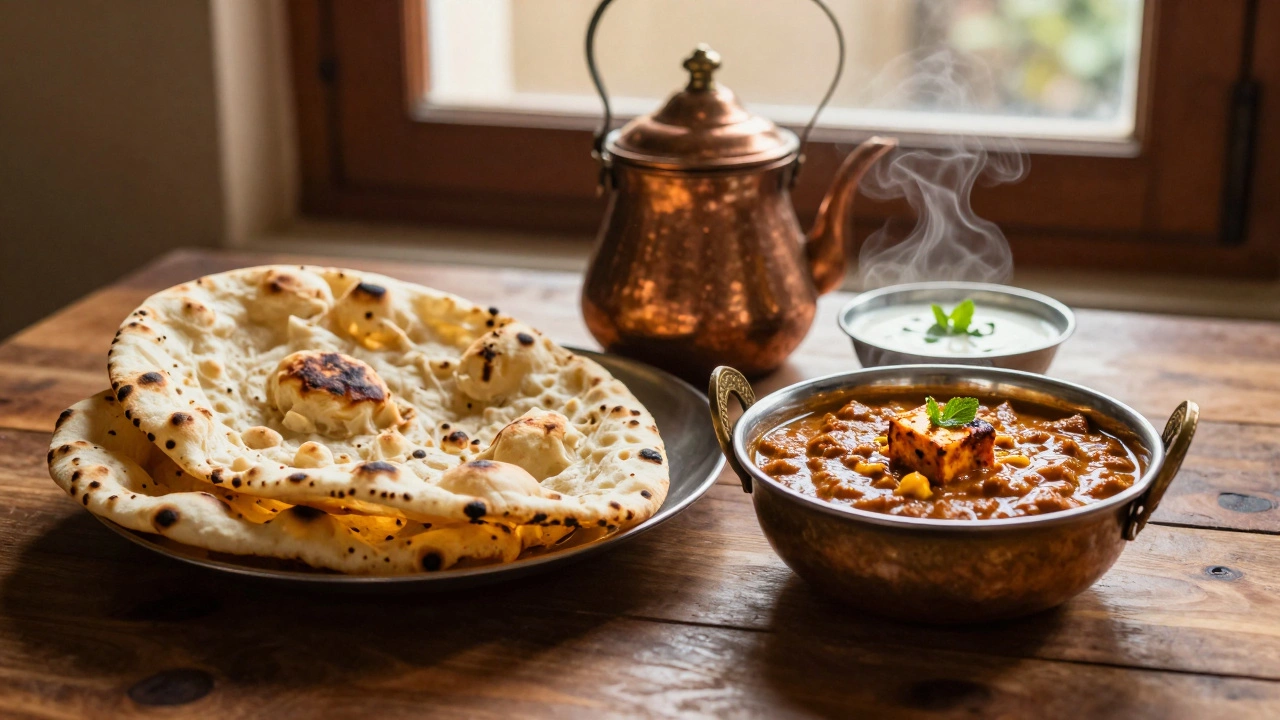
When you think of Indian food, what comes to mind? Is it creamy butter chicken and fluffy naan from the north? Or spicy dosas and coconut-based curries from the south? The debate between South Indian and North Indian food isn’t just about taste-it’s about history, geography, and daily life. Neither is ‘better.’ But if you’re trying to decide what to eat next, or why one region’s food feels so different from the other, here’s what actually matters.
Climate Shapes the Plate
The difference starts before the spices even touch the pan. North India has colder winters and drier summers. That means people there rely on wheat, dairy, and slow-cooked meats to stay warm. Rice isn’t the star-it’s an occasional side. In South India, the heat and humidity make rice the obvious choice. It digests faster, keeps you cool, and grows easily in the wet soil along the coasts and rivers. You won’t find a single household in Tamil Nadu or Kerala that doesn’t serve rice at least twice a day.That’s why North Indian meals center around roti, paratha, or naan, often dipped in rich gravies made with ghee, cream, and yogurt. South Indian meals? A plate of rice, sambar, rasam, and a side of coconut chutney. The texture, the temperature, the rhythm-it’s all designed for the climate.
Spice Profiles Are Opposites
North Indian food uses spices like cumin, coriander, garam masala, and dried red chilies. The heat is deep and warming, often mellowed by cream, butter, or paneer. Think of a Rogan Josh or a Dal Makhani-rich, slow-simmered, and comforting. The flavors build slowly, layer by layer.South Indian food? It’s bright, sharp, and punchy. Curry leaves, mustard seeds, tamarind, green chilies, and asafoetida dominate. The heat hits fast-think of a spicy Vindaloo or a tangy Rasam. Coconut is everywhere: in chutneys, in curries, even in rice. It adds sweetness and texture that balances the fire. You won’t find garam masala in a traditional Kerala fish curry. You’ll find kokum, dried red chilies, and roasted coconut.
One is earthy and slow-burning. The other is citrusy and immediate. Neither is more authentic. They’re just responses to different environments.
Protein Choices Tell a Story
In North India, dairy and meat are central. Paneer is a protein staple. Butter chicken, kebabs, and lamb curries are weekend classics. Beef is avoided due to religious practices, but chicken, goat, and buffalo are common. The use of yogurt and cream in gravies isn’t just for flavor-it’s a way to preserve meat in times before refrigeration.South India? Fish is king along the coasts. In Kerala, you’ll eat karimeen (pearl spot fish) fried in turmeric and coconut oil. In Tamil Nadu, sardines and mackerel are cooked with tamarind and curry leaves. Lentils like toor dal and urad dal are more important than paneer. Vegetarianism is widespread, but not because of religion alone-it’s because rice and lentils are cheap, abundant, and nourishing.
North India’s protein culture is tied to Mughal influence and pastoral traditions. South India’s is tied to ancient Dravidian farming and fishing communities. One isn’t richer. One isn’t purer. They’re just different paths to the same goal: feeding people well.
Breakfast Isn’t Just a Meal-It’s a Ritual
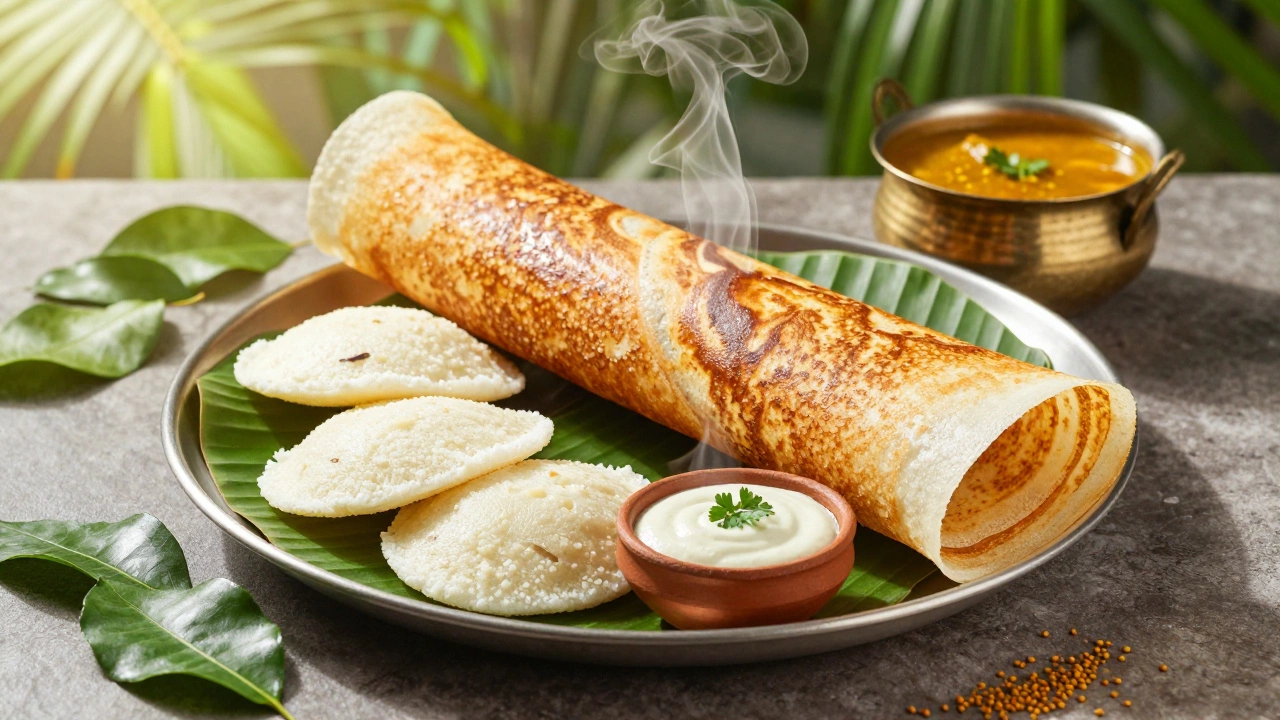
If you’ve ever had North Indian breakfast, you’ve probably had paratha with yogurt or a plate of aloo sabzi with bread. Simple. Filling. Often eaten with tea.Now try South Indian breakfast: a hot, crispy dosa with coconut chutney and sambar. Or idli steamed in banana leaves, served with the same. Or pongal, a savory rice-and-lentil porridge with black pepper and ghee. These aren’t snacks. They’re daily rituals that take hours to prepare. Fermentation is key-idli and dosa batter sits overnight. That’s not laziness. That’s science. Fermentation breaks down starches, makes nutrients more available, and gives that light, airy texture.
North Indian breakfasts are quick. South Indian ones are slow. One isn’t better. One just demands more time-and patience.
Street Food Tells You Who They Are
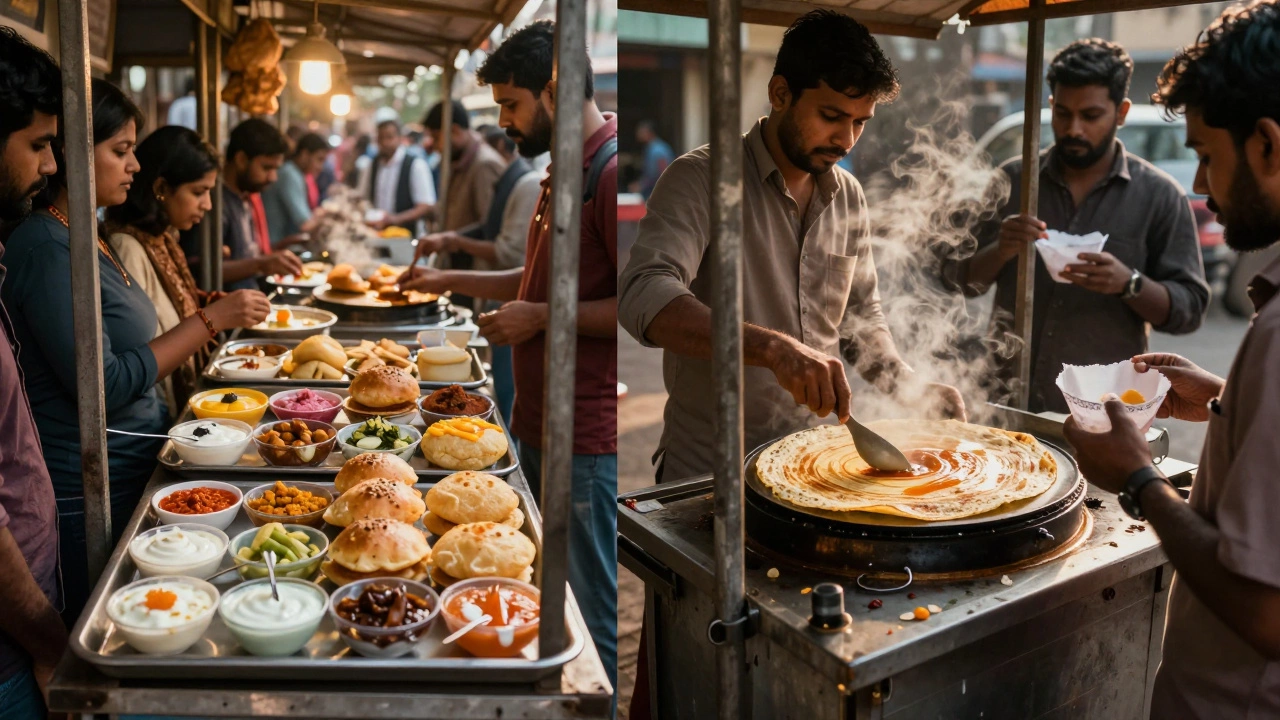
Walk through Delhi’s Chandni Chowk and you’ll find chaat-crispy puris topped with tamarind chutney, yogurt, potatoes, and chickpeas. It’s messy. It’s loud. It’s sweet, sour, spicy, and crunchy all at once.Walk through Chennai’s Mylapore or Bangalore’s MG Road and you’ll find vada pav-spicy lentil fritters in a bun-or masala dosa wrapped in paper. You’ll see people eating idli with sambar while standing at a tiny stall. No plates. No forks. Just hands and heat.
North Indian street food is bold and indulgent. South Indian street food is practical and balanced. One is designed for crowds and festivals. The other is designed for daily life.
What’s Actually Healthier?
People say South Indian food is healthier. And it’s true-fermented foods, rice-based meals, and less dairy can be lighter. But that doesn’t mean North Indian food is bad. Dal Makhani is packed with protein. Chana masala is fiber-rich. Even butter chicken has calcium from the cream and yogurt.South Indian meals often have more fiber from lentils and vegetables. Fermented foods like idli and dosa improve gut health. Coconut oil, while high in saturated fat, is medium-chain and metabolized differently than butter.
North Indian food can be heavy-but it’s also nutrient-dense. Paneer gives you calcium. Ghee is a traditional fat that, when used in moderation, supports digestion. The key isn’t which cuisine is ‘cleaner.’ It’s portion size and frequency. Eating dosa every day is fine. Eating butter chicken every day? That’s a different story.
It’s Not About Winning-It’s About Understanding
There’s no official winner. If you ask someone from Punjab, they’ll say their food is the most flavorful. Someone from Karnataka will say theirs is the most balanced. And both are right.What matters is context. If you’re in Delhi in January, you’ll crave a warm paratha with ghee. If you’re in Mysore in April, you’ll want a cool bowl of ragi mudde with spicy curd. The food adapts to the place, the season, the body’s needs.
Trying to pick one as ‘better’ misses the point. Indian cuisine isn’t a competition. It’s a conversation across regions. Each dish tells a story about land, climate, history, and community.
So next time you sit down to eat, don’t ask which is better. Ask: What does this dish say about the people who made it?
Is South Indian food spicier than North Indian food?
It depends on what you mean by ‘spicy.’ South Indian food often uses fresh green chilies, tamarind, and curry leaves, giving it a sharp, tangy heat that hits fast. North Indian food uses dried red chilies and garam masala, which create a deeper, slower-burning warmth. Neither is universally hotter-it’s just different kinds of heat.
Which cuisine is more vegetarian-friendly?
Both are deeply vegetarian, but South Indian cuisine has more plant-based staples. Rice, lentils, coconut, and vegetables form the core of most meals. North Indian food also has many vegetarian dishes like dal, paneer, and chana masala, but dairy and meat are more prominent in celebratory meals. For strict vegetarians, South Indian meals offer more variety without dairy.
Can you find North Indian food in South India and vice versa?
Yes, absolutely. Major cities like Bangalore, Hyderabad, and Chennai have dozens of North Indian restaurants. Similarly, you’ll find dosa joints in Delhi and Lucknow. Urbanization and migration have mixed the cuisines, but the authentic versions still reflect their regional roots. Don’t assume a ‘North Indian’ restaurant in Kerala serves the same food as one in Amritsar.
Which cuisine is better for weight loss?
South Indian meals tend to be lower in fat and calories because they use less cream, butter, and cheese. Rice, lentils, and vegetables are the base. But if you eat fried dosas or add too much coconut chutney, the calories add up. North Indian food can be high in fat, but dishes like dal, sabzi, and roti can be healthy if cooked without excess ghee. Portion control and cooking method matter more than region.
Why does North Indian food use so much dairy?
North India has a long tradition of cattle rearing, especially in Punjab and Rajasthan. Dairy was a way to preserve nutrition in dry, cold climates. Ghee, yogurt, and paneer are shelf-stable and calorie-dense-perfect for winters. Plus, Mughal cuisine introduced rich, creamy gravies as symbols of luxury. Over time, dairy became central to flavor and texture.
If you’re planning a trip across India, don’t just pick one cuisine to try. Eat both. Let your taste buds travel. The real journey isn’t in choosing a winner-it’s in tasting the difference.