Kerala Food Explorer & Matcher
Not sure what to order in Kerala? Answer a few questions below to find the perfect dish for your palate.
Why this choice?
Browse All Famous Dishes
You’ve landed in Kochi or maybe you’re chilling on the backwaters of Alleppey. The air smells like coconut oil and cardamom. You’re hungry. But when someone asks, "What is a famous food of Kerala?" the answer isn’t just one dish. It’s a whole vibe. Kerala food is distinct from its neighbors Tamil Nadu or Karnataka because it leans heavily into coconut, rice, and seafood, with a spice profile that warms rather than burns. If you only eat one thing here, you’ll miss the point. But if you know what to look for, you’ll understand why this state is often called "God's Own Country"-at least from a culinary perspective.
Let’s cut through the noise. There are hundreds of recipes, but five categories dominate the local diet and tourist menus alike. We’re talking about the ceremonial feast known as Sadya, the breakfast staple Appam and Stew, the coastal favorite Karimeen Pollichathu, the Muslim-influenced Malabar Biryani, and the ubiquitous street snack Banana Chips. Each tells a story about the region’s history, religion, and geography. Here’s how to navigate them without getting overwhelmed.
The Grand Feast: Understanding Sadya
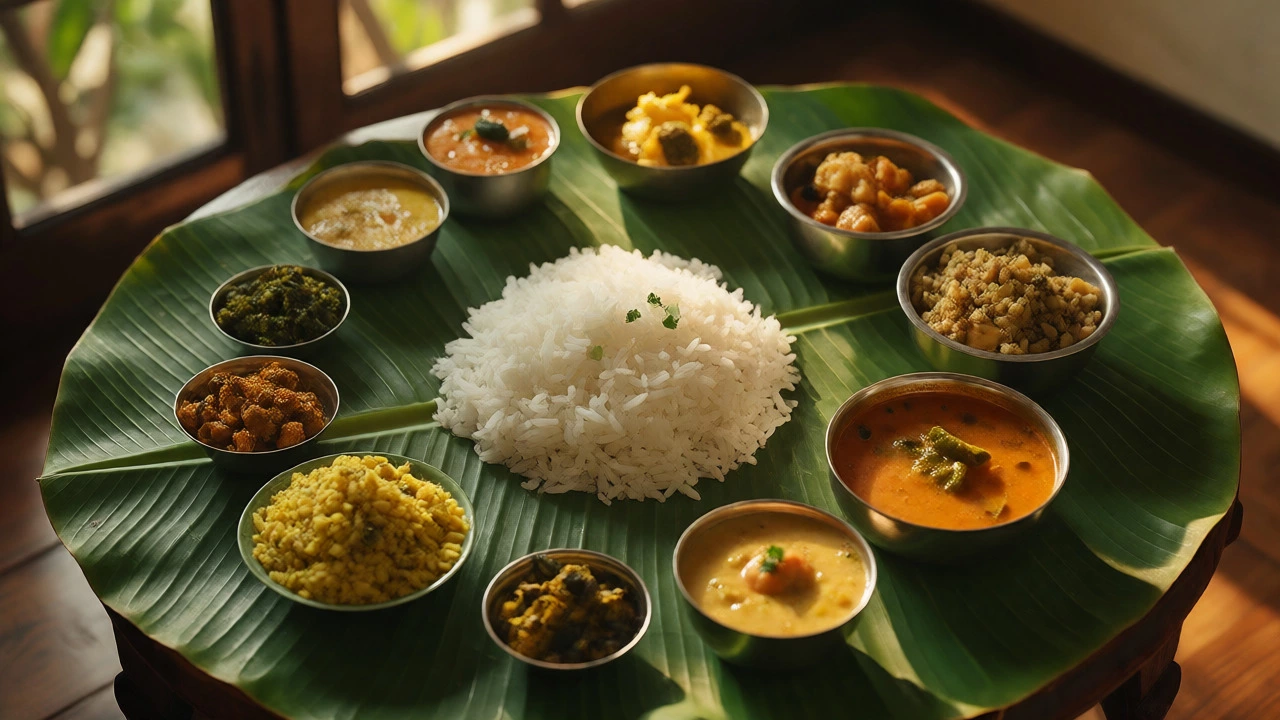
If you want the full experience, you have to try a Sadya. This isn’t just lunch; it’s a cultural event. Traditionally served during Onam (the harvest festival) or weddings, a Sadya is a vegetarian meal served on a banana leaf. Yes, the leaf is your plate. You sit on the floor, and servers place small mounds of rice in the center, then surround it with up to 26 different dishes.
The magic lies in the balance. You get sweet payasam (dessert), tangy pickles, creamy avial (mixed vegetables in coconut yogurt), and spicy sambar. The order matters. You start with the rice and mix it with specific curries based on taste preference. Don’t worry if you don’t know the names. Just ask the server to guide you. They usually enjoy explaining the components. Note: Authentic Sadya is strictly vegetarian and uses no onion or garlic in many traditional temples, relying instead on ginger and asafoetida for flavor depth.
Breakfast Done Right: Appam and Stew
Forget pancakes. In Kerala, breakfast is Appam. These are bowl-shaped pancakes made from fermented rice batter and coconut milk. They have crispy edges and a soft, spongy center. The secret ingredient? Yeast or toddy (fermented palm sap), which gives them their signature sourness and fluffiness.
Appam rarely goes alone. It’s paired with stew-a mild, aromatic curry made with chicken, beef, or vegetables, simmered in coconut milk and flavored with cinnamon, cloves, and green chilies. Unlike North Indian gravies, Kerala stews are light and soupy, perfect for dipping. If you’re vegan, ask for vegetable stew. It’s equally comforting. Locals eat this at dawn, so find a small family-run eatery early morning for the freshest batch.
Coastal Delicacies: Karimeen Pollichathu
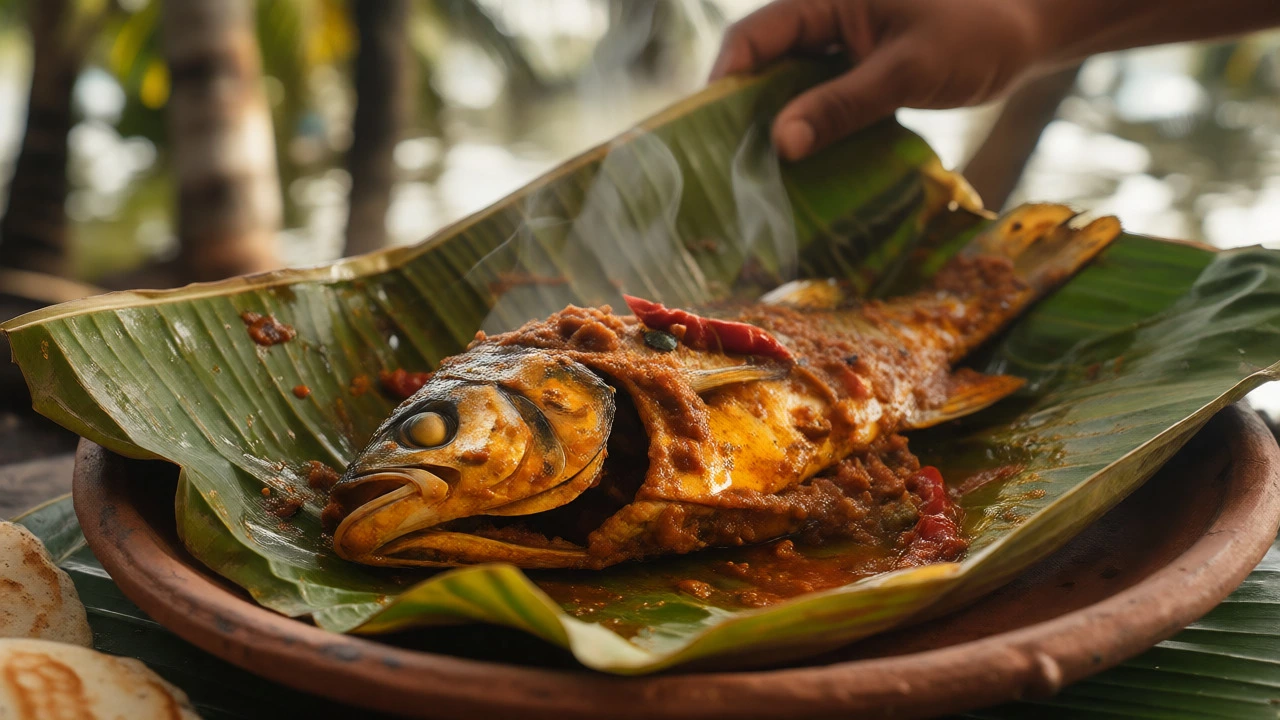
Kerala has a massive coastline, so fish isn’t optional-it’s essential. The star of the show is Karimeen Pollichathu. This dish features Pearl Spot Fish (Karimeen), a freshwater fish native to Kerala’s backwaters. The fish is marinated in a spicy masala paste, wrapped in a banana leaf, and grilled over low heat.
Why banana leaves? They impart a subtle smoky aroma and keep the fish moist. When you open the packet at the table, the steam hits you with notes of turmeric, chili, and fenugreek. The flesh flakes apart easily. Pair this with steamed rice or neer dosa (thin rice crepe). If you’re allergic to shellfish but love seafood, this is your safest and most delicious bet. Avoid restaurants that fry it deeply; grilling preserves the natural sweetness of the fish.
Spice Route Legacy: Malabar Biryani
Move north to the Malabar Coast, and the cuisine shifts. Here, Arab traders influenced local cooking centuries ago, resulting in Malabar Biryani. Unlike the dry Hyderabadi biryani, Malabar versions use short-grain seeraga samba rice, which is fragrant and sticky. The meat (usually chicken or mutton) is cooked separately with dried plums (alu bukhara) and fried onions before being layered with rice.
It’s served with a side of salad and raita. The spice level is moderate, but the aroma is intense. Look for places using wood-fired ovens (tandoors) for authentic char. Vegetarians can find egg or paneer versions, though purists argue the meat version is superior. Tip: Order it with a side of nadan katti (local black pepper) powder if you want extra kick.
Snacks and Street Food: Banana Chips and Pazham Pori
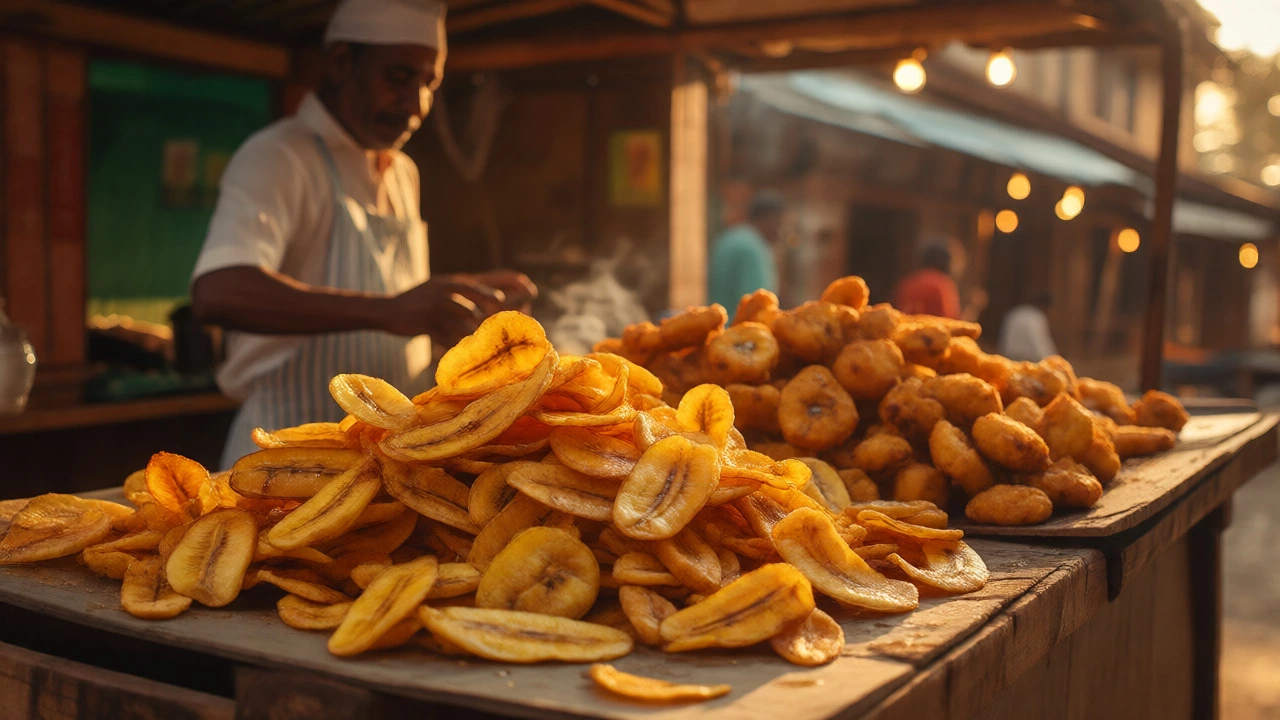
You can’t leave Kerala without grabbing snacks. Banana Chips are everywhere. Made from raw nendran bananas sliced thin and fried in coconut oil, they’re salty, crunchy, and addictive. Buy them loose from local shops rather than sealed packets for better freshness.
For something sweet, try Pazham Pori-ripe plantains dipped in batter and deep-fried. They’re often sold by roadside vendors near bus stands. Eat them hot with tea. Another must-try is Puttu and Kadala Curry, a cylindrical steamed rice cake served with black chickpea curry. It’s heavy, filling, and beloved by laborers and tourists alike.
| Dish Name | Main Ingredient | Flavor Profile | Best Time to Eat |
|---|---|---|---|
| Sadya | Rice, Vegetables, Coconut | Balanced, Mild to Spicy | Lunch (Festivals/Weddings) |
| Appam & Stew | Fermented Rice Batter, Chicken/Veg | Mild, Aromatic, Sour Notes | Breakfast/Dinner |
| Karimeen Pollichathu | Pearl Spot Fish, Masala | Spicy, Smoky, Tangy | Lunch/Dinner |
| Malabar Biryani | Seeraga Samba Rice, Meat | Aromatic, Rich, Moderate Spice | Lunch/Dinner |
| Pazham Pori | Ripe Plantain, Sugar | Sweet, Soft Interior | Evening Snack |
Practical Tips for Eating Like a Local
Eating in Kerala is easy, but a few rules help you avoid discomfort. First, hygiene varies. Stick to busy local spots where turnover is high. Second, spice tolerance differs. Kerala spices are warm, not necessarily hot like Andhra food. If you say "no spice," they might still add mild heat. Ask for "less masala" if you’re sensitive.
Water safety is key. Drink bottled water unless you trust the source. Coconut water (tender coconut) is safe and refreshing, available almost everywhere for under ₹50. Also, respect the banana leaf etiquette. Do not waste food. Leaving leftovers on the leaf is considered disrespectful in traditional settings.
Finally, timing matters. Lunch is the main meal, served between 12 PM and 2 PM. Dinner starts late, around 8 PM. If you arrive at a restaurant at 4 PM, options may be limited to snacks. Plan accordingly.
Is Kerala food very spicy?
Kerala food uses plenty of spices like black pepper, cardamom, and cinnamon, which create warmth and aroma rather than sharp heat. While some dishes like fish curries can be spicy, most meals, especially those with coconut milk bases like stews and avials, are mild and palatable for international travelers. You can always request less masala.
Can vegetarians easily find food in Kerala?
Yes, absolutely. Kerala has a strong vegetarian culture, particularly among Nair communities and in temple towns. Dishes like Sadya, Avial, Sambar, and Vegetable Stew are entirely vegetarian. Many restaurants offer dedicated vegetarian sections. However, note that some traditional recipes use ghee (clarified butter), so inform staff if you are vegan.
What is the difference between North Indian and Kerala food?
North Indian cuisine relies heavily on wheat (roti/naan), dairy (cream/butter), and dry spice mixes. Kerala cuisine centers on rice, coconut (milk/oil/grated), and fresh seafood. Flavors in Kerala are more aromatic due to the historical spice trade influence, whereas North Indian flavors are often richer and creamier. Kerala also uses fermented batters (like idli/dosa/appam) more frequently.
Where is the best place to try authentic Sadya?
While hotels serve Sadya daily, the most authentic experience is at a local community hall during festivals or at dedicated vegetarian restaurants in Thiruvananthapuram or Thrissur. Look for places serving it on banana leaves with unlimited refills. Some heritage homes also offer homestay dining experiences featuring home-cooked Sadya.
Are banana chips healthy?
Banana chips are high in potassium and fiber since they are made from raw bananas. However, they are deep-fried in coconut oil, making them calorie-dense. In moderation, they are a good source of energy. Choose ones fried in pure coconut oil rather than refined palm oil for better health benefits.