Eco Wellness Resort Knowledge Quiz
1. What is the primary difference between a standard "Green Hotel" and an "Eco Wellness Resort"?
2. Which of the following is a key characteristic of authentic eco wellness dining?
3. How can travelers best verify if a resort is genuinely eco-friendly and not just "greenwashing"?
4. Why might an eco wellness resort be beneficial for someone with allergies or respiratory issues?
You’re scrolling through booking sites, hunting for a break from the city grind. You see terms like "green," "sustainable," and "wellness" thrown around so often they’ve lost their meaning. But then you spot it: eco wellness resort. It sounds promising, but what does it actually mean? Is it just a fancy label for a hotel with a few potted plants in the lobby? Or is there something deeper going on behind the scenes?
Here’s the truth: not all green hotels are created equal. An eco wellness resort isn’t just about saving water or using bamboo toothbrushes. It’s a specific type of accommodation that merges two powerful concepts: environmental responsibility and personal well-being. If you’re looking to recharge without feeling guilty about your carbon footprint, understanding this distinction is crucial. Let’s break down exactly what makes these places tick, how they differ from standard hotels, and why they might be the smartest choice for your next getaway.
The Core Definition: Where Ecology Meets Well-Being
To understand an eco wellness resort, you first need to look at its two parent concepts: ecotourism and wellness tourism. Ecotourism focuses on responsible travel to natural areas that conserves the environment and improves the well-being of local people. Wellness tourism, on the other hand, is travel associated with the pursuit of maintaining or enhancing one’s personal well-being. When you combine them, you get a hybrid model designed to heal both the planet and the person.
Think of it this way. A regular hotel asks, "How can we make you comfortable while maximizing profit?" An eco wellness resort asks, "How can we make you feel better while ensuring this land stays healthy for the next hundred years?" This shift in question changes everything-from the materials used in construction to the food served at breakfast.
These resorts operate on a principle of reciprocity. You pay for a high-quality experience, and in return, your stay directly funds conservation efforts and community development. It’s not charity; it’s a symbiotic business model. For example, many such resorts use revenue from spa treatments to fund reforestation projects in the surrounding area. Your massage literally helps plant trees.
Key Characteristics That Define the Experience
So, how do you spot a genuine eco wellness resort versus one that’s just doing some light "greenwashing"? Look for these concrete attributes. These aren’t vague promises; they are measurable practices that define the category.
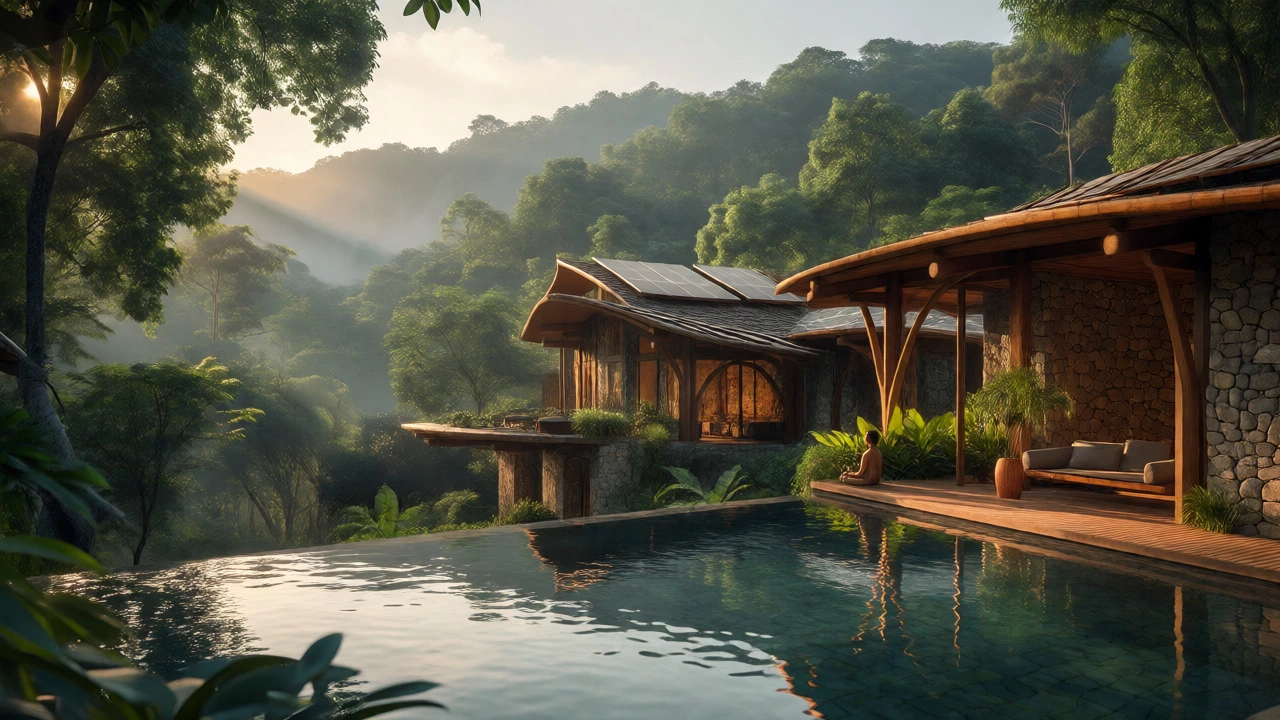
- Architectural Integration: The buildings shouldn’t dominate the landscape. Instead, they should blend into it. Think solar panels disguised as roof tiles, rainwater harvesting systems built into the structure, and locally sourced stone or timber. The goal is minimal visual and physical impact on the ecosystem.
- Energy Independence: Many top-tier eco resorts generate their own power. They might use solar arrays, wind turbines, or micro-hydroelectric generators. Some even achieve net-zero energy status, meaning they produce as much energy as they consume.
- Hyper-Local Sourcing: Food miles matter here. An authentic eco wellness resort often has an on-site organic garden or partners closely with nearby farms. You’ll eat seasonal produce grown within a few kilometers of your plate. This reduces transportation emissions and supports the local agricultural economy.
- Water Stewardship: Water is precious. These properties typically employ greywater recycling systems (using sink/shower water for irrigation) and low-flow fixtures. In drought-prone areas, this is non-negotiable.
- Wellness Programming: Unlike a standard spa that just sells massages, the wellness activities here connect you to nature. Yoga sessions happen outdoors, meditation guides teach mindfulness rooted in local traditions, and fitness classes might involve hiking trails maintained by the resort.
Notice the pattern? Every feature serves two purposes: reducing environmental harm and enhancing guest health. There’s no waste, no disconnect between the indoor luxury and the outdoor reality.
Eco Wellness Resorts vs. Standard Green Hotels
It’s easy to confuse an eco wellness resort with a "green hotel." Both care about the environment, but their primary focus differs significantly. A green hotel might switch to LED lights and stop offering daily towel changes to save money and energy. That’s great, but it doesn’t necessarily improve your mental or physical health during the stay.
An eco wellness resort goes further. It integrates sustainability into the core guest experience. Here’s a quick comparison to clarify the differences.
| Feature | Standard Green Hotel | Eco Wellness Resort |
|---|---|---|
| Primary Goal | Reduce operational costs and environmental impact. | Enhance guest well-being through sustainable practices. |
| Dining | Might offer vegetarian options; sourcing varies. | Farm-to-table, organic, often medicinal/herbal focus. |
| Activities | Standard gym, pool, maybe a tour desk. | Nature immersion, guided mindfulness, ecological workshops. |
| Community Impact | Hires locals; may donate to charities. | Active partnership with indigenous/local communities; cultural education included. |
| Design Philosophy | Efficient; uses recycled materials where possible. | Biophilic design; brings nature indoors to reduce stress. |
If you’re just trying to sleep somewhere with less plastic, a green hotel works fine. But if you want to leave feeling mentally clearer and physically healthier, knowing that your presence helped preserve the local ecosystem, you need the full eco wellness package.

The Hidden Benefits for Your Health and Mind
Why bother with the extra effort to find these places? Because the benefits go beyond guilt-free vacations. Research in environmental psychology suggests that exposure to natural environments lowers cortisol levels (the stress hormone) more effectively than urban parks. Eco wellness resorts maximize this effect by placing you directly inside thriving ecosystems, not just near them.
Consider the air quality. Many conventional hotels rely heavily on chemical cleaning products and synthetic fragrances. Eco resorts often use plant-based cleaners and essential oils. For someone with allergies or asthma, this difference alone can transform a vacation from exhausting to restorative.
Then there’s the food. Eating hyper-local, organic meals reduces your intake of preservatives and pesticides. Many eco wellness resorts also incorporate Ayurveda, Traditional Chinese Medicine, or other holistic dietary principles into their menus. You’re not just eating lunch; you’re fueling your body with nutrient-dense ingredients that haven’t traveled across oceans to reach your fork.
Furthermore, the digital detox aspect is real. While Wi-Fi exists, many eco resorts encourage disconnection. They might have limited signal in certain zones or offer "digital sabbath" packages. This forced pause allows your brain to reset, improving sleep quality and cognitive function long after you’ve returned home.
Common Pitfalls: Spotting Greenwashing
Not every property claiming to be "eco" is legitimate. Greenwashing-marketing yourself as environmentally friendly when you’re barely making an effort-is rampant. How can you tell if a resort is truly walking the talk?
Ask specific questions before you book. Don’t settle for "We recycle." Ask, "Where does our recycling go? Do you compost food waste?" Vague answers are red flags. Genuine resorts have clear data on their waste diversion rates. They might say, "We divert 85% of waste from landfill through composting and partnerships with local recyclers." That’s specific. That’s verifiable.
Check for third-party certifications. Labels like LEED (Leadership in Energy and Environmental Design), EarthCheck, or Green Key provide independent verification. However, don’t rely solely on logos. Look at their annual sustainability report. Most serious eco wellness resorts publish one. If they can’t show you numbers on water usage, energy consumption, or community spending, they’re likely prioritizing marketing over mission.
Also, examine the supply chain. Does the resort sell imported bottled water? That’s a huge contradiction in an eco-resort. They should offer filtered tap water in reusable glass bottles. Are the toiletries in tiny plastic sachets? Or are they bulk dispensers made from biodegradable materials? These small details reveal the true operational culture.

Choosing the Right Destination for Your Needs
Once you decide to try an eco wellness resort, where should you go? The best location depends on what kind of restoration you need.
- For Deep Relaxation: Look for tropical islands or coastal areas with marine conservation programs. Snorkeling in protected reefs and listening to ocean waves provides profound sensory calming. Places like Bali or the Maldives have strong examples of this model.
- For Mental Clarity: Mountain retreats are ideal. The cooler air and quiet forests help sharpen focus. Destinations in Costa Rica, Switzerland, or New Zealand often excel here, combining hiking with mindfulness training.
- Cultural Immersion: If you want to learn, choose resorts integrated with indigenous communities. In parts of India, Peru, or Australia, you can stay in properties that actively preserve local crafts and languages. Your stay becomes an educational exchange rather than just a transaction.
Remember, the "best" resort is subjective. Read recent reviews specifically mentioning sustainability. Did guests notice the staff explaining local ecology? Were the meals genuinely fresh? Real-world feedback cuts through the marketing fluff.
Final Thoughts: Traveling with Intent
An eco wellness resort isn’t a trend; it’s a response to a world that needs healing. By choosing these accommodations, you vote with your wallet for a travel industry that respects boundaries-both human and planetary. You’re not just buying a room; you’re investing in a system that values balance.
Next time you plan a trip, skip the generic search filters. Dig deeper. Look for the stories behind the sustainability claims. Find the place where your relaxation fuels regeneration. It’s a richer, more meaningful way to travel, and frankly, you’ll probably sleep better too.
Are eco wellness resorts more expensive than regular hotels?
Often, yes, but not always. The initial construction and maintenance of sustainable systems can cost more, which may reflect in nightly rates. However, many mid-range eco resorts compete on price by reducing operational costs through energy efficiency and local sourcing. Plus, you often get added value like included meals, activities, or transfers, which can offset the higher sticker price compared to a budget hotel that charges extra for everything.
Do I need to give up luxury in an eco wellness resort?
Absolutely not. In fact, many eco wellness resorts are ultra-luxury. The definition of luxury has shifted from gold-plated faucets to exclusive access to pristine nature, personalized service, and high-quality organic amenities. True luxury today is about space, silence, and sustainability, not just excess material goods.
How can I verify if a resort is truly eco-friendly?
Look for credible third-party certifications like EarthCheck, LEED, or Green Key. Check their website for a sustainability report with specific metrics on energy, water, and waste. Also, read recent guest reviews focusing on cleanliness, food quality, and staff knowledge about local ecology. If the staff can explain where the food comes from or how they treat wastewater, it’s a good sign.
Is eco wellness travel suitable for families with children?
Yes, increasingly so. Many eco resorts now offer family-friendly programming that teaches kids about nature conservation through play. Activities like tree planting, wildlife spotting, and farm visits engage children while educating them. Just check if the resort has appropriate facilities for kids, such as pools, safe beaches, or childcare services, as some adult-only retreats might not accommodate younger travelers.
What is the difference between ecotourism and eco wellness tourism?
Ecotourism primarily focuses on observing nature and minimizing impact. Eco wellness tourism adds a layer of active self-care and health improvement. While an ecotourist might hike to see birds, an eco wellness tourist hikes to improve cardiovascular health and practice mindfulness, with the added benefit that their fees support the habitat those birds live in.