Indian Cuisine Explorer
Discover the perfect Indian dish for your taste. Select a region below to explore its signature flavors.
North
Rich & CreamySouth
Tangy & SpicyWest
Bold & NuttyEast
Subtle & EarthySelect a Dish
When people ask what is the famous food in India, they usually expect a single answer like "curry" or "naan." But that’s like saying American food is just "burgers." Indian cuisine is a vast, complex tapestry of flavors that changes dramatically every few hundred kilometers. The spices, cooking methods, and staple ingredients shift depending on whether you are in the humid south, the arid west, or the lush northeast. If you are planning a trip or just curious about this culinary giant, you need to look beyond the stereotypes. Real Indian food is defined by its regional diversity, not a monolithic style.
The North: Rich, Creamy, and Hearty
If you head to North India, particularly states like Punjab, Uttar Pradesh, and Rajasthan, the food is heavy, comforting, and often dairy-rich. This region has a history of royal kitchens (Mughlai influence), which means you will find lots of ghee (clarified butter), cream, and nuts.
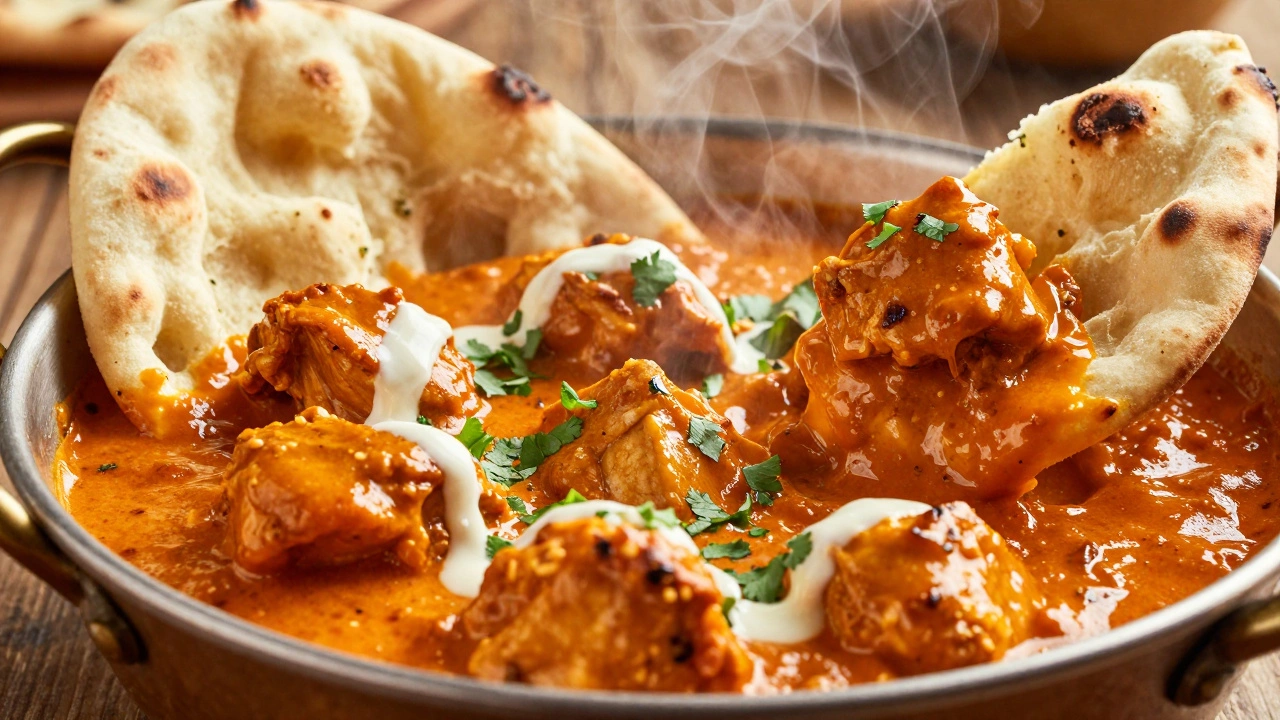
The undisputed king here is Butter Chicken. It is a tender chicken dish cooked in a vibrant orange sauce made from tomatoes, butter, cream, and a blend of spices like garam masala and fenugreek. It’s mild, creamy, and practically designed to be dipped into warm Naan bread. Naan itself is a leavened flatbread baked in a clay oven called a tandoor. The charred spots on the outside contrast with the soft, pillowy interior.
Another staple is Dal Makhani. This is a slow-cooked black lentil dish simmered for hours with butter and cream. It originated in the hotels of Punjab as a way to use leftover dal, but it has become a luxury comfort food nationwide. For vegetarians, Paneer Tikka is essential. Paneer is a fresh, non-melting cottage cheese that is marinated in yogurt and spices, then grilled until slightly crispy. It serves as a protein-rich base for many curries and street snacks.
- Key Ingredients: Wheat flour, ghee, paneer, lentils, yogurt.
- Flavor Profile: Rich, creamy, mildly spiced, aromatic.
- Must-Try Dish: Butter Chicken with Garlic Naan.
The South: Tangy, Spicy, and Rice-Based
Cross the Vindhya Range into South India (states like Tamil Nadu, Kerala, Karnataka, and Andhra Pradesh), and the menu flips. Here, rice is the primary staple, not wheat. The climate is tropical, so the food relies heavily on coconut, tamarind, curry leaves, and fresh chilies. The heat is sharper and more immediate than in the north.
You cannot talk about southern food without mentioning Dosa. This is a thin, crispy crepe made from fermented batter of rice and urad dal (black gram lentils). The fermentation gives it a slight tanginess and makes it easier to digest. It is usually served with Sambar, a lentil-based vegetable stew flavored with tamarind and asafoetida, and Coconut Chutney. The combination of hot, spicy sambar and cool, nutty chutney with the crispy dosa is a breakfast legend.
In Kerala, the spice trade history shines through in dishes like Appam, a bowl-shaped rice pancake with lacy edges, often served with stew or egg curry. Further east in Andhra Pradesh, the food is notoriously spicy. Biryani is also huge here, though it differs from the Hyderabadi version. Southern biryanis often use short-grain seeraga samba rice and feature distinct layering techniques with fried onions and saffron.
- Key Ingredients: Rice, coconut, tamarind, curry leaves, mustard seeds.
- Flavor Profile: Tangy, spicy, herbal, light yet intense.
- Must-Try Dish: Masala Dosa with Sambar and Chutney.
The West: Bold, Dry, and Nutty
West India, specifically Gujarat, Maharashtra, and Goa, offers a unique twist. Gujarat is known for its sweet-and-sour vegetarian cuisine, while Maharashtra brings us the famous street food culture of Mumbai. Goa, with its Portuguese colonial past, introduces pork and vinegar into the mix.
The most iconic street food from Mumbai is Vada Pav. Think of it as India’s first fast-food burger. It consists of a spicy potato fritter (vada) placed inside a soft bread roll (pav), served with a green chili chutney and garlic chutney. It is cheap, filling, and incredibly popular among locals. Another Maharashtrian favorite is Pav Bhaji, where mashed vegetables are cooked in butter and spices, served with toasted bread rolls.
In Gujarat, meals often include a balance of six tastes: sweet, sour, salty, bitter, pungent, and astringent. You might try Thepla, a whole-wheat flatbread stuffed with fenugreek leaves, or various types of dhokla, a steamed savory cake made from fermented chickpea or rice batter.
- Key Ingredients: Jowar (sorghum), peanuts, kokum (for sourness), vinegar (in Goa).
- Flavor Profile: Sweet-sour balance, dry textures, bold spices.
- Must-Try Dish: Vada Pav with Green Chutney.
The East: Fish, Rice, and Fermented Flavors
East India, including West Bengal, Odisha, and Bihar, is dominated by the Ganges delta. Fish is a daily staple, especially in Bengal, where it is considered sacred. The food here is less oily and focuses on subtle spices and natural sweetness.
Fish Curry is the heart of Bengali cuisine. Unlike northern curries that use thick tomato bases, eastern fish curries often use turmeric, mustard paste, and poppy seeds for texture and flavor. Rogan Josh is also found here, though it originates from Kashmir; in the east, it takes on a lighter, more aromatic form. Another delicacy is Shorshe Ilish, which is hilsa fish cooked in a pungent mustard gravy. It is a festive dish that showcases the region’s love for river fish.
For sweets, this region is home to Rosogolla, soft spongy balls of chenna (cottage cheese) soaked in sugar syrup. They are best eaten fresh from Kolkata’s famous sweet shops. In Odisha, Chenna Poda is a burnt cheesecake dessert that is caramelized and dense.
- Key Ingredients: River fish, mustard oil, panch phoron (five-spice blend), jaggery.
- Flavor Profile: Subtle, earthy, mustardy, sweet endings.
- Must-Try Dish: Shorshe Ilish (Hilsa Fish in Mustard Gravy).
Street Food: The Soul of Indian Eating
No discussion on famous Indian food is complete without addressing street food. It is affordable, diverse, and deeply cultural. While hygiene can be a concern for tourists, sticking to busy stalls with high turnover ensures safety.
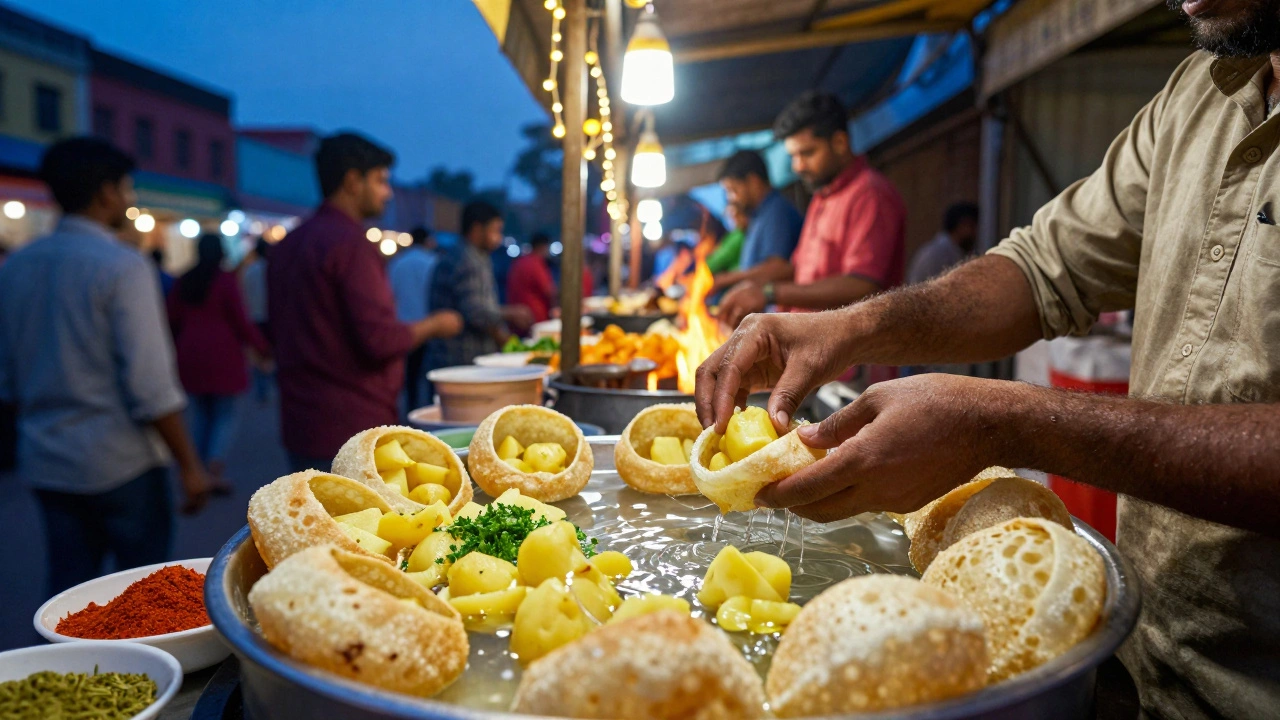
Beyond Vada Pav, Chaat is a category of snack foods that are crunchy, spicy, and tangy. Pani Puri (also known as Golgappa) is perhaps the most famous. It involves hollow, crisp puris filled with spiced potato, chickpeas, and tamarind water. You eat the entire thing in one bite. The explosion of flavors-sour, spicy, sweet, and savory-is addictive. In Delhi, Chole Bhature is a weekend ritual: spicy chickpea curry served with large, fluffy fried bread.
| Dish Name | Region of Origin | Main Ingredients | Taste Profile |
|---|---|---|---|
| Pani Puri | North/West India | Crispy puri, spiced water, potatoes | Tangy, Spicy, Crunchy |
| Vada Pav | Maharashtra | Potato fritter, bread, chutneys | Spicy, Savory, Comforting |
| Pav Bhaji | Mumbai | Mashed veggies, butter, bread | Rich, Butterly, Spicy |
| Samosa | All India | Fried pastry, potato/peas filling | Crispy, Salty, Herby |
Vegetarian vs. Non-Vegetarian Choices
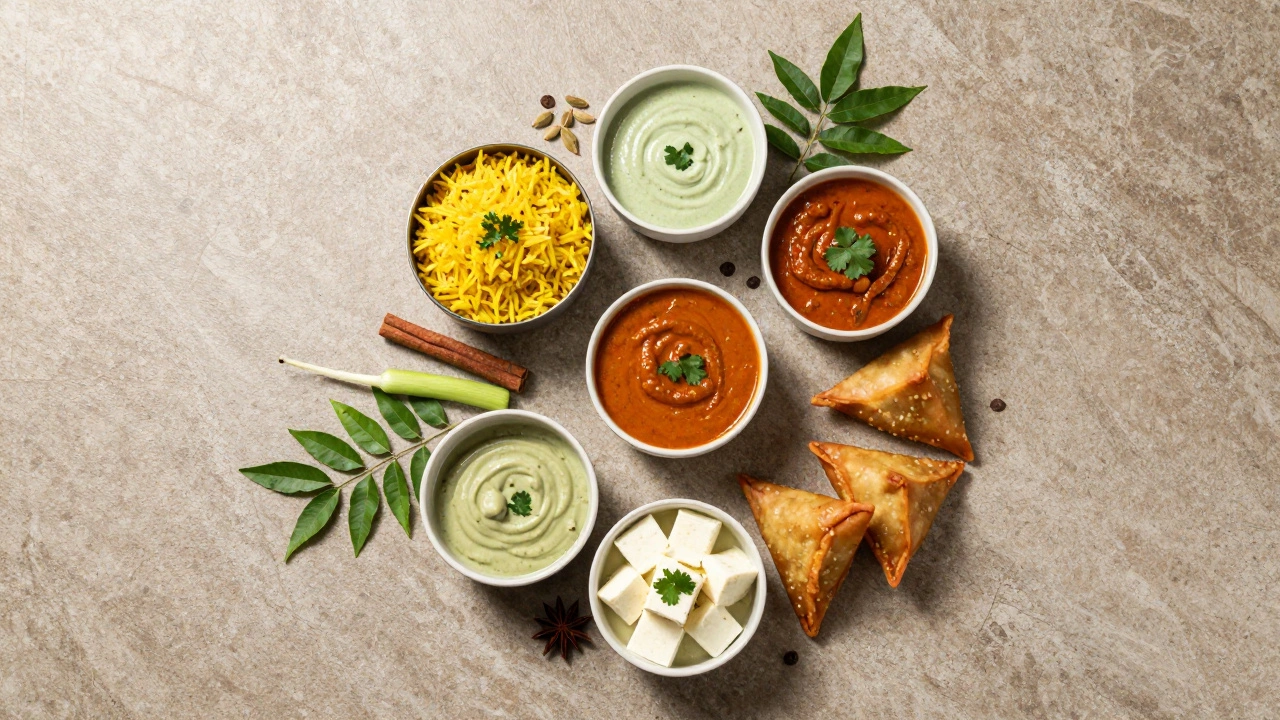
India has the largest population of voluntary vegetarians in the world. About 40% of Indians do not eat meat, largely due to religious beliefs (Hinduism, Jainism, Buddhism) and cultural traditions. This means vegetarian food in India is not an afterthought; it is sophisticated, varied, and central to the cuisine.
Non-vegetarian options vary by region. Beef is rarely consumed due to the sacred status of cows in Hinduism. Pork is common in the Northeast and Goa but less so in the rest of the country. Mutton (goat/lamb) and chicken are widely available. Seafood dominates the coastal regions. When dining out, always check for the green dot (vegetarian) or brown triangle (non-vegetarian) symbol on menus, as required by Indian law.
How to Eat Like a Local
Eating with your hands is traditional in many parts of India, especially in the south and east. Use only your right hand. The warmth of your hand helps mix the spices with the rice or roti, enhancing the flavor experience. However, in urban restaurants or when eating messy street food, utensils are perfectly acceptable.
Water consumption is crucial. Tap water is not safe to drink; always stick to bottled or filtered water. Also, start with milder spices if you are new to Indian food. The heat level can escalate quickly, and not all Indian restaurants cater to international palates.
What is the most famous dish in India?
While there is no single dish, Butter Chicken and Biryani are globally recognized as the most famous. Butter Chicken represents the rich, creamy north, while Biryani showcases the aromatic rice cultures of Hyderabad and Lucknow. For street food, Pani Puri is arguably the most iconic.
Is Indian food too spicy for foreigners?
Not necessarily. Indian cuisine has a wide spectrum of heat levels. Northern dishes like Butter Chicken or Korma are mild and creamy. Southern and Eastern dishes tend to be spicier. You can always ask for "mild" or "medium" spice when ordering, and raita (yogurt sauce) helps cool down the palate.
What should I try if I am vegetarian?
India is a paradise for vegetarians. Try Paneer Tikka, Dal Makhani, Masala Dosa, and Samosas. Many Indian households cook elaborate multi-course vegetarian meals that include lentils, vegetables, grains, and desserts.
Where can I find the best street food in India?
Mumbai is the street food capital, offering Vada Pav and Pav Bhaji. Delhi is famous for Chole Bhature and Kebabs. Chennai offers excellent Dosas, and Kolkata is known for its unique fusion snacks like Kathi Rolls. Always choose stalls with high customer turnover to ensure freshness.
What drinks go well with Indian food?
Lassi, a yogurt-based drink, is perfect for cooling down spicy meals. Mango Lassi is sweet and refreshing. For tea lovers, Chai (spiced milk tea) is a cultural staple. In the south, Filter Coffee is strong and sweet, often served in steel tumblers.