Skydiving Safety & Risk Calculator
Personal Safety Score
Answer these questions to see how your choices affect your safety profile.
Activity Risk Comparison
Fatality rates per million participants/events. Lower is safer.
Safety Rating
Your Risk Assessment
Recommended Actions:
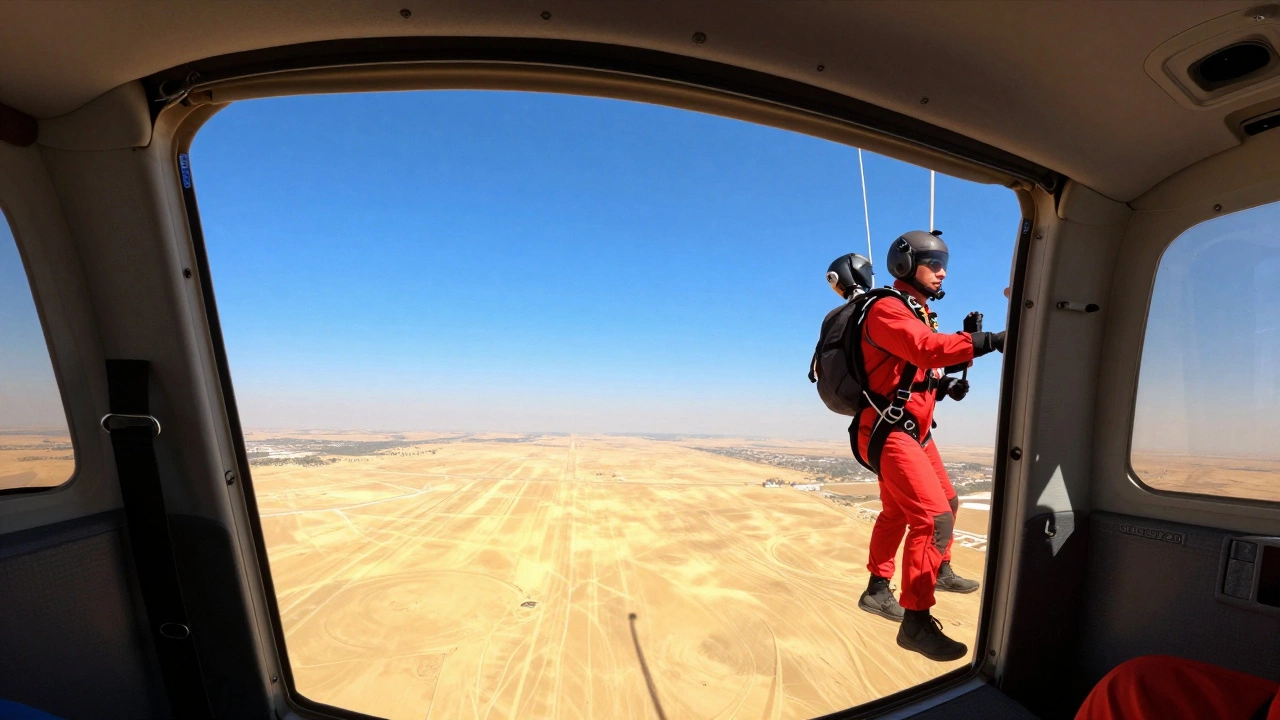
Jumping out of a perfectly good airplane at 10,000 feet sounds like a recipe for disaster. It’s the kind of thing that makes your stomach drop just thinking about it. But here is the reality check you probably didn’t expect: skydiving is statistically safer than driving to the grocery store. When people ask, "What is the fatality rate of skydiving?", they are usually bracing for a horror story. The data, however, tells a much calmer tale.
For travelers looking into adventure sports in India, understanding these numbers isn't just about trivia; it's about managing fear and making informed choices. Whether you are planning a jump over the beaches of Goa or the hills of Rajasthan, knowing the actual risk helps separate hype from hazard. Let’s break down the real numbers, why accidents happen, and how you can stay safe when you take the leap.
The Real Numbers Behind the Jump
To understand the risk, we have to look at where the data comes from. The most reliable statistics come from the United States Parachute Association (USPA). They track every incident in the U.S., which serves as a global benchmark for safety standards. According to recent annual reports, the fatality rate hovers around 0.005% per jump. To put that in perspective, you are roughly 30 times more likely to die in a car accident on your way to the drop zone than you are during the jump itself.
In absolute terms, this means there is approximately one fatality for every 100,000 to 150,000 jumps. If you were to jump once a day, it would take you centuries to statistically encounter a fatal event. For a first-time jumper doing a single tandem experience, the odds are overwhelmingly in your favor. The human brain is wired to remember the dramatic crashes seen on social media while ignoring the millions of successful landings. This cognitive bias makes the sport seem far deadlier than it actually is.
| Activity | Fatality Rate (per million participants/events) | Primary Risk Factor |
|---|---|---|
| Skydiving (Tandem) | ~0.5 - 1 | Equipment failure (rare) / Human error |
| Driving to Drop Zone | ~10-15 | Vehicle collision |
| Bungee Jumping | ~1-2 | Anchoring errors |
| Hiking/Trekking | ~1-3 | Falls, weather, wildlife |
Why Do Accidents Happen?
If the equipment is so safe, why do fatalities still occur? The answer almost always points to human behavior rather than mechanical failure. Modern parachutes are incredibly robust. The main canopy might fail to open properly due to a packing error or entanglement, but that is exactly what the reserve parachute is for. Fatalities typically happen when a reserve is not deployed, or when two canopies tangle together in a way that cannot be resolved.
For student jumpers and tandems, the biggest risks are often related to lack of experience or poor decision-making by instructors. In the broader skydiving community, collisions between experienced jumpers in freefall account for a significant portion of serious incidents. These are rare for beginners because you are attached to an instructor who manages the altitude and separation. However, it highlights that the sport requires strict adherence to protocols. Weather conditions also play a massive role. High winds, low clouds, or sudden storms can turn a routine jump into a hazardous situation if operators ignore safety limits.
Skydiving Safety in India
India has emerged as a popular destination for adrenaline seekers, with hotspots in Goa, Rajasthan, and parts of Kerala. While global standards exist, the regulatory landscape in India is less centralized than in countries like the U.S. or Australia. This means the burden of due diligence falls heavily on you, the traveler.
Most reputable operators in India partner with international brands or employ instructors certified by the USPA or the British Parachute Association (BPA). When researching providers, look for these certifications explicitly. A local company without international accreditation may cut corners on equipment maintenance or instructor training hours. The heat and humidity in many Indian regions can also affect equipment handling and pilot performance, adding a layer of complexity that Western operators might not face daily.
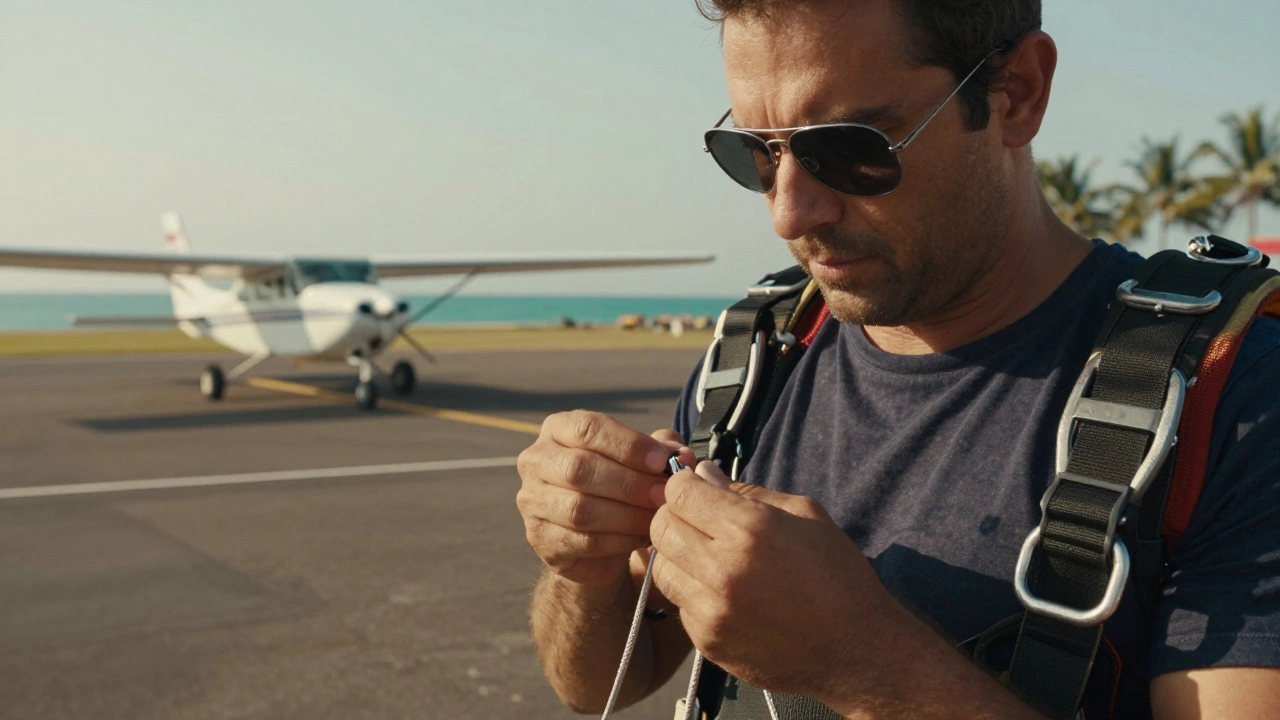
It is crucial to verify the age and condition of the aircraft and the parachutes. Tandem rigs used for tourists should be relatively new and meticulously inspected before every single jump. Ask questions. A professional operator will welcome your curiosity about their safety record and inspection logs. If they brush you off, consider it a red flag.
Tandem vs. Solo: Understanding Your Risk Level
Your personal risk profile changes drastically depending on how you jump. Most tourists opt for a tandem skydive. In this scenario, you are strapped to a certified instructor who handles all aspects of the jump-from exit to canopy control to landing. You are essentially a passenger. The fatality rate for tandem jumps is significantly lower than for solo student jumps because the instructor has thousands of hours of experience and acts as a safety net.
Solo jumping, even for students completing their first license course (AFF), carries higher risk. You are responsible for deploying your own chute and navigating under canopy. While the equipment remains the same, the margin for error shrinks. If you are visiting India for a holiday, stick to tandem jumps. The thrill is identical, but the safety buffer is immense. Never attempt to progress to solo jumps unless you are committing to a full certification course with hundreds of supervised jumps.
How to Vet a Skydiving Operator
Choosing the right company is the most important step you can take. Here is a checklist to ensure your provider prioritizes safety over profit:
- Certifications: Verify that instructors hold current licenses from recognized bodies like USPA, BPA, or AFFI.
- Equipment Brand: Look for top-tier gear manufacturers like Velocity Systems, Skydive Canada, or Swallowtail. Cheap, unknown brands are a warning sign.
- Aircraft Maintenance: Ask about the maintenance schedule of the plane. Regular commercial aviation standards should apply.
- Online Reviews: Read recent reviews on independent travel platforms. Look for mentions of professionalism and safety briefings, not just "fun."
- Weather Policy: A safe operator will cancel or postpone jumps if wind speeds exceed safe limits or visibility is poor. Do not pressure them to fly in marginal conditions.
Physical Requirements and Health Checks
You don’t need to be an athlete to skydive, but you do need to be honest about your health. Most operators require you to sign a waiver disclosing medical conditions. Heart problems, high blood pressure, epilepsy, and back issues can disqualify you from jumping. The G-forces during deployment and the impact of landing, though cushioned, place stress on the body.
Pregnancy is an automatic no-go for skydiving due to the risk of abdominal trauma during landing. Weight limits are also strictly enforced, usually capping at around 90-100 kg (200-220 lbs), depending on the aircraft and rig capacity. Exceeding these limits compromises the parachute's ability to slow you down effectively. Always disclose any medications you are taking, as some can affect balance or consciousness.
The Psychological Aspect of Fear
Fear is natural. Even seasoned skydivers feel a spike of adrenaline before exiting the door. The key is distinguishing between healthy caution and paralyzing anxiety. During the freefall, which lasts about 30-45 seconds, you reach terminal velocity of roughly 120 mph (200 km/h). Surprisingly, many jumpers describe this not as terrifying, but as peaceful. The wind noise is loud, but the sensation is more like floating on a cushion of air than falling.
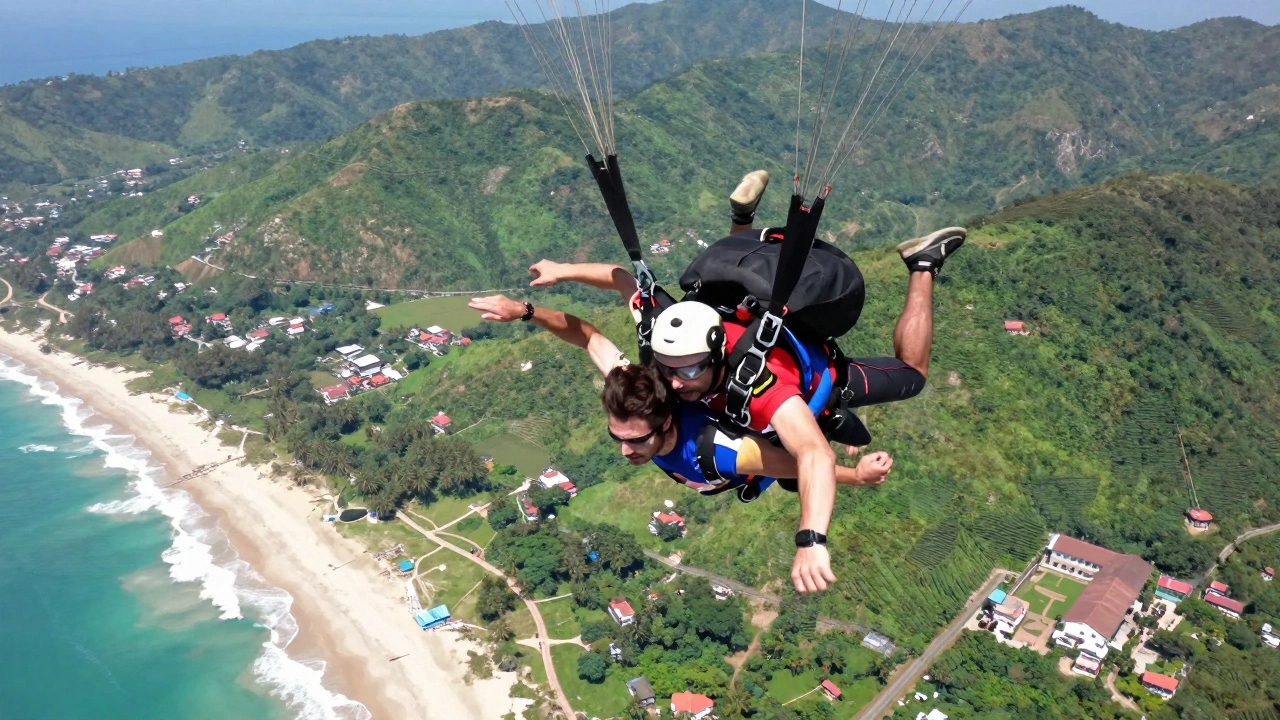
The canopy ride, which lasts 5-7 minutes, is where you truly appreciate the view. Over India, this could mean soaring above the Arabian Sea or the golden sands of Thar Desert. Trusting your instructor is vital. They will guide you through the landing procedure, which involves lifting your legs to avoid dragging them. Following instructions precisely reduces the risk of minor injuries like ankle sprains, which are the most common non-fatal outcome.
Is skydiving in India safe for beginners?
Yes, provided you choose a reputable operator with internationally certified instructors. Tandem skydiving is designed specifically for beginners, with the instructor controlling all critical aspects of the jump. Always verify the company's safety record and equipment standards before booking.
What is the most common cause of death in skydiving?
The most common causes are human error, such as failing to deploy the parachute at the correct altitude, or collisions with other skydivers during freefall. Equipment failure is extremely rare due to redundant systems like reserve parachutes and automatic activation devices (AADs).
Do I need prior experience to go skydiving?
No, no prior experience is needed for a tandem jump. You will receive a brief ground training session covering body position and landing procedures. The instructor handles the rest. Solo jumps require extensive training and certification.
What happens if the main parachute doesn't open?
Every tandem rig has a reserve parachute specifically for this scenario. Additionally, modern rigs are equipped with an Automatic Activation Device (AAD) that will automatically deploy the reserve if the main chute fails to open by a certain altitude. This redundancy makes catastrophic failure nearly impossible.
Are there weight limits for skydiving in India?
Yes, most operators enforce a weight limit, typically between 90kg and 100kg (200-220 lbs). This ensures the parachute can safely support both the passenger and the instructor. Check with your specific provider for their exact limits.