Kailash Mansarovar Yatra Preparation Checker
This tool helps assess your readiness for the Kailash Mansarovar Yatra, the world's hardest trek. Answer the following questions to see if you're prepared for this physically and mentally demanding pilgrimage.
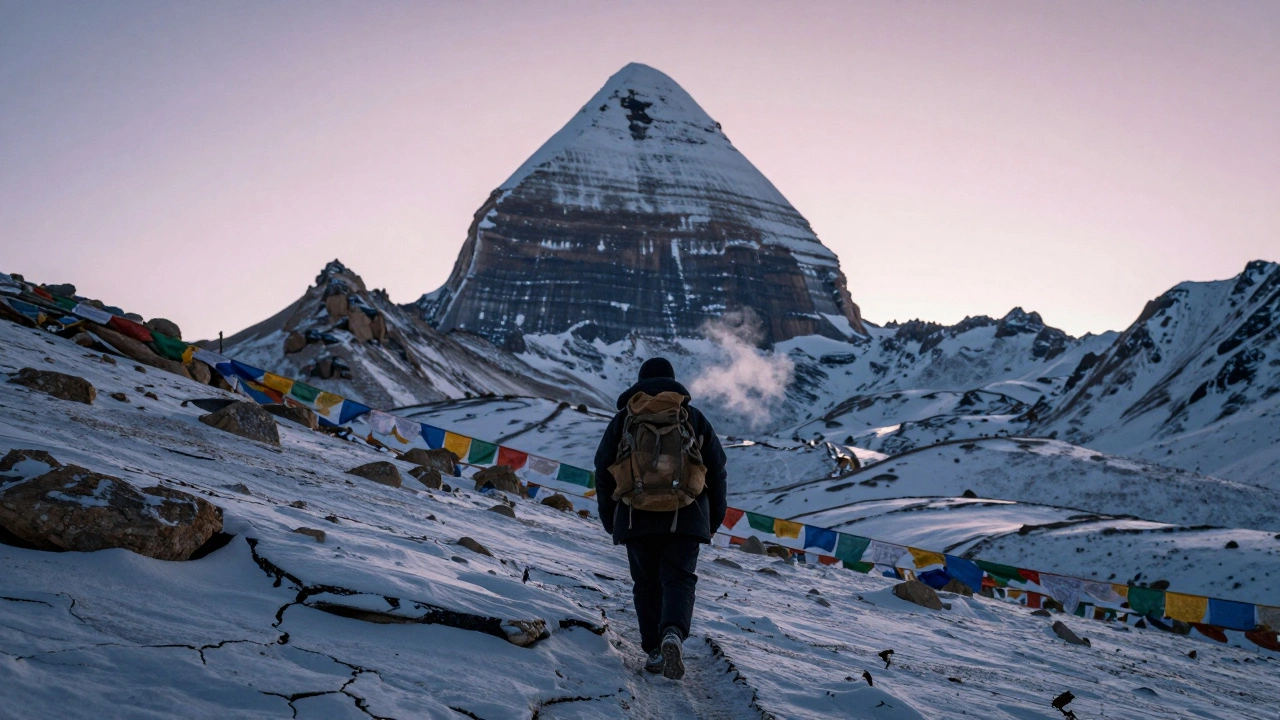
If you’re looking for the hardest trek in Asia, you’re not just searching for a long hike-you’re chasing something that tests your body, mind, and spirit. Most people think of Everest Base Camp or Annapurna Circuit. But the real answer lies farther north, in a remote corner of Tibet, where the air is thin, the ground is unforgiving, and the stakes are spiritual as much as physical. The Kailash Mansarovar Yatra isn’t just a trek. It’s a pilgrimage that breaks people-and transforms them.
Why Kailash Mansarovar Is the Hardest
The Kailash Mansarovar Yatra covers about 52 kilometers in just three days, with altitudes peaking at 5,700 meters (18,700 feet) at the Dolma La Pass. That’s higher than Everest Base Camp. And unlike other treks, you don’t have luxury lodges or porters. You’re walking on rocky, uneven trails with little oxygen, often in freezing wind, rain, or snow-even in summer.
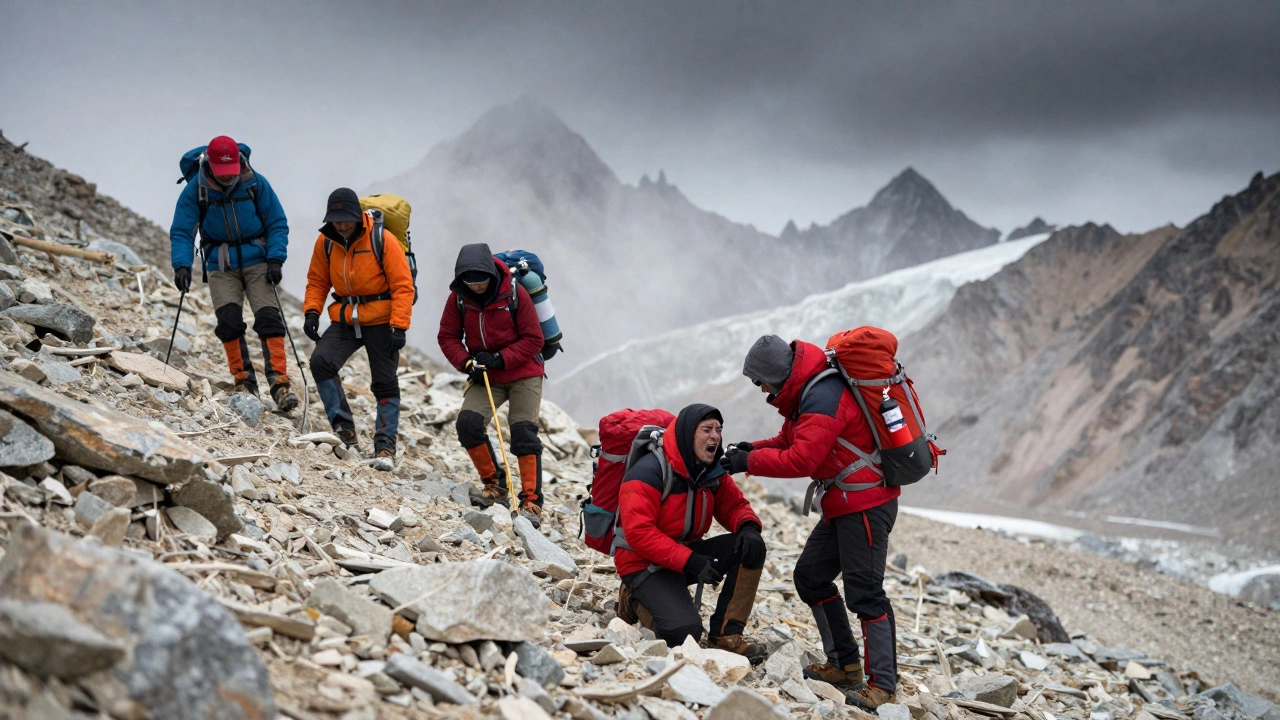
At that altitude, your body starts shutting down. Headaches, nausea, dizziness, and vomiting are normal. Many turn back before the pass. Others get altitude sickness severe enough to require evacuation. The Chinese government limits the number of permits to 2,000 per year. Even then, about 30% of trekkers don’t complete the full circuit.
What makes it harder than other Himalayan treks? It’s not just the height. It’s the lack of infrastructure. No tea houses. No Wi-Fi. No phone signal. You carry everything: food, water, sleeping bag, oxygen canisters. The nearest medical help is hours away. And the terrain? Loose scree, narrow ridges, and steep switchbacks that feel like climbing a ladder made of gravel.
The Spiritual Weight
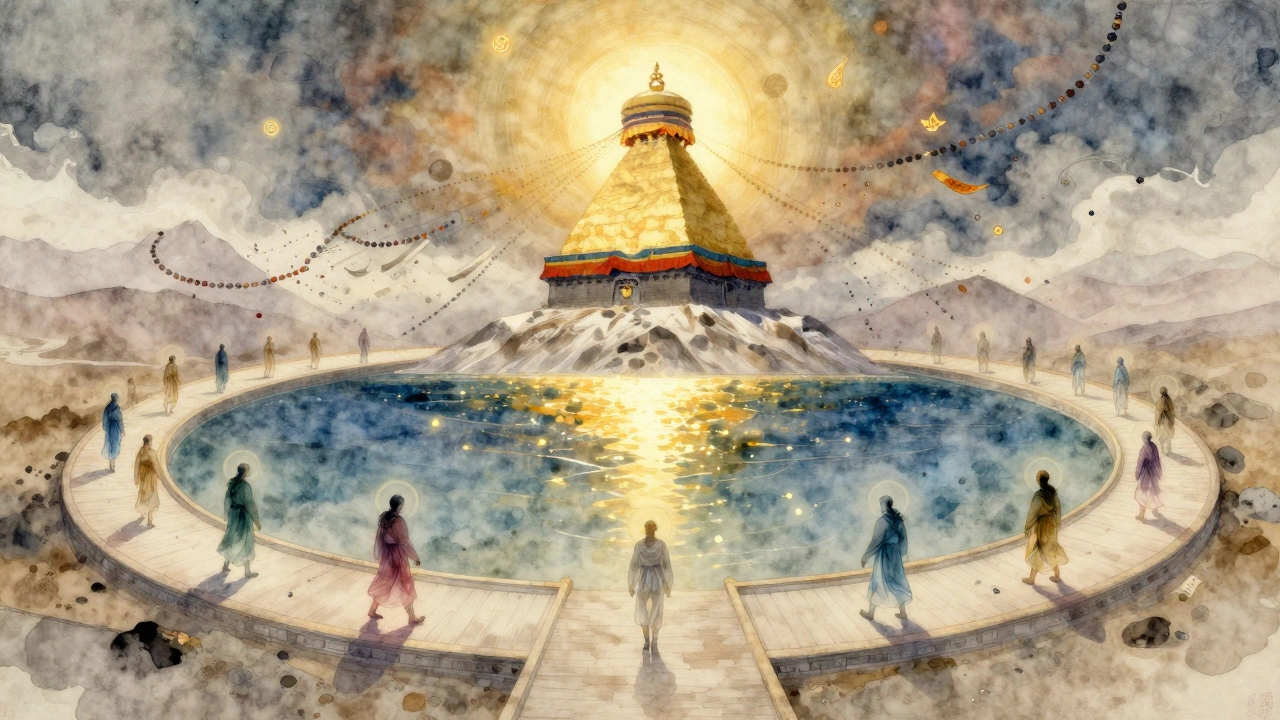
Kailash is sacred to four religions: Hinduism, Buddhism, Jainism, and Bon. Hindus believe Lord Shiva lives here. Buddhists see it as the center of the universe. For Jains, it’s where their first guru attained enlightenment. Pilgrims walk the circuit clockwise (Hindus and Buddhists) or counterclockwise (Bon followers). Each step is a prayer.
Most trekkers don’t realize how much mental strength this requires. You’re not just hiking-you’re carrying decades of expectation. Some come to heal grief. Others seek clarity. A few just want to say they did it. The mountain doesn’t care why you’re there. It only asks for your presence. And if you’re not fully in it, the altitude will remind you.
Logistics: How to Get There
You can’t just show up and start walking. The trek begins in the town of Darchena in Tibet, accessible only through organized tours. Most travelers fly into Kathmandu, Nepal, then take a 4WD ride across the Nepal-Tibet border. From there, it’s another 10 hours on rough roads to Darchena. Permits cost between $1,200 and $2,500, depending on the tour operator and season.
The best time to go is May to September. Even then, temperatures drop below freezing at night. You need thermal layers, a down jacket rated for -20°C, waterproof boots, and a high-altitude sleeping bag. No one makes it without proper gear. And no one makes it without preparation.
Training: What You Need to Do Before You Go
Most people think being fit means you can handle this. That’s a deadly mistake. You need specific high-altitude training. Here’s what works:
- Walk 8-10 kilometers daily with a 10-15 kg backpack for at least 3 months
- Train at elevation if possible-hike mountains above 3,000 meters
- Practice breathing techniques: slow inhale through nose, long exhale through mouth
- Take Diamox (acetazolamide) as prescribed by a doctor to prevent altitude sickness
- Test your oxygen saturation with a pulse oximeter before departure
One Australian trekker I spoke to-Sarah, 48, from Brisbane-trained for nine months. She climbed Mount Kosciuszko weekly, carried a weighted pack up stairs, and slept in a hypoxic tent. She still got altitude sickness at 5,000 meters. She didn’t summit the pass. But she made it to the base camp. And she said, ‘I didn’t fail. I listened to my body.’
What Happens When You Don’t Prepare
Every year, people die on this trek. Not from falls or avalanches. From cerebral edema-fluid building up in the brain. Symptoms: confusion, loss of balance, slurred speech. If you ignore them, you won’t wake up. There’s no time to wait for rescue. Evacuation by helicopter costs $5,000 and isn’t guaranteed.
One Indian group in 2023 lost two members in a single day. They were in their 30s, fit, experienced trekkers. They skipped Diamox. They didn’t acclimatize. They pushed hard to take photos at the pass. By noon, one was unconscious. The other collapsed walking back. Both needed emergency oxygen and medevac.
This isn’t a challenge to prove you’re tough. It’s a test of humility.
Alternatives That Are Still Tough
If Kailash feels too extreme, here are other brutal treks in Asia that still demand everything you’ve got:
- Annapurna Circuit (Nepal) - 230 km, 5,416m Thorong La Pass. Better infrastructure, but longer exposure to altitude.
- Markha Valley to Stok Kangri (India) - 110 km, 6,153m summit. Higher peak, but you don’t have to do the full circuit.
- Mount K2 Base Camp (Pakistan) - 150 km, 5,150m. Remote, politically unstable, no support.
- Laugavegur Trail (Iceland) - 55 km, 900m. Not high, but weather is brutal. Wind, rain, snow-all in one day.
None of these match Kailash’s combination of altitude, isolation, spiritual pressure, and lack of safety nets. That’s why it’s still the hardest.
Who Should Do It?
Not everyone should attempt Kailash. If you have heart or lung conditions, high blood pressure, or a history of altitude sickness, don’t go. If you’re training for your first marathon, wait. If you’re doing this because it’s on a bucket list, reconsider.
But if you’ve hiked for years. If you’ve been to 3,000m+ before. If you’ve trained hard and respect the mountain. If you’re ready to walk in silence, carry your own weight, and face your limits-then Kailash might be the only trek that changes you.
Final Thoughts: It’s Not About the Summit
Most people think the goal is to reach the Dolma La Pass. But the real goal is to walk the whole circuit without breaking. To sleep under the stars. To drink from the icy lake of Mansarovar. To sit at the base of Kailash and feel something bigger than yourself.
It’s not about being the strongest. It’s about being the most present.
Is the Kailash Mansarovar Yatra open to foreigners?
Yes, but only through licensed tour operators. Foreigners must enter via Tibet, not Nepal, and need special permits from the Chinese government. Independent travel is not allowed. Most tours start from Kathmandu, Nepal, and cross into Tibet by road.
How long does the Kailash trek take?
The full circuit takes 3 days of walking, but most itineraries include 5-7 days total. This includes acclimatization in Darchena, the 52 km trek, and time at Lake Mansarovar. Rushing it increases the risk of altitude sickness.
Do I need a guide for the Kailash trek?
Yes. Independent trekking is banned. You must travel with a licensed guide and group. Guides handle permits, logistics, and emergency protocols. They also know the safest routes and when to turn back.
What’s the best time of year to do the Kailash trek?
May to September is the only safe window. July and August bring monsoon rains, but the trails are passable. June and September offer the clearest skies and least snow. Outside this period, snow blocks the Dolma La Pass and temperatures drop to -30°C.
Can I do the Kailash trek without prior high-altitude experience?
Not safely. Even experienced hikers without high-altitude training have failed. You need to have hiked above 4,000 meters at least once before. A history of altitude sickness is a hard stop. Medical screening is required before permits are issued.
Next Steps: If You’re Serious
If you’re considering this trek, start now. Book a doctor’s appointment for a fitness check. Get your oxygen saturation tested. Start carrying weight on long walks. Learn breathing techniques. Research tour operators with strong safety records. Read first-hand accounts from people who’ve done it-not just Instagram posts.
There’s no rush. The mountain has been there for thousands of years. It won’t disappear if you wait a year. But if you go unprepared, you might not come back.