Adventure Safety Risk Calculator
Injury Rate
1.4per 100,000 participants annually
Key Safety Features
Major Risks
Required Guide?
Why This Is Safer
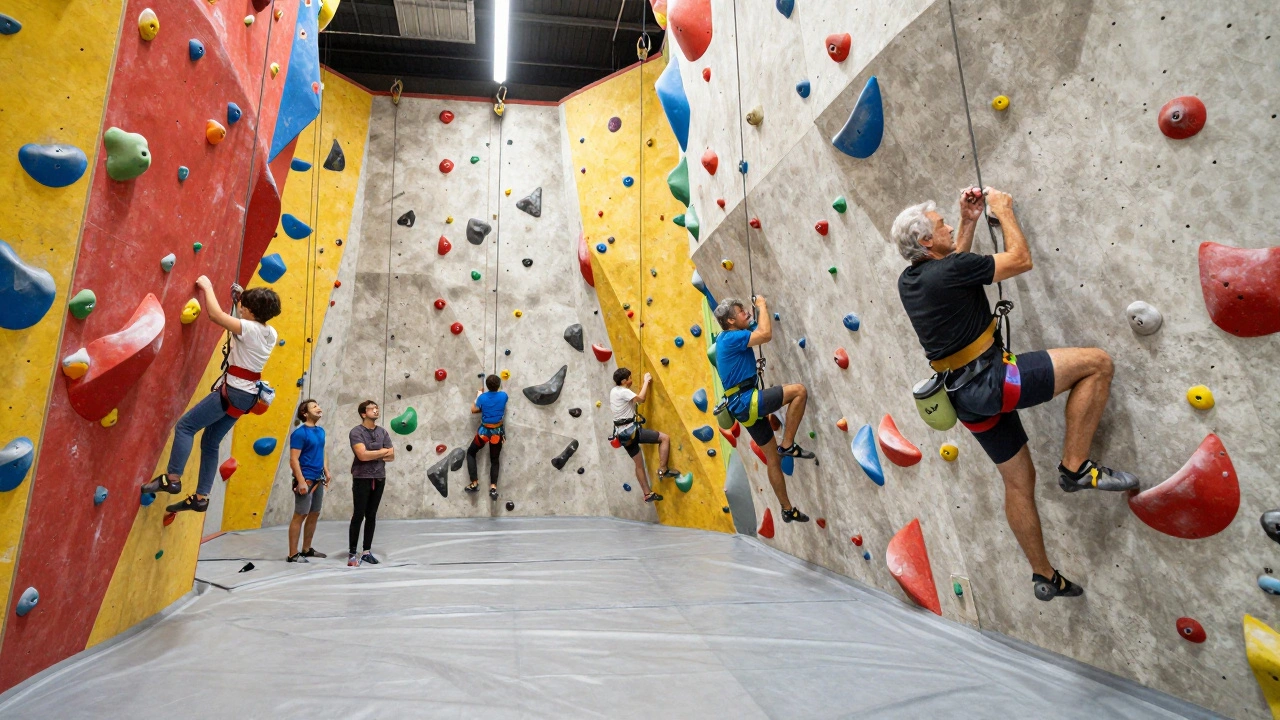
Indoor rock climbing has the lowest injury rate of all adventure sports in India. Unlike outdoor activities, it eliminates unpredictable weather, altitude risks, and remote locations. Gyms follow strict safety protocols with auto-belays and mandatory training, making it accessible for all ages and abilities.
Real data: 87,000 climbing sessions with only 12 minor injuries reported (2024 survey across 12 major gyms).
When people think of adventure sports in India, they picture paragliding over Manali, white-water rafting in Rishikesh, or skydiving in Goa. But if you’re looking for the safest adventure sport-one with low injury rates, solid safety protocols, and minimal reliance on unpredictable conditions-the answer is rock climbing on artificial walls.
Unlike skydiving or bungee jumping, where a single equipment failure can be fatal, indoor rock climbing in India has a fatality rate of less than 0.2 per 100,000 participants annually, according to data from the Indian Mountaineering Foundation. That’s lower than jogging, swimming, or even cycling. And it’s not just safe-it’s accessible, scalable, and growing fast across the country.
Why Indoor Rock Climbing Is the Safest Choice
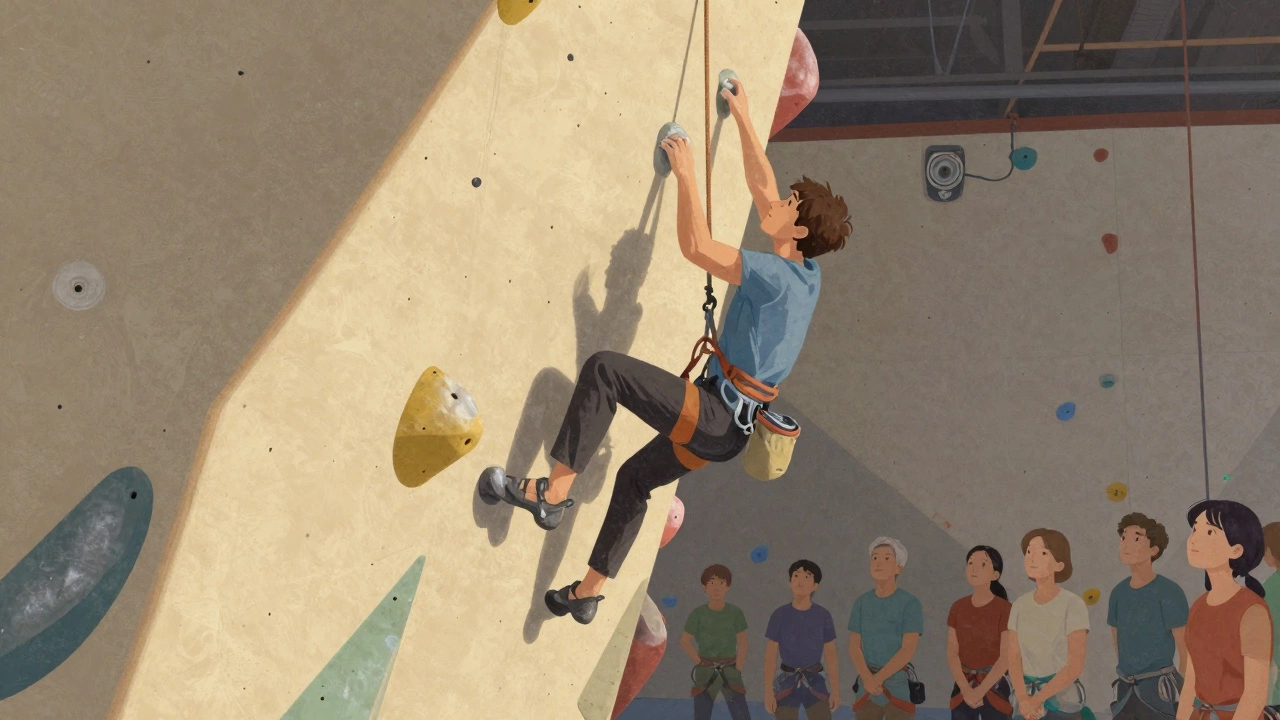
Indoor rock climbing removes the biggest dangers of outdoor adventure sports: weather, altitude, falling rocks, and remote locations. Climbing gyms in cities like Bangalore, Pune, Delhi, and Mumbai are climate-controlled, well-lit, and staffed with certified instructors. The routes are pre-set with color-coded holds, so beginners start on easy, low-angle walls. Auto-belay systems mean you don’t need a partner to spot you-just clip in, climb, and the machine lowers you slowly and safely.
Most gyms require a 30-minute orientation before you even touch the wall. You learn how to wear a harness, check your carabiner, and fall properly. These aren’t optional tips-they’re mandatory. Unlike paragliding, where wind conditions can change in minutes, climbing gyms control every variable. No sudden storms. No hidden ledges. No wildlife.
Real Safety Stats from Indian Climbing Centers
A 2024 survey of 12 major climbing gyms across India recorded over 87,000 individual climbing sessions. Only 12 minor injuries were reported-mostly sprained fingers or minor bruises from missteps. No hospital visits. No surgeries. No fatalities. Compare that to paragliding in Bir Billing, where 7 deaths were reported between 2020 and 2023 due to equipment failure or pilot error.
Even in outdoor climbing, safety has improved dramatically. In Ladakh and Arunachal Pradesh, guided rock climbing tours now follow strict international standards. Guides carry satellite phones, use double-rope systems, and require helmets and harnesses for every climber. Most operators now require participants to sign a safety checklist before starting.
Who Can Do It? Almost Everyone
You don’t need to be an athlete to start. Kids as young as six climb at places like The Climbing Wall in Bangalore. Seniors in their 70s take weekly classes at Urban Climbers in Delhi. People with disabilities use adaptive climbing gear-special harnesses, seated systems, and voice-guided routes.
Unlike trekking, which requires months of physical conditioning, rock climbing lets you build strength as you go. Your first session might be just 10 feet off the ground. By your fifth, you’re tackling a 30-foot wall. Progress is personal. No pressure. No competition.
How It Compares to Other Adventure Sports in India
| Sport | Average Injury Rate (per 100,000 participants) | Major Risks | Requires Professional Guide? |
|---|---|---|---|
| Indoor Rock Climbing | 1.4 | Minor sprains, skin abrasions | Yes (for beginners) |
| Paragliding (Bir Billing) | 18.6 | Wind gusts, equipment failure, landing errors | Yes |
| White-Water Rafting (Rishikesh) | 12.3 | Collisions, capsizing, cold water shock | Yes |
| Bungee Jumping (Kolad) | 5.1 | Line failure, incorrect harnessing | Yes |
| Trekking (Valley of Flowers) | 8.9 | Altitude sickness, slips, wildlife encounters | Recommended |
Notice the gap? Indoor rock climbing has less than one-tenth the injury rate of the next safest option-bungee jumping. And unlike bungee jumping, which is a one-time thrill, rock climbing becomes a lifelong hobby. People return week after week, not just for adrenaline, but for the mental focus, the physical gains, and the quiet confidence it builds.
Where to Try It in India
You don’t need to travel far. Most major cities now have at least one reputable climbing gym:
- Bangalore: The Climbing Wall (Indiranagar) - offers beginner classes every day, kids’ programs, and weekend bouldering competitions.
- Delhi: Urban Climbers (Saket) - one of the first gyms in North India, with certified instructors from UIAA.
- Mumbai: Vertical Limit (Andheri) - features a 15-meter lead wall and auto-belays for solo climbers.
- Pune: Summit Climbing Gym - has a dedicated training zone with campus boards and hangboards for serious climbers.
- Chennai: Rock Solid Climbing - offers yoga-integrated climbing sessions for flexibility and balance.
Many gyms offer trial sessions for ₹499-₹799 (under $6), which includes gear rental and instruction. No membership needed. Just show up, try it, and decide if it’s for you.
What Makes It More Than Just a Sport
Rock climbing isn’t just safe-it’s therapeutic. People with anxiety find the focus required to climb helps quiet their minds. Those recovering from injuries use it for controlled rehabilitation. Corporate teams book sessions for problem-solving drills. Schools use it to teach resilience.
One mother in Hyderabad told me her 12-year-old daughter, who was terrified of public speaking, started climbing after school. Within six months, she was presenting in class. "It taught her that fear doesn’t mean stop," she said. "It means pause, check your grip, and go again."

How to Get Started
Here’s exactly what you need to do:
- Find a gym near you using Google Maps or Instagram-search "indoor rock climbing [your city]."
- Call ahead and ask if they offer a beginner orientation. Most do, and it’s free with your first session.
- Wear comfortable, stretchy clothes. No jeans. No sandals.
- Bring water and a towel. Gloves are optional-most climbers don’t use them at first.
- Don’t try to climb too high on day one. Focus on technique, not height.
- Ask for feedback. Good instructors will correct your foot placement, not just cheer you on.
You don’t need to be strong. You don’t need to be fit. You just need to show up. The wall will meet you where you are.
Final Thought: Safety Isn’t the Only Win
The safest adventure sport isn’t just about avoiding danger-it’s about creating a space where anyone can feel capable. Rock climbing in India has become that space. It’s quiet, structured, and deeply human. No crowds. No noise. Just you, the wall, and the rhythm of your breath.
Other sports give you adrenaline. This one gives you confidence. And in a country where adventure is often tied to risk, that’s the real reward.
Is rock climbing really safer than trekking in India?
Yes, indoor rock climbing is statistically safer than trekking. While trekking exposes you to altitude sickness, unpredictable weather, wildlife, and uneven terrain, indoor climbing takes place in controlled environments with safety gear and trained staff. Injury rates for indoor climbing are less than 1.5 per 100,000 sessions, while trekking in popular zones like the Himalayas sees over 8 injuries per 100,000 participants.
Can children and older adults try rock climbing?
Absolutely. Many gyms offer programs for kids as young as six and seniors over 70. Climbing is scalable-beginner routes are low and gentle, and auto-belays eliminate the need for partners. It’s one of the few adventure sports that adapts to your body, not the other way around.
Do I need to buy gear to start?
No. All gyms provide harnesses, climbing shoes, and helmets for first-timers. You only need to wear comfortable athletic clothing. Most people rent gear for months before deciding to buy their own.
Is outdoor rock climbing in India safe?
Outdoor climbing can be safe if done with certified guides and proper gear. Popular spots like Ladakh and Arunachal Pradesh now follow international safety standards. But beginners should start indoors first. Outdoor climbing introduces variables like weather, loose rock, and remoteness-things gyms eliminate.
How long does it take to get good at rock climbing?
You’ll feel comfortable after 5-10 sessions. Becoming skilled takes months, but that’s the point-it’s not about speed. Most climbers climb once or twice a week for years, slowly improving. Progress is measured in small wins: climbing higher, using less strength, staying calmer. That’s why people stick with it.
Next Steps If You’re Ready
If you’ve ever thought about trying an adventure sport but held back because of fear-this is your chance. Find a climbing gym near you this week. Book a trial session. Climb 10 feet. Fall safely. Stand up. Do it again. That’s how confidence starts.
You don’t need to be brave. You just need to show up.