Indian Beach Comparison Tool
Compare Your Ideal Beach
Select your priorities to find the best beach for your trip
Beach Comparison
| Beach | Water Quality (1-5) |
Crowd Level (1-5) |
Facilities (1-5) |
Activities (1-5) |
Best Season | Environmental Protection |
|---|---|---|---|---|---|---|
Radhanagar BeachHavelock Island, Andamans |
5 | 2 | 2 | 3 | Nov-Mar | Strict limits, no plastic |
Palolem BeachGoa |
4 | 4 | 3 | 4 | Oct-Mar | Plastic ban |
Kovalam BeachKerala |
4 | 3 | 4 | 3 | Oct-Mar | Sustainable tourism |
Ghogla BeachDiu |
5 | 2 | 1 | 2 | Oct-Feb | Natural preservation |
Chalavara BeachKarnataka |
4 | 1 | 1 | 1 | Oct-Mar | Wild, untouched |
Personalized Recommendation
Select your priorities to see your recommended beach
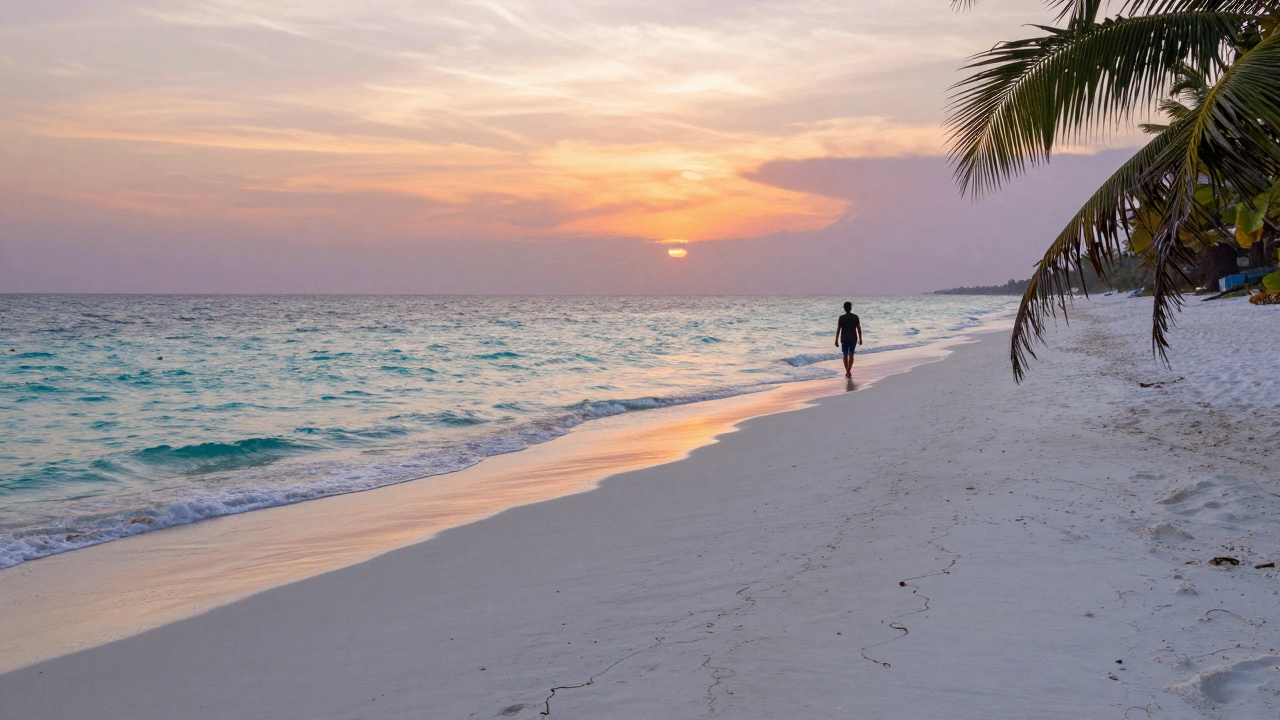
Ask ten people where the prettiest beach in India is, and you’ll get ten different answers. That’s because India’s coastline isn’t just long-it’s wildly diverse. From white sands that glow under moonlight to turquoise waters that rival the Maldives, the country has more than one beach worth calling the prettiest. But if you’re looking for the one that stops people in their tracks, that makes them forget their phones and just stare at the horizon, there’s one place that keeps coming up again and again: Radhanagar Beach on Havelock Island in the Andaman Islands.
Why Radhanagar Beach stands out
Radhanagar Beach isn’t just a stretch of sand. It’s a sensory reset button. The water is so clear you can see your toes five feet down, even when you’re standing in the shallows. The sand isn’t just white-it’s powdery, almost like sugar, and stays cool even in the midday heat. At sunset, the sky turns into a watercolor painting: deep oranges, soft purples, and pinks that reflect off the water like liquid gold.Unlike crowded beaches in Goa or Mumbai, Radhanagar feels untouched. There are no high-rise hotels lining the shore. No loud music blaring from beach shacks. No vendors chasing you with coconut water or fake jewelry. Just the sound of waves, the rustle of palm fronds, and the occasional call of a kingfisher. The beach stretches for nearly 2.5 kilometers, wide enough that you can walk for half an hour without seeing another soul.
Local authorities limit daily visitors to protect the ecosystem. You can’t drive here-only walk or take a bicycle. That’s why it stays pristine. No plastic bottles. No motorized water sports. No sunscreen pollution. It’s one of the few beaches in India where nature still runs the show.
What makes a beach truly pretty? It’s not just looks
Beauty isn’t just about postcard views. It’s about how a place makes you feel. A pretty beach doesn’t just look good-it feels safe, calm, and alive. Radhanagar delivers all three.The water temperature stays between 26°C and 29°C year-round. That’s perfect for swimming, snorkeling, or just floating. The coral reefs just offshore are home to parrotfish, clownfish, and even the occasional sea turtle. Snorkelers report seeing up to 40 different fish species in a single hour. The reef is healthy, too-no bleaching, no damage from anchors. That’s because the Andaman government banned commercial fishing and reef-damaging activities here back in 2019.
And then there’s the silence. No jet skis. No speedboats. No party boats. Even the boats that ferry tourists to the beach are electric or solar-powered. You won’t hear a single engine unless you walk a kilometer away from the shore.
Other beaches that challenge Radhanagar’s crown
Radhanagar is the favorite, but it’s not the only contender. India has other beaches that come close-and in some ways, even beat it.Palolem Beach, Goa is softer, quieter, and more laid-back than the party zones of North Goa. The crescent shape wraps around calm waters, and the beach is lined with bamboo huts that serve fresh seafood. But it’s still a magnet for backpackers and Instagram influencers. You’ll find more people here than at Radhanagar, even in the off-season.
Kovalam Beach, Kerala has the charm of backwaters meeting the ocean. Three separate coves offer different vibes: Lighthouse Beach for surfers, Hawa Beach for couples, and Samudra Beach for yoga. The water is warm, the coconut trees are thick, and the Ayurvedic spas are world-class. But the sand here is a bit coarser, and the tide can be unpredictable.
Ghogla Beach, Diu is a hidden gem on India’s west coast. It’s got the same white sand as Radhanagar, but fewer people. The cliffs behind the beach give it a dramatic backdrop. The water is calm, and the sunset views are unbeatable. But getting there is harder-you need a car, and the nearest airport is 70 kilometers away.
Chalavara Beach, Karnataka is wilder. No shops. No umbrellas. Just rocks, tide pools, and the sound of the Arabian Sea. It’s perfect for solitude seekers, but not for families or swimmers-the currents here are strong.

When to go-and when to avoid
The best time to visit Radhanagar Beach is between November and March. The weather is dry, the skies are clear, and the sea is calm. Water visibility for snorkeling peaks in January and February.Avoid April to June. It’s hot-temperatures hit 35°C-and humidity is brutal. July to September is monsoon season. Rain can be heavy, the sea gets rough, and many boats stop running. The beach is still beautiful, but you won’t be able to swim or snorkel.
For other beaches, timing varies. Kovalam is best from October to March. Palolem is liveliest in December but quietest in July. Ghogla is ideal from October to February. Always check local forecasts-monsoon patterns in the Andamans can shift unexpectedly.
How to get there
To reach Radhanagar Beach, you need to fly into Veer Savarkar International Airport in Port Blair. From there, take a 2.5-hour ferry to Havelock Island. Ferries leave daily from Port Blair’s jetty, and tickets cost around ₹1,200 round-trip. Book in advance-especially in peak season.Once on Havelock, you can hire a taxi, rent a bicycle, or take a shared jeep to the beach. The ride takes about 30 minutes. There’s a small entry fee of ₹50 per person, which goes toward beach maintenance. No cars are allowed past the parking area, so you’ll walk the last 500 meters. It’s worth it.
What to pack
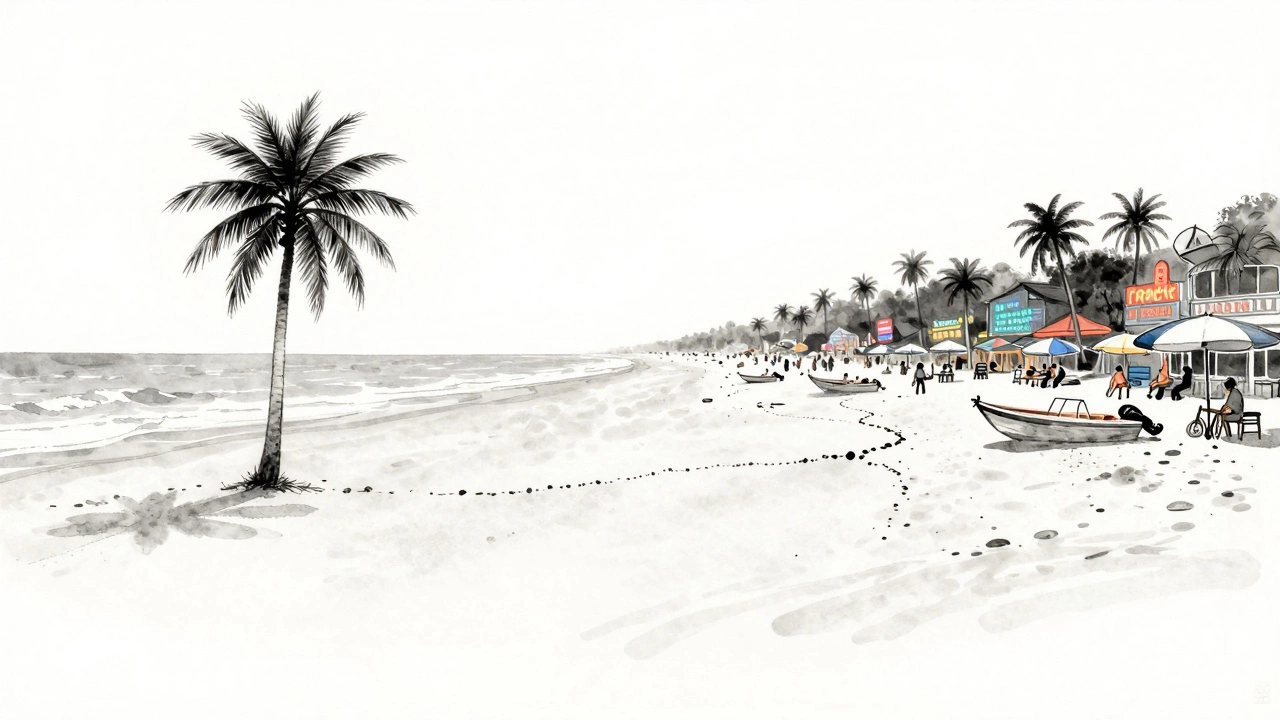
You don’t need much. But here’s what works:- Reef-safe sunscreen (chemical sunscreens are banned on many Andaman beaches)
- A wide-brimmed hat and UV-blocking sunglasses
- Light, quick-dry clothing
- Waterproof phone case (for snorkeling photos)
- Reusable water bottle (plastic bottles are discouraged)
- Flip-flops or sandals
- A light towel or sarong
Leave the alcohol, loud speakers, and single-use plastics behind. The island doesn’t have recycling facilities. What you bring in, you take out.
Why this matters beyond tourism
Radhanagar isn’t just a pretty beach. It’s a model. It proves that tourism doesn’t have to destroy nature. With smart limits, strict rules, and community-led management, a beach can stay beautiful for decades.Other Indian beaches are trying to copy this model. Kerala’s beaches now ban plastic. Goa has started restricting motorized water sports. But Radhanagar remains the gold standard. It’s not the biggest. It’s not the most famous. But it’s the one that respects its environment-and that’s what makes it truly the prettiest.
Is Radhanagar Beach safe for swimming?
Yes, Radhanagar Beach is safe for swimming during the dry season (November to March). The waters are calm, with no strong undercurrents. Lifeguards are not present, but the beach is shallow for a long way out, making it ideal for families. Avoid swimming during monsoon season (June-September) when waves can become dangerous.
Can I visit Radhanagar Beach in a day trip?
You can, but you won’t get the full experience. A day trip from Port Blair means you’ll spend 5-6 hours on ferries and have only 3-4 hours on the beach. To truly relax, stay overnight. There are eco-resorts and homestays on Havelock Island that offer simple, clean rooms starting at ₹1,500 per night.
Are there any facilities at Radhanagar Beach?
There are basic facilities: clean public restrooms, a few shaded seating areas, and small stalls selling fresh coconut water, bananas, and bottled water. No restaurants or bars. You won’t find ice cream or cocktails. That’s intentional-it keeps the beach natural. Bring your own snacks if you want more than fruit.
Is Radhanagar Beach crowded?
It gets busy between December and February, especially on weekends. But because of visitor limits and the beach’s length, it rarely feels crowded. Early mornings and late afternoons are the quietest. Weekdays are always better than weekends. If you want total solitude, go in November or March.
Can I snorkel or dive at Radhanagar Beach?
Yes, snorkeling is excellent here. The coral reef starts just 20-30 meters from shore. You can rent gear from local operators for ₹500-₹800 per hour. No scuba diving is allowed without a certified guide, and only a few licensed operators are permitted. The marine life is rich: colorful fish, octopuses, and even reef sharks have been spotted near the outer reef.