Indian State Cultural Highlights
India is a subcontinent of diverse cultures. Here are the cultural heavyweights broken down by their unique offerings.
Rajasthan
Focus: Royalty & Folklore
The living museum of royalty, defined by desert landscapes and warrior kings.
Kerala
Focus: Nature & Wellness
Known as "God’s Own Country," balancing lush nature, maritime history, and spirituality.
Tamil Nadu
Focus: Temple Architecture
The cradle of Dravidian architecture and one of the oldest continuous cultures in the world.
West Bengal
Focus: Intellectual Arts
The intellectual and artistic heart of India, home to writers, painters, and thinkers.
Punjab
Focus: Festivity & Faith
Known for agricultural wealth, vibrant high-energy culture, and intense hospitality.
Comparison of Cultural Highlights
| State | Primary Focus | Signature Art | Must-Try Dish | Best Time |
|---|---|---|---|---|
| Rajasthan | Royalty & Folklore | Kalbelia Dance | Dal Baati Churma | Oct - Mar |
| Kerala | Nature & Wellness | Kathakali | Sadya Feast | Sep - Feb |
| Tamil Nadu | Temple Architecture | Bharatanatyam | Filter Coffee | Oct - Jan |
| West Bengal | Intellectual Arts | Durga Puja Pandals | Hilsa Fish Curry | Sep - Nov |
| Punjab | Festivity & Faith | Bhangra | Butter Chicken | Oct - Mar |
Frequently Asked Questions
Ask ten travelers which Indian state has the best culture, and you’ll likely get ten different answers. That’s because India isn’t just one country; it’s a subcontinent stitched together by threads of language, religion, food, and history so diverse that they often feel like entirely different nations. There is no single "best" culture here. Instead, there are distinct cultural ecosystems, each offering a unique window into human tradition. Whether you are chasing ancient temple architecture, vibrant street festivals, or classical music that dates back centuries, your answer depends on what resonates with you personally.
This article breaks down the cultural heavyweights of India. We will look at Rajasthan, Kerala, Tamil Nadu, West Bengal, and Punjab to understand why each claims the title. By the end, you won't just have a list of places; you'll have a framework for deciding where your next trip should go based on the specific type of cultural immersion you crave.
Rajasthan: The Living Museum of Royalty
If you imagine India through the lens of Bollywood or colonial postcards, you are picturing Rajasthan. This northwestern state is defined by its desert landscape and its history as a land of warrior kings. The culture here is performative, grand, and deeply rooted in hospitality. When you visit cities like Jaipur, Udaipur, or Jaisalmer, you are stepping into a world where palaces double as hotels and forts dominate the skyline.
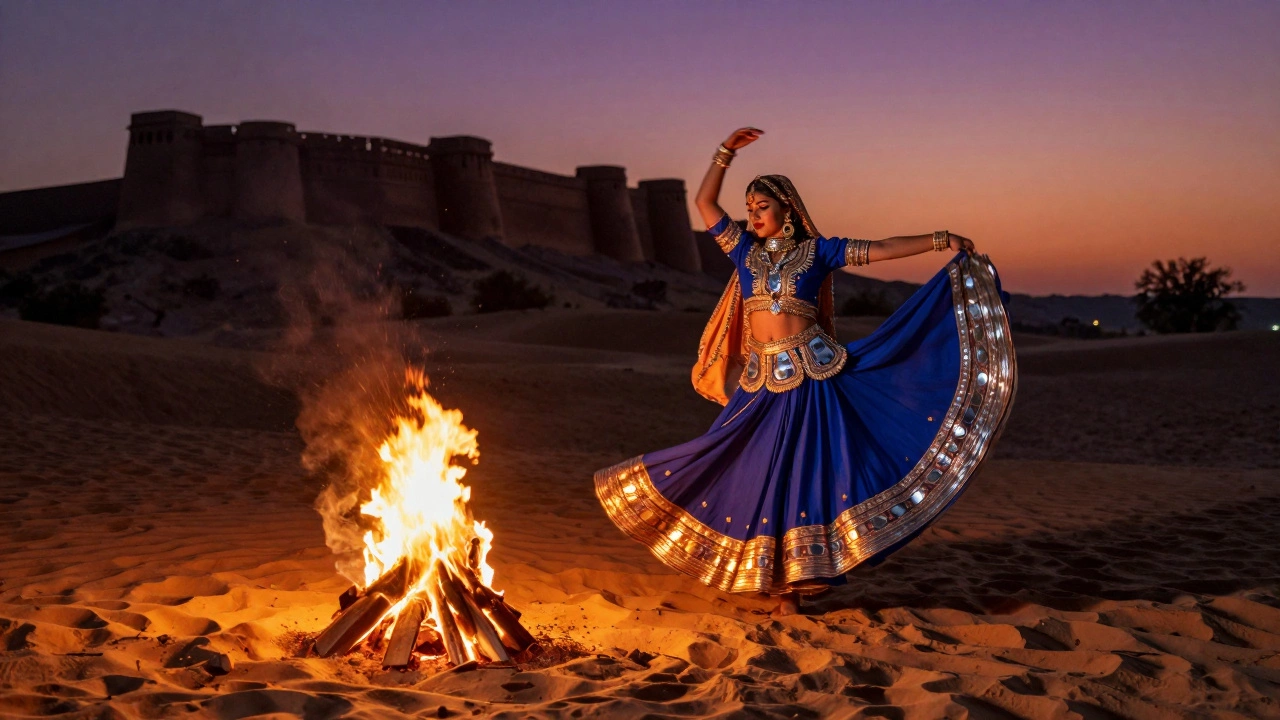
The cultural heartbeat of Rajasthan is its folk art. You can’t walk through a market without seeing hand-painted textiles, blue pottery, or intricate mirror work. But the real magic happens at night. In the Thar Desert, locals gather around bonfires for Kalbelia dance performances, a traditional dance form recognized by UNESCO. The dancers, dressed in long, swirling skirts, mimic the movements of snakes, accompanied by hypnotic drums and flutes. It’s not a staged show for tourists; it’s a community ritual that has survived centuries of harsh desert life.
Food in Rajasthan is also a reflection of its environment. With water scarce, the cuisine relies heavily on dairy, lentils, and dried meats. Try dal baati churma, a dish of hard wheat balls served with spicy lentil curry and crushed sweet crumbles. It’s hearty, comforting, and tastes exactly like the warmth of the people who serve it.
- Best for: History buffs, photography enthusiasts, and those who love grand architecture.
- Key Heritage Sites: Amber Fort, City Palace Udaipur, Jaisalmer Fort.
- Cultural Highlight: Pushkar Camel Fair (October/November).
Kerala: The Harmony of Nature and Spirituality
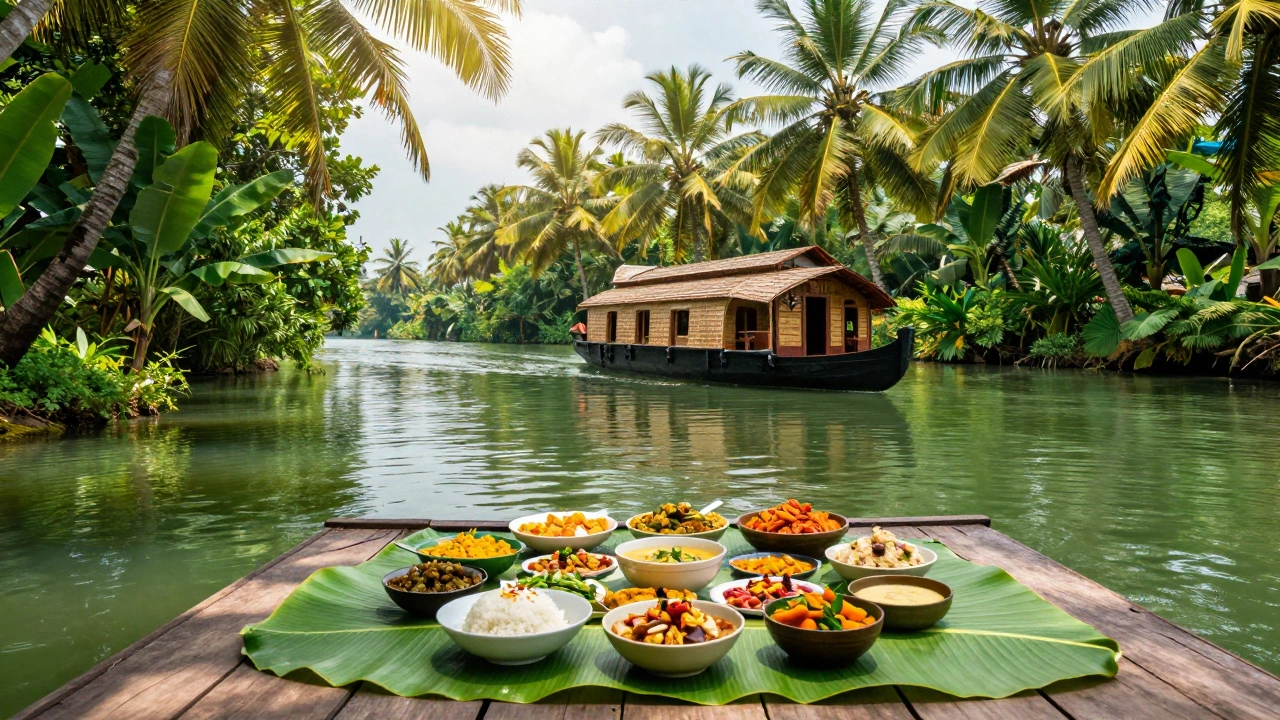
Travel south to Kerala, and the vibe shifts dramatically. Known as "God’s Own Country," Kerala’s culture is built on a balance between lush nature, maritime history, and deep spiritual traditions. Unlike the arid intensity of Rajasthan, Kerala feels cool, green, and fluid. The backwaters-networks of lagoons and lakes parallel to the coast-are central to daily life, serving as highways for fishing boats and houseboats alike.
Kerala is famous for two major cultural exports: Ayurveda and Kathakali. Ayurveda is not just a spa treatment here; it’s a way of life. The state has some of the oldest medical colleges in the world dedicated to this system of holistic healing. You’ll find locals getting massages with herbal oils not for luxury, but for health maintenance.
Then there is Kathakali, a classical dance-drama known for its elaborate makeup, costumes, and expressive eye movements. Performers spend hours preparing their faces before taking the stage to tell stories from Hindu epics like the Ramayana and Mahabharata. The storytelling is silent except for the percussion instruments, yet every eyebrow raise conveys emotion. Watching a Kathakali performance under the stars in Thrissur is an experience that stays with you long after you leave.
The cuisine here is coconut-heavy, spicy, and fresh. Rice is the staple, often served on banana leaves with an array of side dishes called sadya. During festivals like Onam, families prepare massive feasts with up to 26 different vegetarian dishes. It’s a celebration of abundance and community.
- Best for: Wellness seekers, nature lovers, and fans of classical arts.
- Key Heritage Sites: Guruvayur Temple, Padmanabhapuram Palace.
- Cultural Highlight: Onam Festival (August/September).
Tamil Nadu: The Cradle of Dravidian Architecture
If you want to see the roots of South Indian culture, you go to Tamil Nadu. This state is home to the Dravidian civilization, one of the oldest continuous cultures in the world. The capital, Chennai, is a modern metropolis, but venture inland to Madurai or Thanjavur, and you enter a timeline that stretches back over two millennia.
Tamil Nadu is synonymous with temple architecture. The Brihadeeswarar Temple in Thanjavur, a UNESCO World Heritage Site, was built in the 11th century without any mortar. Its towering vimana (tower) still stands tall, a testament to engineering brilliance. These temples were not just places of worship; they were economic hubs, schools, and centers for art and music.
Music and dance are inseparable from Tamil culture. Bharatanatyam, one of the most popular classical dance forms in India, originated here. Dancers use precise footwork and hand gestures to narrate mythological stories. Every morning in Chennai, thousands of students practice in studios, keeping the tradition alive. Similarly, Carnatic music, a complex system of melodic ragas and rhythmic talas, is deeply embedded in daily life. You’ll hear musicians practicing on trains, in parks, and at street corners.
The people of Tamil Nadu are proud of their linguistic heritage. Tamil is one of the few languages in the world with a literary tradition spanning over 2,000 years. This pride translates into a strong sense of identity and resistance against cultural homogenization. Food-wise, expect bold flavors. Idlis, dosas, and vadas are breakfast staples, but the real star is the filter coffee-strong, sweet, and served in steel tumblers.
- Best for: Architecture enthusiasts, classical music/dance fans, and history scholars.
- Key Heritage Sites: Meenakshi Amman Temple, Mahabalipuram Shore Temple.
- Cultural Highlight: Margazhi Season (December-January, music festival).
West Bengal: The Intellectual and Artistic Heart
In the east, West Bengal offers a culture that is intellectual, artistic, and fiercely independent. The capital, Kolkata, was once the capital of British India and remains the cultural capital of the nation today. It’s a city of writers, painters, filmmakers, and thinkers. If you enjoy literature, Kolkata is your paradise. It hosts the largest book fair in India, where authors sell copies directly to readers from makeshift stalls.
The legacy of Rabindranath Tagore, the first non-European Nobel laureate, looms large here. He wrote the national anthems of both India and Bangladesh and founded Visva-Bharati University, a place where education blends with nature and art. His influence is visible in the annual Poush Mela, a fair celebrating poetry, music, and rural crafts.
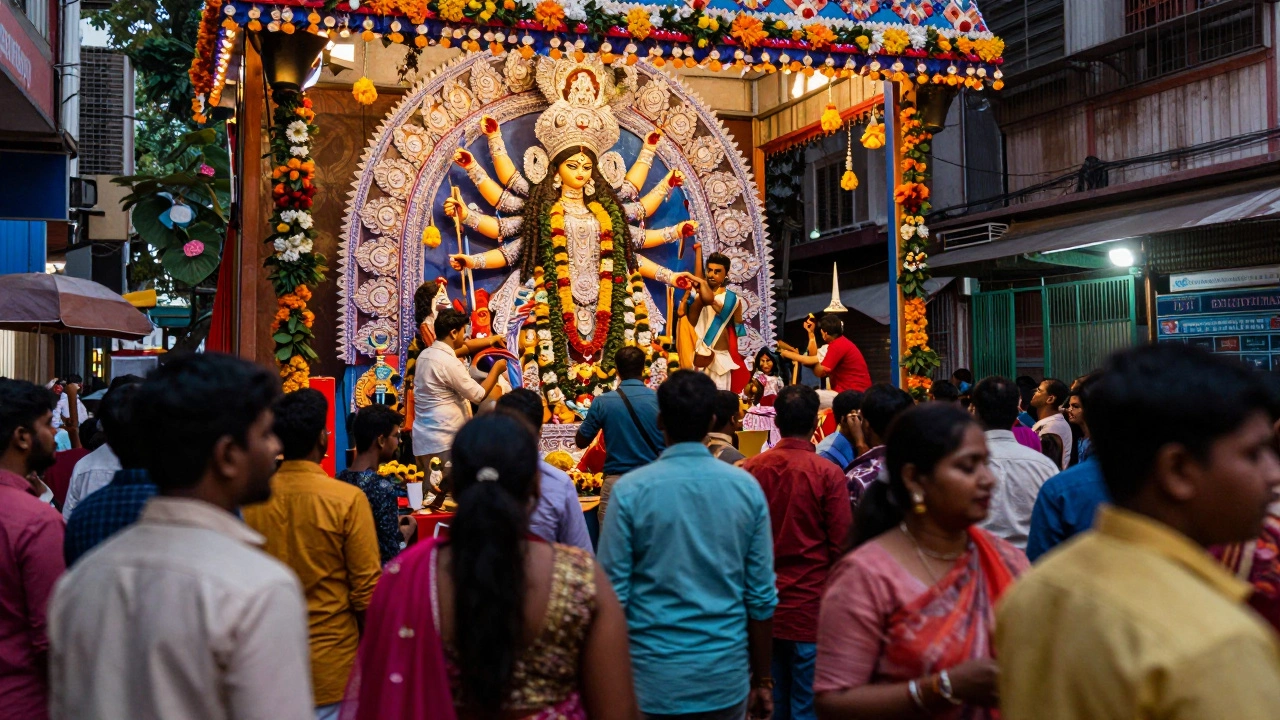
Festivals in West Bengal are explosive. Durga Puja is not just a religious event; it’s a civic holiday that shuts down the entire city for five days. Neighborhood committees compete to build the most elaborate pandals (temporary structures) housing idols of Goddess Durga. People dress up, eat, dance, and socialize day and night. It’s a display of creativity, community spirit, and devotion all rolled into one.
Food in Bengal revolves around fish and rice. Hilsa fish, caught in the Bay of Bengal, is considered a delicacy. Pair it with mustard oil-based curries and sweets like rosogolla and sandesh, and you have a meal that reflects the region’s riverside lifestyle.
- Best for: Literature lovers, art enthusiasts, and festival goers.
- Key Heritage Sites: Victoria Memorial, Dakshineswar Kali Temple.
- Cultural Highlight: Durga Puja (September/October).
Punjab: The Land of Festivity and Farming
Last but certainly not least, we have Punjab. Located in the northwest, Punjab is known for its agricultural wealth and its vibrant, high-energy culture. The people here are famously hospitable, welcoming guests with open arms and full plates. If you’ve ever seen Bhangra dancing, you’ve seen Punjab’s soul.
Bhangra is more than a dance; it’s an expression of joy, originally performed by farmers to celebrate the harvest season. Today, it’s a global phenomenon, but nothing beats watching it live in villages near Ludhiana or Amritsar. The drumming is loud, the movements are energetic, and everyone joins in. It’s impossible to stay serious when the dhol (drum) starts beating.
The Golden Temple in Amritsar, the holiest shrine in Sikhism, is a masterpiece of architecture and spirituality. Open to all regardless of religion or caste, it serves free meals to thousands of people daily in its langar (community kitchen). This act of service, called seva, is central to Punjabi culture. You don’t just visit the Golden Temple; you participate in its ethos.
Food here is rich and indulgent. Butter chicken, naan bread, and sarson ka saag (mustard greens cooked with butter) are staples. Meals are large, shared, and meant to be enjoyed with laughter and conversation. Punjab is where you go if you want to feel the warmth of Indian hospitality at its most intense.
- Best for: Energy seekers, foodies, and those interested in Sikh heritage.
- Key Heritage Sites: Harmandir Sahib (Golden Temple), Wagah Border.
- Cultural Highlight: Vaisakhi (April, harvest festival).
| State | Primary Cultural Focus | Signature Art Form | Must-Try Dish | Best Time to Visit |
|---|---|---|---|---|
| Rajasthan | Royalty & Folklore | Kalbelia Dance | Dal Baati Churma | Oct - Mar |
| Kerala | Nature & Wellness | Kathakali | Sadya Feast | Sep - Feb |
| Tamil Nadu | Temple Architecture | Bharatanatyam | Filter Coffee | Oct - Jan |
| West Bengal | Intellectual Arts | Durga Puja Pandals | Hilsa Fish Curry | Sep - Nov |
| Punjab | Festivity & Faith | Bhangra | Butter Chicken | Oct - Mar |
How to Choose Your Cultural Destination
So, which state has the best culture? The answer lies in your personal preferences. Are you someone who finds peace in silence and spirituality? Head to Kerala or Tamil Nadu. Do you thrive on energy, color, and loud celebrations? Punjab and Rajasthan will keep you entertained. Are you drawn to books, debates, and artistic innovation? Kolkata in West Bengal is waiting for you.
India’s beauty is in its diversity. You can’t experience it all in one trip, and you shouldn’t try. Pick one region, dive deep, and let the local rhythms guide you. Talk to shopkeepers, eat where they eat, and join in the festivities if invited. That’s how you move from being a tourist to becoming part of the story.
Which Indian state is best for first-time visitors interested in culture?
For first-timers, Rajasthan is often the top choice because it combines iconic landmarks like forts and palaces with accessible folk culture. However, if you prefer a mix of nature and tradition, Kerala is equally welcoming and less overwhelming.
Is it safe to travel alone in culturally rich states like West Bengal or Punjab?
Yes, India is generally safe for solo travelers, especially in urban areas and tourist hubs. Locals are often curious and helpful. Just maintain standard travel precautions: avoid isolated areas at night and respect local customs regarding dress and behavior.
What is the best time of year to experience Indian festivals?
The winter months, from October to February, are ideal. Most major festivals like Diwali, Durga Puja, and Pushkar Camel Fair occur during this period. The weather is pleasant, making outdoor exploration comfortable.
Can I learn traditional Indian dance or music during a short trip?
While mastering a form like Bharatanatyam or Kathak takes years, many cultural centers in Chennai, Kolkata, and Jaipur offer introductory workshops for tourists. It’s a great way to engage with the art form even briefly.
Are vegetarian options widely available in all these states?
Absolutely. India has a huge vegetarian population. Tamil Nadu and Kerala have extensive vegetarian cuisines. Even in meat-loving regions like Punjab and West Bengal, you’ll find delicious vegetable curries and breads everywhere.