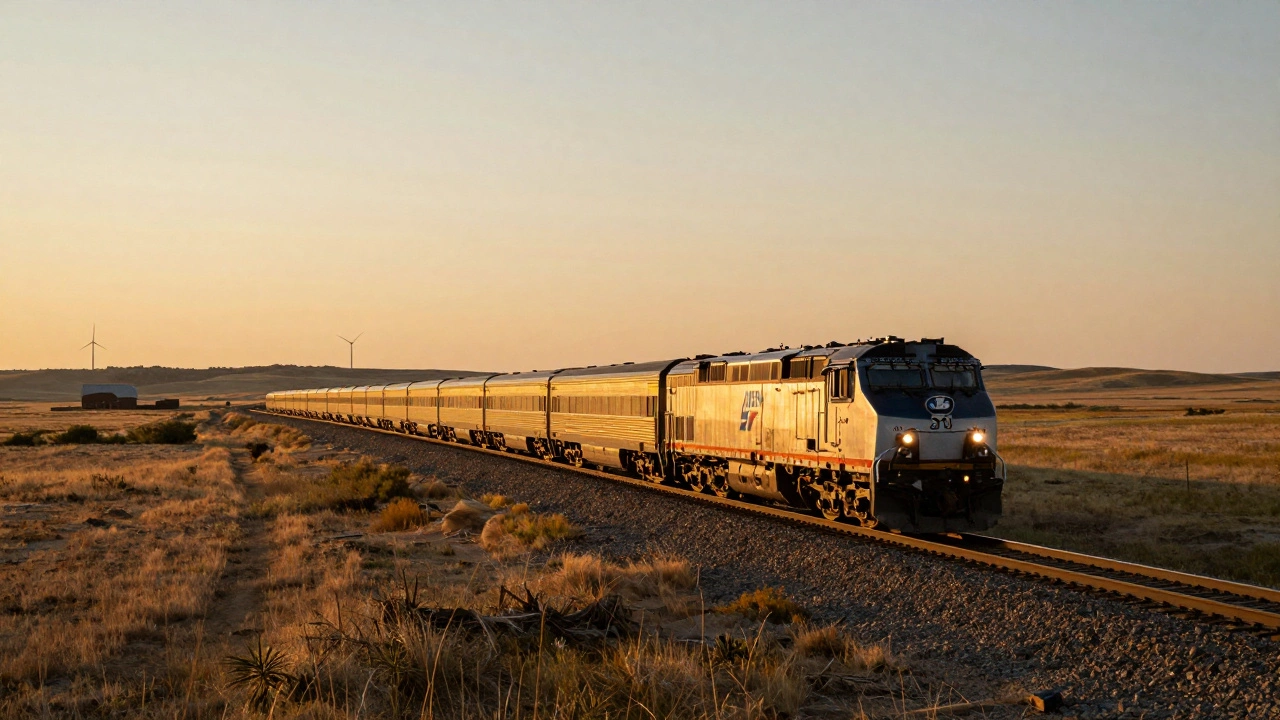
Bullet Train Travel Time Calculator
Calculate how long a high-speed train would take between New York and California based on different speeds. Note: This is a theoretical calculation since no such train exists today.
Estimated Travel Time
Enter a speed to see results
Current Amtrak travel time: 71 hours
There’s no bullet train running from New York to California. Not now. Not anytime soon. And there won’t be one for at least the next two decades-if ever. If you’re imagining a sleek, silent train zipping across the country at 200 miles per hour, you’re thinking of Japan’s Shinkansen or France’s TGV. The U.S. doesn’t have that kind of infrastructure. Not even close.
Why the U.S. Doesn’t Have High-Speed Rail
The idea of a bullet train crossing the U.S. sounds exciting, but it’s not just a matter of laying tracks. Building high-speed rail requires massive investment, political will, and land rights-something the U.S. has consistently avoided. Unlike Japan or China, where the government owns most of the land and can build rail corridors with little resistance, the U.S. is a patchwork of private property, state boundaries, and local opposition. A single high-speed rail line from New York to Los Angeles would need to cross 10 states, dozens of counties, and hundreds of towns. Each one would demand its own environmental review, funding deal, and community agreement. That’s not logistics-it’s a political nightmare.Even Amtrak’s fastest train, the Acela, only hits 150 mph on a few stretches between Boston and Washington, D.C. And that’s on a 230-mile route with 100 years of old infrastructure. The rest of the country? Most Amtrak routes average 50 to 70 mph, slowed down by freight trains, aging signals, and shared tracks. A trip from New York to Chicago takes 19 hours. From Chicago to Los Angeles? Another 43 hours. That’s 62 hours total-over two and a half days-on the best-case scenario with no delays.
What a Realistic Transcontinental Train Trip Looks Like
If you wanted to travel from New York to California by train today, you’d take the California Zephyr or the Texas Eagle with connections. The California Zephyr runs from Chicago to Emeryville (near San Francisco), and you’d need to get from New York to Chicago first. That’s two separate journeys, two separate tickets, and at least one overnight layover.Here’s what it actually looks like:
- New York to Chicago on the Lake Shore Limited: 19 hours
- Chicago to Emeryville (San Francisco Bay Area) on the California Zephyr: 51 hours
- Transfer to San Francisco via BART: 30 minutes
Total time? About 71 hours. That’s nearly three straight days on a train. You’ll see the Rockies, the Great Plains, and the Sierra Nevada. You’ll sleep in a seat or a sleeper car. You’ll eat meals in the dining car. You’ll watch the sun rise over Nebraska and set behind the Nevada desert. It’s beautiful. It’s slow. And it’s not a bullet train.
Could It Ever Happen?
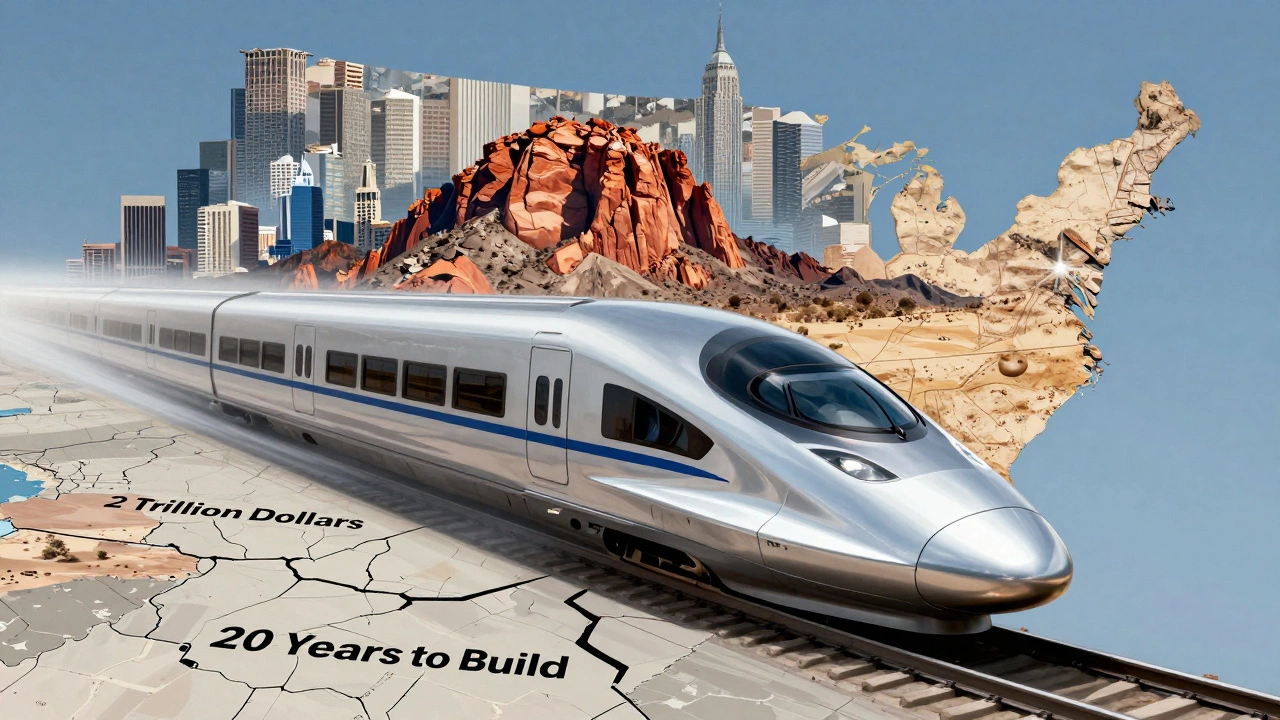
There are plans. There have been plans for 50 years. California’s high-speed rail project, meant to connect Los Angeles and San Francisco, started in 2008. So far, it’s built 119 miles of track in the Central Valley. The full line was supposed to open by 2020. Now it’s pushed to 2033-or later. Even that project doesn’t connect to the East Coast. It’s just one corridor.Why hasn’t it happened? Money. The estimated cost to build a true transcontinental high-speed rail line from New York to Los Angeles? Between $1.5 trillion and $2 trillion. That’s more than the entire U.S. federal budget for 2024. For comparison, the Interstate Highway System cost $425 billion in today’s dollars. The U.S. built 47,000 miles of highways in 35 years. A bullet train across the country would need 2,800 miles of dedicated, grade-separated track. That’s a bigger project than the Panama Canal.
And even if the money appeared tomorrow, it would take 20 years to build. You’d need new electric locomotives, signaling systems, power grids, stations, and maintenance facilities. You’d need to buy land from thousands of owners. You’d need to reroute rivers, tunnel under mountains, and build bridges over valleys. And you’d still have to compete with planes.
Why Planes Still Win
A flight from New York to Los Angeles takes five and a half hours. Add airport security, check-in, and travel to and from the airport, and you’re looking at eight hours door-to-door. For $300 to $600, you’re there. On a train? You’d pay $600 to $1,200 for a sleeper cabin and spend three days getting there. The only advantage? You can walk around, work, read, or stare out the window. No one gets to do that on a plane.But that’s not enough to change the system. Airlines have the airports, the slots, the subsidies, and the customers. Trains have nostalgia, scenery, and a loyal but small fanbase. In the U.S., speed and cost win every time.
What You Can Do Instead
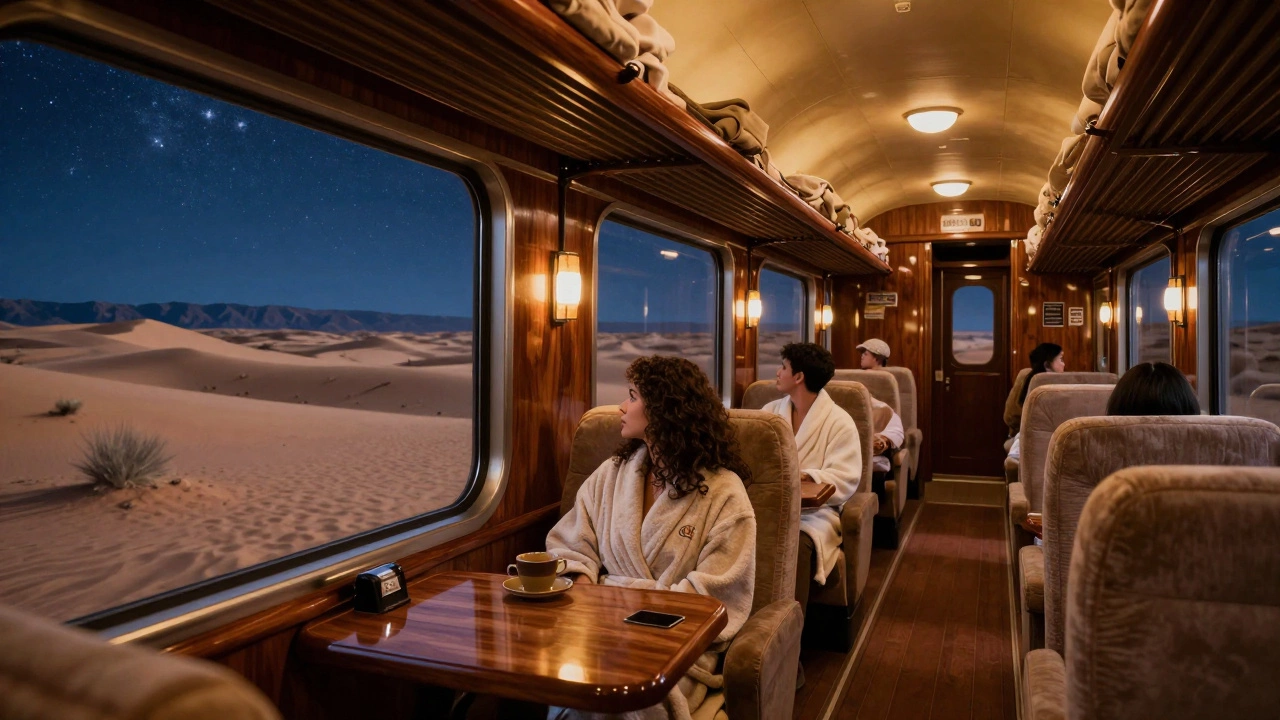
If you want a luxury train experience in the U.S., you don’t need bullet trains. You need Amtrak’s California Zephyr, Empire Builder, or Coast Starlight. These aren’t fast. But they’re luxurious. They have private rooms with beds, large windows, panoramic lounges, and chef-prepared meals. You can sip wine as you roll through the Rockies. You can sleep under stars in the Mojave Desert. You can watch snow fall over the Cascades.Some companies offer private railcars that attach to Amtrak trains. You can charter a whole car for $25,000 to $50,000 for a cross-country trip. That’s not a bullet train. But it’s the closest thing to a luxury rail journey the U.S. offers.
The Real Answer
So how long would a bullet train take from New York to California? If one existed, and if it could average 180 mph nonstop (which no train in the world does), it would take about 15.5 hours. That’s the math: 2,800 miles divided by 180 mph.But it doesn’t exist. And it won’t for a very long time.
The real question isn’t about speed. It’s about priorities. The U.S. chose cars and planes. It didn’t choose trains. And until that changes, the bullet train from New York to California will stay in science fiction-and in the dreams of travelers who still believe in the romance of the rails.
Is there any high-speed rail in the United States?
The only true high-speed rail in the U.S. is Amtrak’s Acela, which runs between Boston and Washington, D.C. It reaches 150 mph on short segments but averages just 68 mph overall due to old tracks and shared use with freight trains. Outside of that corridor, no U.S. train runs faster than 110 mph, and most average under 80 mph.
How long does it take to travel from New York to California by train today?
It takes about 71 hours-nearly three days-on Amtrak. You’ll take the Lake Shore Limited from New York to Chicago (19 hours), then the California Zephyr from Chicago to Emeryville near San Francisco (51 hours). Add transfer time, and you’re looking at close to 75 hours total. Delays are common.
Why doesn’t the U.S. have bullet trains like Japan or Europe?
The U.S. lacks the political will, funding, and land control needed. High-speed rail requires dedicated tracks, massive investment, and centralized planning. The U.S. has a decentralized government, private land ownership, and strong opposition from car and airline industries. Even California’s 400-mile project, started in 2008, is still incomplete after spending $17 billion.
Can you take a luxury train across the U.S.?
Yes, but not as a bullet train. Amtrak’s California Zephyr, Coast Starlight, and Empire Builder offer sleeper cabins, dining cars, and scenic views. You can also charter a private railcar for $25,000-$50,000, which attaches to Amtrak trains. These are slow, expensive, and luxurious-but they’re the only way to experience cross-country rail travel in style.
How much would a bullet train from New York to California cost to build?
Estimates range from $1.5 trillion to $2 trillion. That’s more than the entire federal budget for 2024. For comparison, the Interstate Highway System cost $425 billion in today’s dollars. Building 2,800 miles of dedicated high-speed track through mountains, deserts, and cities would require unprecedented coordination, land acquisition, and engineering.