Grand Central Visitor Estimator
Visit Calculator
Estimate how many people visit Grand Central Terminal in any time period
Visitor Insights
Grand Central Terminal is the most famous train station in the United States
When you think of iconic train stations in the United States, one name rises above all others-not because it’s the biggest, or the busiest, but because it’s a living monument to ambition, design, and the golden age of rail travel. Grand Central Terminal in New York City isn’t just a place to catch a train. It’s a cathedral of transportation, a piece of living history, and the undisputed heart of American rail travel.
Why Grand Central Terminal Stands Out
Opened in 1913, Grand Central Terminal replaced an older station that couldn’t handle the growing demand for rail travel in Manhattan. The new terminal was built with one goal: to make train travel elegant, efficient, and safe. It was the first major railroad station in the world to use electric locomotives exclusively, eliminating smoke and soot from the underground tunnels beneath the city. That alone made it revolutionary.
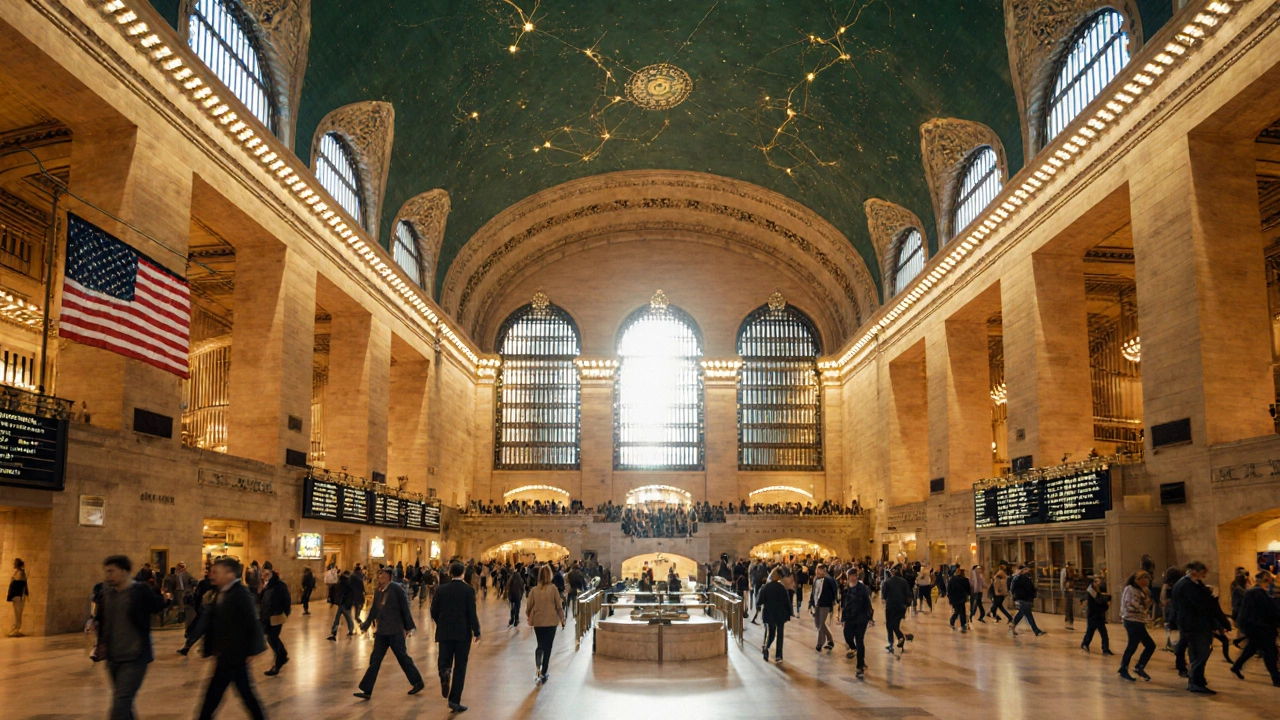
But what really sets it apart is the architecture. The main concourse is 125 feet high, with a ceiling painted to look like the night sky-constellations and all-done in gold leaf and hand-painted by French artists. The clock at the center, made of solid opal glass, is one of the most photographed objects in New York. People meet there every day, not because they have to, but because it feels like the right place to be.
It’s not just beautiful-it’s functional. With 44 platforms and 67 tracks, it handles over 750,000 people every weekday. That’s more than any other train station in the U.S. And unlike many modern stations that feel like airports with benches, Grand Central still has the warmth of a grand public space. Marble floors, brass handrails, arched windows, and hidden staircases all contribute to the feeling that you’re walking through something timeless.
More Than a Station-A Cultural Landmark
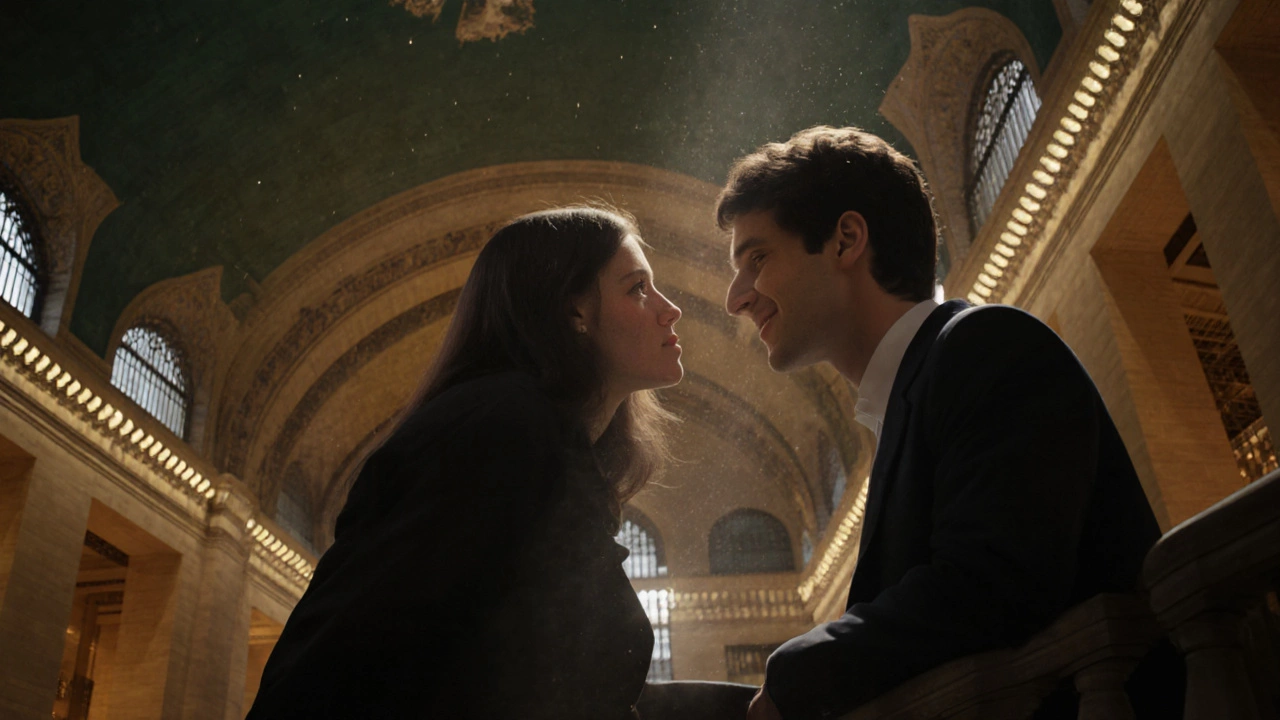
Grand Central Terminal isn’t just a transit hub. It’s a museum, a marketplace, and a stage. The Whispering Gallery, tucked away near the information booth, lets two people stand at opposite corners and hear each other clearly, even when whispering, thanks to the curved architecture. Tourists line up just to test it out.
Inside, you’ll find upscale shops, gourmet food halls like the Grand Central Oyster Bar (opened in 1913 and still serving fresh oysters), and even a small Apple Store tucked into a historic arcade. The terminal has been featured in over 200 films and TV shows-from North by Northwest to Men in Black-because filmmakers know it looks like nothing else on earth.
It survived a major threat in the 1970s when developers wanted to tear it down and build a skyscraper on top. Thanks to public outcry and the efforts of Jacqueline Kennedy Onassis, it was saved and designated a National Historic Landmark in 1976. That fight didn’t just preserve a building-it protected a piece of American identity.
Connecting to Luxury Train Journeys
While Grand Central Terminal doesn’t serve long-distance luxury trains like the California Zephyr or the Amtrak Sunset Limited, it’s the starting point for many who begin their journey into America’s most scenic rail routes. If you’re planning a luxury train trip across the country, you’ll likely fly into New York and take a taxi or subway to Grand Central to catch a train to upstate New York, Vermont, or even Boston.
Many high-end travel packages include a night at a luxury hotel near Grand Central before boarding a sleeper train. The station itself becomes part of the experience-the elegance, the history, the buzz of a city that never sleeps. It’s where the journey begins, not just geographically, but emotionally.
Even Amtrak’s most exclusive services, like the California Zephyr or the Empire Builder, connect to Grand Central through regional services. Passengers on those trains often start their journey in Chicago or Denver, but for many travelers, Grand Central is the first-and sometimes last-impression of American rail travel.
What Makes It More Famous Than Other Stations?
You might ask: What about Union Station in Washington, D.C.? Or Chicago’s Union Station? Both are stunning, both are historic, both serve millions. But neither has the same cultural weight.
Union Station in D.C. is grand, yes-but it’s more of a government building with trains. Chicago’s Union Station is architecturally rich and still bustling, but it lacks the same level of global recognition. Grand Central Terminal is the one people recognize even if they’ve never been to the U.S.
It’s also the most visited tourist site in New York City-not the Statue of Liberty, not Times Square, not the Empire State Building. Over 21 million people walk through Grand Central every year, and nearly all of them are tourists. That’s more than the Louvre in Paris or the Colosseum in Rome. People come to see the station itself.
Hidden Details You Might Miss
Even regular commuters don’t always notice the little things. Look up at the ceiling in the main concourse. The constellations are reversed-because the painting shows the sky as seen from God’s perspective, not Earth’s. That was intentional. It’s a detail only historians and architecture buffs know.
There’s also a hidden staircase behind a bookshelf in the lower level, once used by Vanderbilt family members to avoid the public. And if you stand under the clock and look at the faces of the four timepieces, you’ll see they were originally made by the Seth Thomas Clock Company-but the hands were replaced in 2017 with ones that glow in the dark, a subtle modern touch.
Even the ventilation system is part of the story. The station’s air flows through a network of ducts designed to keep the air fresh without fans or noise. It’s a marvel of early 20th-century engineering.
How to Visit Grand Central Terminal
You don’t need a train ticket to visit. The terminal is open to the public from 5:15 a.m. to 2 a.m. daily. The best time to go is early morning or late evening when the crowds thin out and the light hits the ceiling just right.
Take a self-guided tour using the free Grand Central Terminal app, which points out hidden features and tells the stories behind them. Or join a guided tour led by the Grand Central Partnership-these are free and last about 90 minutes.
Don’t miss the Oyster Bar for a classic New York lunch. Order the oyster platter or the lobster roll. Sit at the counter and watch the world go by.
If you’re planning a luxury train journey, book a hotel in Midtown and walk to Grand Central the night before. Feel the energy. Watch the commuters. Notice how the station hums-not with chaos, but with order. That’s what makes it unforgettable.
Final Thoughts
Grand Central Terminal isn’t famous because it’s the busiest or the newest. It’s famous because it was built to last. Every detail-from the marble to the stars on the ceiling-was chosen with care. It represents a time when travel was treated as an art form, not a commodity.
When you stand in that main concourse, you’re not just waiting for a train. You’re standing in the middle of American history, engineering, and culture. That’s why, more than a century after it opened, it remains the most famous train station in the United States.
Is Grand Central Terminal the busiest train station in the world?
No, it’s not the busiest in the world-that title belongs to Shinjuku Station in Tokyo, which handles over 3.6 million people daily. But Grand Central Terminal is the busiest in the United States and one of the most visited tourist sites globally, with over 21 million visitors per year. Its fame comes from its history, architecture, and cultural impact, not just passenger numbers.
Can you take a luxury train from Grand Central Terminal?
Not directly. Grand Central Terminal serves commuter rail lines like Metro-North and some Amtrak regional routes. Long-distance luxury trains like the California Zephyr or Empire Builder depart from other stations, such as New York’s Penn Station. But many luxury rail packages include a stay near Grand Central, and you can easily transfer via subway or taxi to Penn Station to board those trains.
What’s the difference between Grand Central Terminal and Grand Central Station?
Grand Central Terminal is the correct name of the building. It’s called a "terminal" because trains end their routes there and turn around. "Grand Central Station" is a common mistake-it’s actually the name of a nearby subway station and an old railroad station that was replaced in 1913. The building you see today is Grand Central Terminal.
Why is the ceiling painted with reversed constellations?
The celestial mural on the ceiling was painted to show the sky as it would appear to a divine observer looking down from above, not as seen from Earth. This means the constellations are mirrored. The original design was based on a 16th-century star chart, and while the painting was restored in the 1990s, the reversed layout was intentionally kept as part of the original artistic vision.
Are there any secret rooms or passages in Grand Central Terminal?
Yes. There are several hidden areas, including a secret staircase behind a bookshelf in the lower level, once used by the Vanderbilt family. There’s also a private dining room for railroad executives, now used for events. And beneath the terminal, there’s a network of unused tunnels and platforms, some of which are used for storage or film shoots. Guided tours occasionally include access to some of these spaces.