Tirupati Wait Time Estimator
How long will you wait for darshan at Tirumala?
Calculate your estimated wait time based on your visit date, season, and event status. The temple attracts over 40 million visitors annually with wait times ranging from 4 to 18+ hours.
Enter your visit details to see estimated wait time
Every year, more than 40 million people visit a single temple in India. That’s more than the entire population of Australia. They come from every state, every corner of the world, walking barefoot for miles, waiting in lines that stretch for kilometers, just to catch a glimpse of a black stone idol. This isn’t a festival. It’s daily life for one of the most crowded religious sites on Earth.
The Temple That Defies All Numbers
The Tirumala Venkateswara Temple, also known as Tirupati Balaji, sits on the seventh hill of the Seshachalam range in Andhra Pradesh. It’s not the oldest temple in India. It’s not the largest. But it’s the most visited. By a huge margin. In 2024, it recorded over 41 million pilgrims. That’s about 112,000 people every single day. On peak days during festivals like Brahmotsavam, the number spikes to 150,000. The temple complex has over 1,200 priests, 500+ staff managing queues, and a dedicated team just to clean the thousands of tons of hair offered by devotees each year.
Why here? The answer isn’t just faith. It’s tradition. The temple is dedicated to Lord Venkateswara, a form of Vishnu, believed to be the guardian of Kali Yuga - the current age in Hindu cosmology. Devotees believe that a simple darshan, a glance at the deity, can remove all sins and bring prosperity. This isn’t a metaphor. It’s a promise passed down through generations. Families save for years to make the trip. Some sell land. Others take loans. They come not just to pray, but to fulfill a vow.
How It Works: The Realities of a Million-Person Queue
Walking into Tirupati isn’t like walking into a church or mosque. There’s no quiet reverence at the entrance. There’s a system - and it’s brutal.
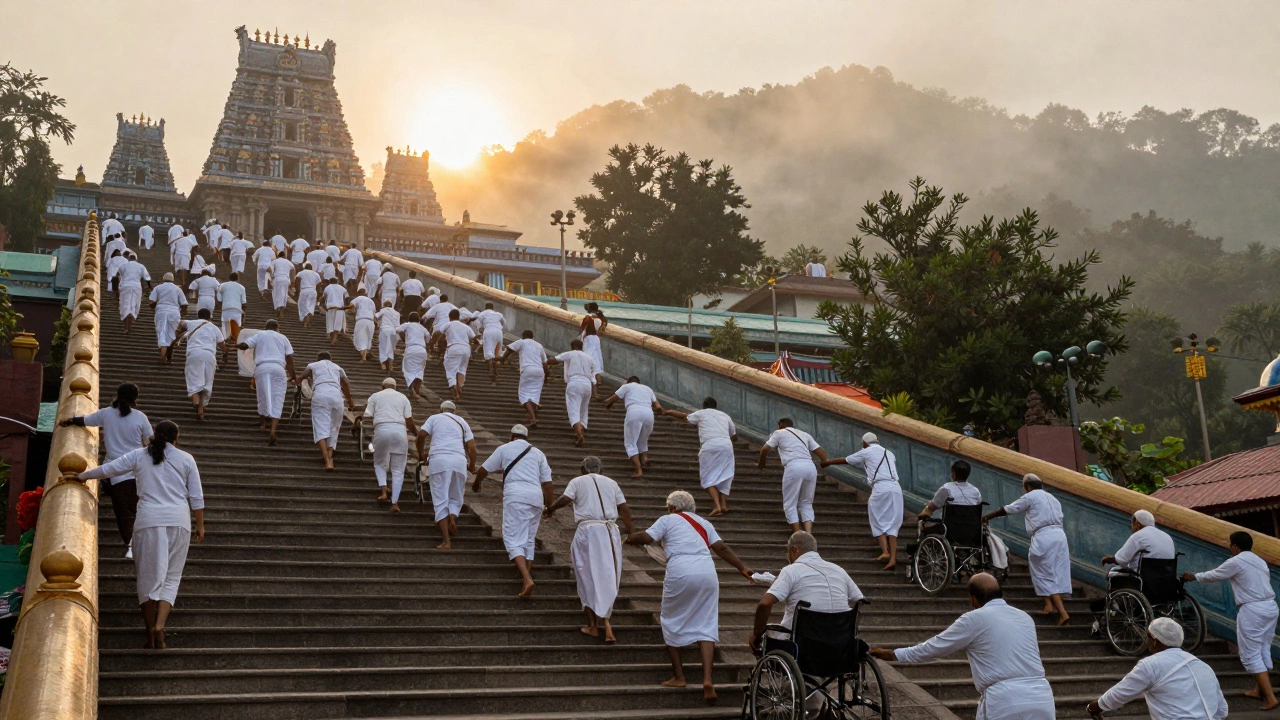
First, you need a token. You can’t just show up and walk in. The temple uses a digital queue system called Tirumala Tirupati Devasthanams (TTD). You book your darshan slot online or through authorized centers. Even then, you might wait 8 to 12 hours. On busy days, it’s longer. People bring mats, water, snacks, and sometimes even portable chairs. Children sleep on the ground. Elderly people are helped by volunteers who carry them in special chairs.
There’s no air conditioning. No shade for most of the path. The hill climb - called the Alipiri or Srivari Mettu - is 3.5 kilometers of steep stone steps. Thousands climb it daily. Others take a bus or a special vehicle called the Pushpak, but even that doesn’t skip the queue. The temple runs 24/7. There’s no closing time. No holidays. The deity is worshipped every minute of every day.
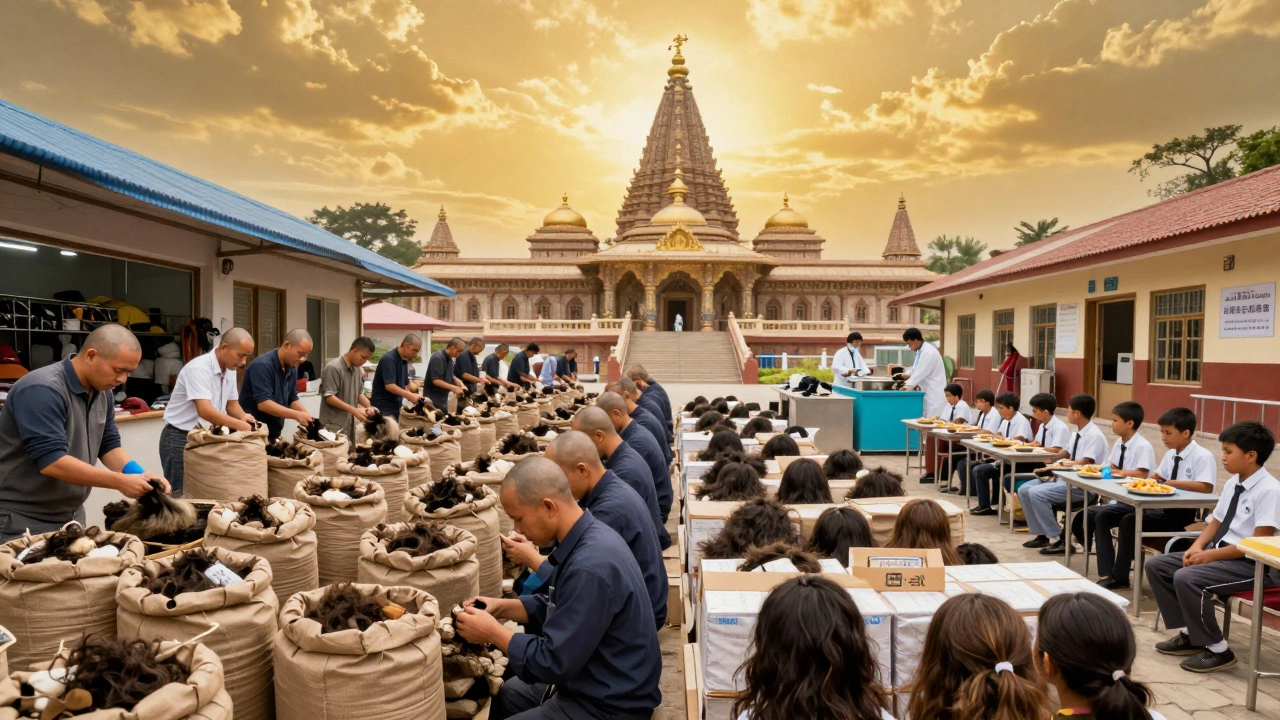
What do people offer? Hair. Tons of it. The temple has a dedicated hair collection center where devotees shave their heads as a sign of surrender. In 2023, over 1,000 tons of hair were collected. That hair is sold to international wig manufacturers. The temple earns millions from this - money that goes back into feeding pilgrims, maintaining roads, and running free hospitals and schools across the region.
Why Not Other Famous Temples?
You might think of the Golden Temple in Amritsar. Or Kashi Vishwanath in Varanasi. Or the Jagannath Temple in Puri. All are deeply sacred. All draw millions. But none come close to Tirupati’s numbers.
The Golden Temple sees about 100,000 visitors a day - impressive, but less than a quarter of Tirupati’s daily average. Kashi Vishwanath draws around 15 million a year. Puri’s Jagannath Temple sees about 18 million. Even the Vaishno Devi shrine in Jammu, another massive pilgrimage site, records about 10 million annually.
What makes Tirupati different? It’s the promise. The belief that this one visit can change your life. It’s not tied to a single festival. It’s not limited by season. It’s open year-round. And it’s accessible. Unlike some remote Himalayan shrines, Tirupati is just a 12-hour train ride from Hyderabad or Chennai. There are airports nearby. Buses run from every major city. The temple doesn’t just welcome pilgrims - it feeds them, shelters them, and treats them like family.
What You’ll See Inside
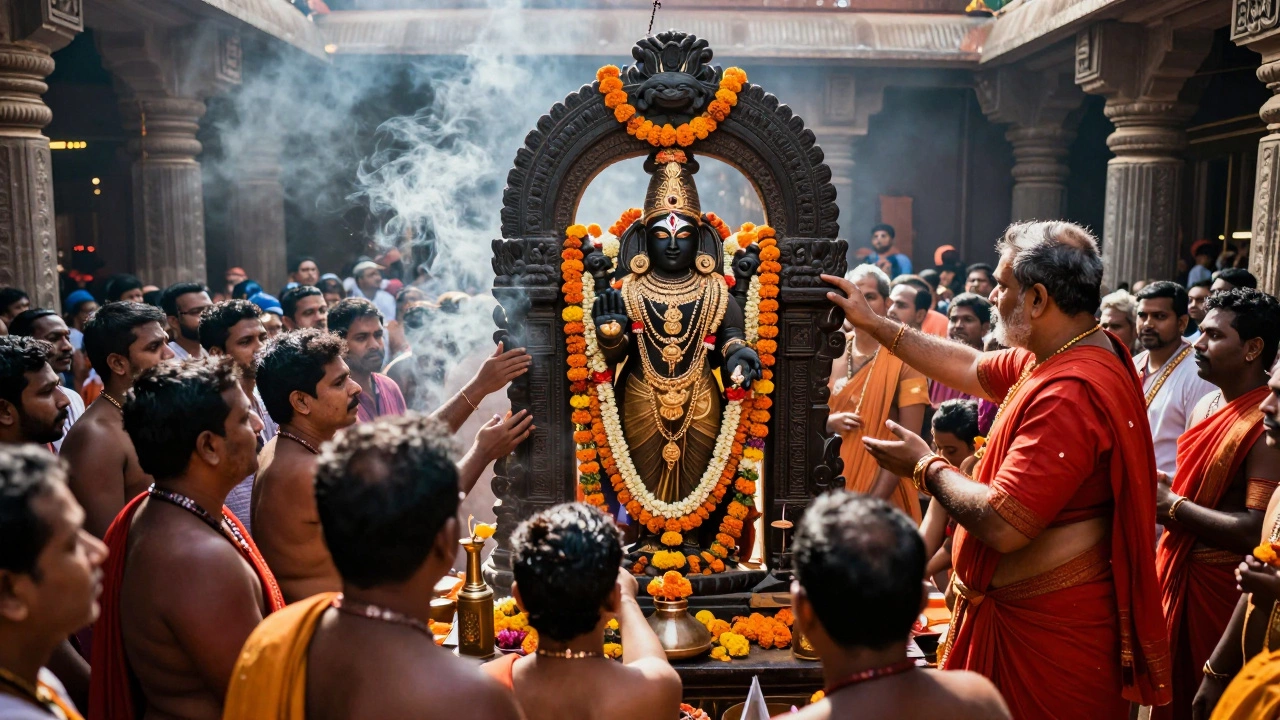
The sanctum sanctorum holds the 8-foot-tall idol of Lord Venkateswara, covered in gold and jewels. The idol’s face is dark, almost black, with large eyes and a prominent nose. His hands hold the conch and discus - symbols of protection and power. The idol is adorned with flowers, silk, and gold ornaments daily. Devotees don’t see the full idol. The view is limited to the face and upper chest. That’s intentional. The temple’s architecture is designed to create a sense of awe, not clarity.
Inside the temple complex, you’ll find dozens of smaller shrines, halls for rituals, and massive kitchens that serve free meals - called prasadam - to over 100,000 people daily. The food is simple: rice, lentils, vegetables, and sweet pongal. But it’s prepared with ritual purity. No onions, no garlic. No meat. Just pure, plant-based offerings.
There’s also a museum inside the temple grounds that displays centuries-old artifacts: ancient coins, temple bells, royal donations, and even the original wooden chariot used in processions. These aren’t just relics. They’re proof that this temple has been a center of devotion for over 1,200 years.
The Economic Engine Behind the Devotion
The Tirumala temple isn’t just a place of worship. It’s a massive economic force. The TTD, the organization that runs the temple, is one of the richest religious bodies in the world. Its annual income in 2024 exceeded ₹10,000 crore (about $1.2 billion USD). Most of this comes from donations, hair sales, and the sale of prasadam.
That money doesn’t vanish. It builds roads. It funds schools. It runs hospitals with free surgeries. It supports orphanages. It provides scholarships. The temple runs over 1,000 schools across Andhra Pradesh and Telangana, educating over 200,000 children. It operates 15 hospitals with over 2,000 beds, offering everything from cataract surgery to dialysis - all free.
And it’s not just about charity. The temple employs over 30,000 people directly. Thousands more work in nearby hotels, transport, food stalls, and souvenir shops. Tirupati town has grown from a quiet village into a city of over 1 million people, mostly because of the temple’s pull.
What to Expect If You Go
If you’re planning a visit, here’s what you need to know:
- Book early. Use the official TTD website. Walk-ins are rarely possible.
- Wear simple clothes. No shorts, no sleeveless tops. Men wear dhotis or pants and shirts. Women wear sarees or salwar kameez.
- Bring water and snacks. The wait can be long. Food is available, but prices rise near the temple.
- Don’t carry valuables. Theft is rare, but crowds make it risky.
- Be ready for the climb. If you’re not fit, take the bus or vehicle. The stairs are steep and exposed.
- Respect the rules. No cameras inside the sanctum. No shoes allowed beyond the entrance.
And if you’re thinking of shaving your head - do it. It’s not required. But if you do, you’ll join millions who’ve made the same sacrifice. You’ll leave with nothing but your faith. And you’ll carry something heavier: the feeling that you’ve been part of something bigger than yourself.
Is It Worth It?
Some call it chaos. Others call it divine order. The truth? It’s both.
You’ll see a woman in her 70s, carried on a stretcher, smiling as she reaches the sanctum. You’ll see a teenage boy, tears in his eyes, holding his first offering. You’ll see a family from Dubai, speaking English, bowing in the same way as a farmer from Odisha. Everyone is equal here. No caste. No wealth. No status. Just a line of souls waiting for grace.
It’s not about religion. Not really. It’s about hope. About the belief that if you show up - really show up - something will change. And for millions, it does.
Is Tirupati the most visited temple in the world?
Yes, the Tirumala Venkateswara Temple in Tirupati is the most visited religious site in the world, with over 40 million annual visitors. It surpasses even the Vatican and Mecca in terms of daily footfall. No other temple or shrine records numbers close to this.
Can non-Hindus visit the Tirupati temple?
Yes, non-Hindus are welcome to visit the temple complex and view the outer areas. However, only Hindus are allowed inside the main sanctum where the deity is housed. This rule is strictly enforced, and visitors are asked to respect the religious customs.
How long is the wait to see the deity?
The wait time varies from 4 to 12 hours depending on the day and season. During festivals, it can exceed 18 hours. Booking a special darshan ticket online can reduce the wait to under 2 hours, but it costs more. The free queue is always longer.
Is it safe to visit Tirupati with children or elderly people?
Yes, but planning is essential. The temple provides free wheelchairs and special priority queues for elderly and disabled visitors. Many families bring young children, and volunteers help carry them. The air is hot and dry, so bring water, hats, and sunscreen. Avoid peak summer months (April-June) if possible.
What’s the best time of year to visit Tirupati?
The best time is between October and March, when the weather is cooler and drier. Avoid major festivals like Brahmotsavam (September-October) and Rama Navami (March-April) if you want shorter lines. Weekdays are always quieter than weekends.
Can I get free food at the temple?
Yes. The temple runs the largest free community kitchen in the world, serving over 100,000 meals daily. You can eat at any of the 12+ dining halls in the complex. Meals are served in a simple, vegetarian style - rice, dal, vegetables, and sweet pongal. No charge. No questions asked.
If you’ve ever wondered what true devotion looks like, Tirupati shows you. It’s not about grand architecture or ancient history. It’s about people - ordinary people - doing extraordinary things out of love, hope, and faith. And that’s why it remains the most visited temple on Earth.