Temple Fame Calculator
Which State Has the Most Famous Temples?
Based on the article, Tamil Nadu has over 33,000 temples and dominates in fame, scale, architecture, and continuity. This calculator shows how different states compare when you adjust the importance of key factors.
Temple Count
Tamil Nadu: 33,000+ temples
Other states: Karnataka (5,000), Odisha (4,000), Andhra Pradesh (varies)
Architectural Significance
Tamil Nadu has unique features like shadowless towers, intricate carvings, and UNESCO sites
Other states have fewer masterpieces
Visitor Numbers
Tirupati draws 50M+ visitors/year
Tamil Nadu's temples collectively attract millions
Historical Continuity
Tamil Nadu temples have 1000+ years of unbroken rituals
Others often damaged by invasions
Results
Based on article data, Tamil Nadu has the highest combined score for famous temples. The results will update when you adjust the sliders and click Calculate.
When you think of India’s spiritual heartland, temples come to mind first. But not all states are equal when it comes to the number and fame of their temples. If you’re planning a temple tour across India, you’re not just looking for quantity-you’re looking for places where history, architecture, and devotion collide in ways you won’t find anywhere else. So which state actually has the most famous temples?
South India Leads by a Wide Margin
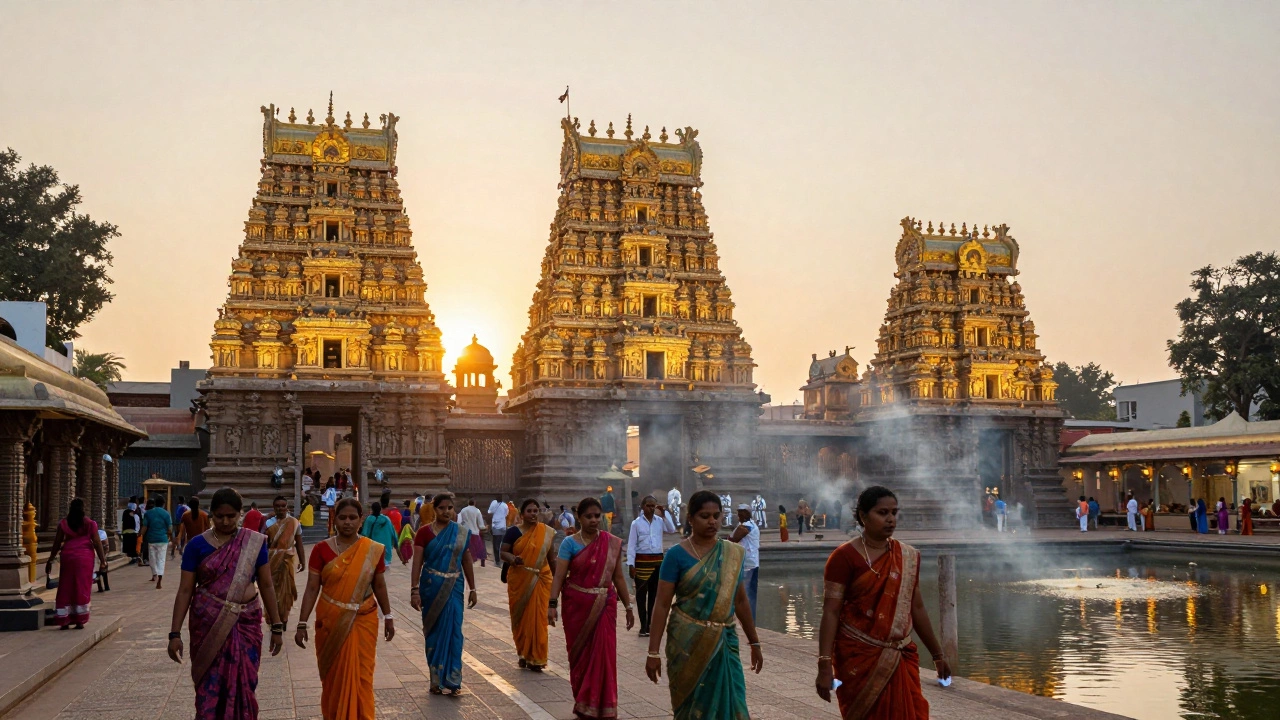
Tamil Nadu is the clear winner when it comes to the density and fame of temples in India. It’s not even close. The state is home to over 33,000 temples, more than any other state in the country. But it’s not just the numbers. It’s the scale, the art, and the living traditions that make them famous.
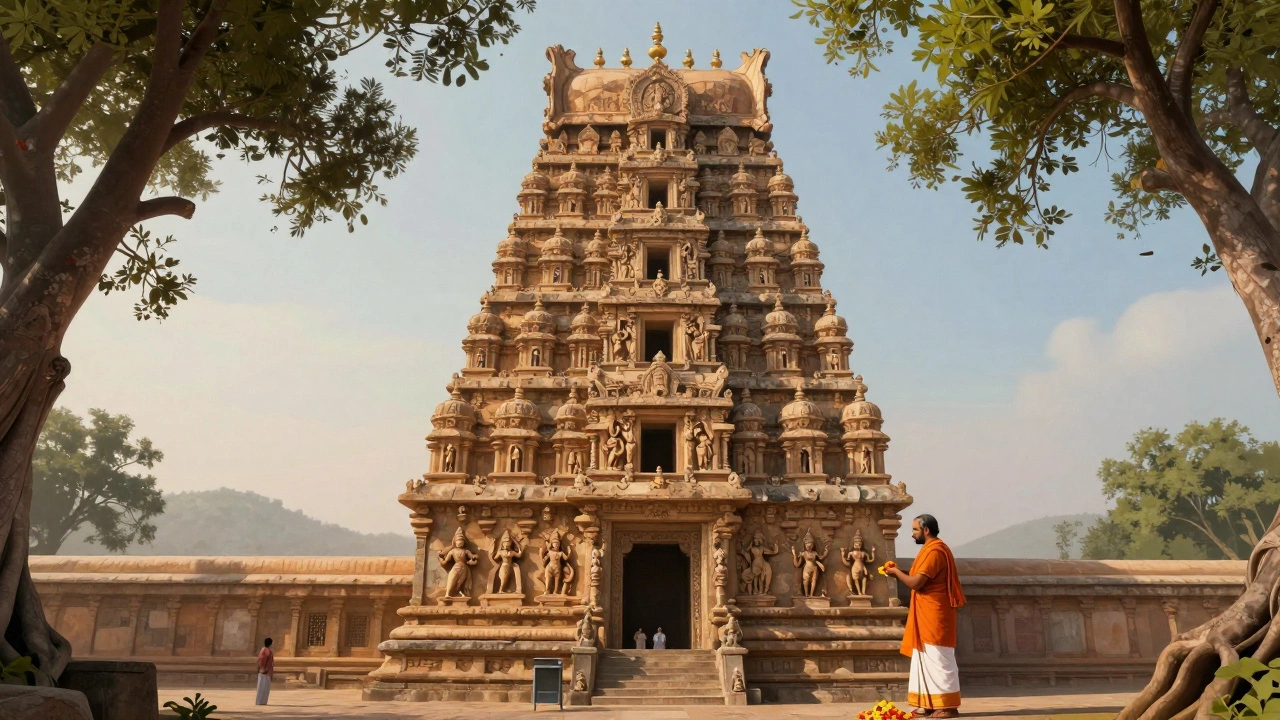
The Meenakshi Amman Temple in Madurai isn’t just a temple-it’s a city within a temple. With 14 gopurams (towering gateways), 33,000 sculptures, and daily rituals that haven’t changed in over a thousand years, it draws nearly 15,000 visitors every day. The Brihadeeswarar Temple in Thanjavur, built in 1010 CE, is a UNESCO World Heritage Site and one of the first temples to use a single granite stone for its vimana (tower)-a feat still studied by engineers today.
Other major temples like Ramanathaswamy in Rameswaram, Srirangam Ranganathaswamy Temple (the largest functioning Hindu temple in the world), and the Kapaleeshwarar Temple in Chennai are all in Tamil Nadu. These aren’t just tourist spots. They’re active centers of worship, music, dance, and scholarship that have survived invasions, colonial rule, and modernization.
Why Tamil Nadu Stands Out
The reason Tamil Nadu has so many famous temples goes back to its history. Between the 6th and 16th centuries, the Pallava, Chola, Pandya, and Vijayanagara dynasties poured wealth into temple building. They didn’t just build shrines-they built entire economic and cultural ecosystems around them. Temples became landowners, banks, schools, and hospitals. Kings commissioned sculptures, commissioned musicians, and funded daily rituals to prove their divine right to rule.
Unlike North India, where many ancient temples were destroyed during medieval invasions, Tamil Nadu’s temples survived because they were built in remote, well-fortified locations. Their massive stone walls and complex layouts made them harder to raze. Many were even hidden under jungle cover until British archaeologists rediscovered them in the 1800s.
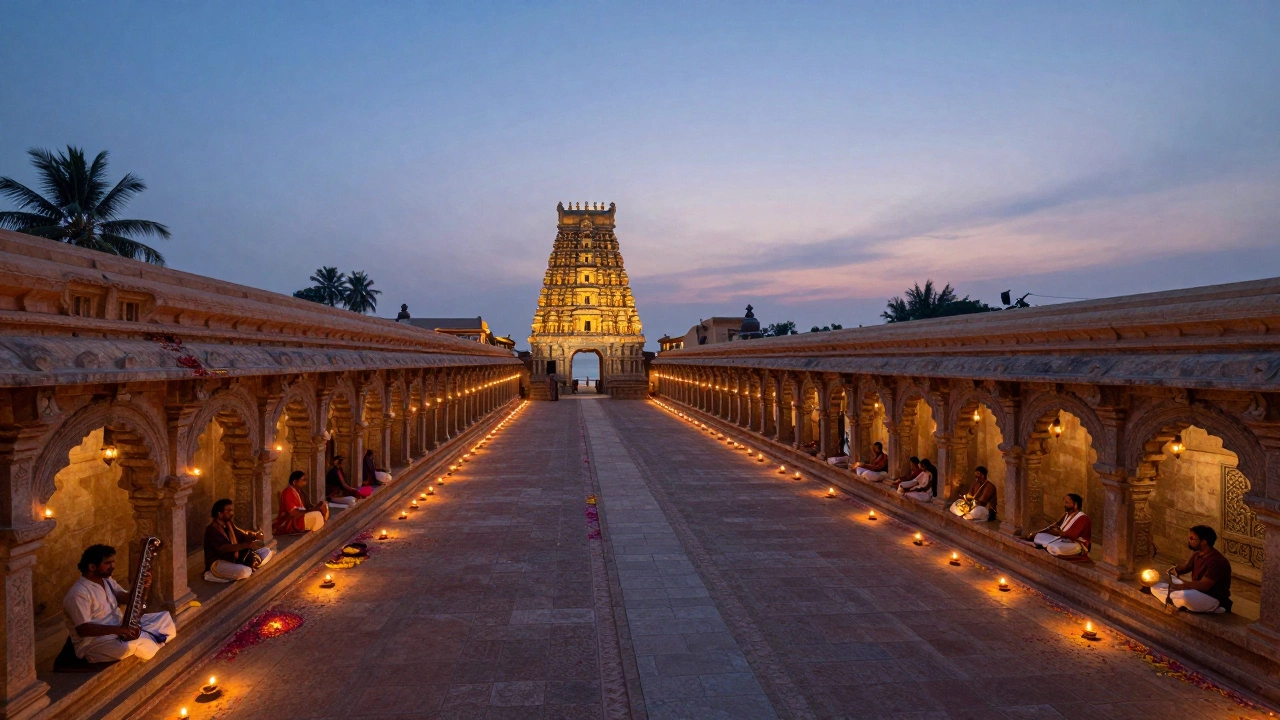
Today, the temple culture here is still alive. You’ll hear Carnatic music echoing through corridors, see Bharatanatyam dancers performing as offerings, and smell incense mixing with the sea breeze near coastal shrines. The temples aren’t relics-they’re breathing institutions.
Other States with Major Temple Clusters
While Tamil Nadu dominates, other states have their own powerful temple traditions.
Andhra Pradesh and Telangana are home to the famous Tirupati Balaji Temple, which receives over 50 million visitors a year-more than any other temple in the world. The Venkateswara Temple sits atop the Tirumala hills and is run by the Tirumala Tirupati Devasthanams (TTD), one of the richest religious institutions on Earth. But even with its fame, the state doesn’t come close to Tamil Nadu’s overall temple density.
Karnataka has the Hoysaleswara Temple in Halebidu and the Chennakesava Temple in Somanathapura, both masterpieces of Hoysala architecture. These temples are stunning, with every inch of stone carved with deities, dancers, and animals. But there are only a handful of major ones. Karnataka’s temple count is around 5,000-less than one-sixth of Tamil Nadu’s.
Odisha’s Konark Sun Temple and Puri’s Jagannath Temple are iconic. The Jagannath Temple hosts the massive Rath Yatra festival, drawing millions. But again, the number of major temples is limited. Odisha has around 4,000 temples, mostly concentrated in Puri and Bhubaneswar.
North India has famous names like Kashi Vishwanath in Varanasi and the Golden Temple in Amritsar, but these are mostly single-site landmarks. Uttar Pradesh and Punjab have fewer temples overall, and many of their ancient ones were lost to centuries of conflict. The temples here are more about spiritual weight than architectural volume.
What Makes a Temple ‘Famous’?
Not every ancient temple is famous. Fame comes from a mix of factors:
- Scale: Is it one of the largest in the country? (Srirangam is the biggest functioning temple.)
- Architecture: Does it have unique engineering or art? (Brihadeeswarar’s shadowless tower, Hoysala’s lace-like carvings.)
- Religious significance: Is it one of the 12 Jyotirlingas or 18 Shakti Peethas? (Rameswaram is one of the Jyotirlingas.)
- Continuity: Has it been worshipped in the same way for over 1,000 years? (Meenakshi Amman has been.)
- Visitor numbers: Does it draw tens of millions annually? (Tirupati does.)
Tamil Nadu hits all five. Other states hit one or two. That’s why it leads.
Planning Your Temple Tour
If you’re planning a temple tour focused on the most famous sites, here’s what works:
- Start in Madurai-visit Meenakshi Amman Temple at sunrise, when the courtyard fills with the sound of bells and chants.
- Head to Thanjavur to see the Brihadeeswarar Temple. Climb the inner staircase for a view of the massive Nandi bull carved from one stone.
- Travel to Rameswaram to walk the longest temple corridor in India (1,200 meters) and touch the sacred water wells.
- End in Srirangam, where you can spend a full day wandering through 21 gopurams and 7 concentric courtyards.
Book accommodations in advance. Many temple towns have limited high-quality hotels. Stay in heritage guesthouses run by temple trusts-they’re cheaper, cleaner, and more authentic than chain hotels.
Respect the dress code. Shoulders and knees must be covered. Many temples provide dhotis or shawls at the entrance, but bringing your own saves time.
Visit early. Most temples open at 5 or 6 a.m. The crowds come later. Early mornings are when you’ll see the real devotion-the priests chanting, the flowers being offered, the silence before the crowds arrive.
What About Other Regions?
Some travelers assume North India has more temples because of Varanasi or Haridwar. But those are pilgrimage hubs, not temple clusters. Varanasi has dozens of temples, but they’re spread out. Tamil Nadu has hundreds within a 100-kilometer radius.
West India has the Somnath Temple in Gujarat and the Mahakaleshwar Temple in Ujjain, both Jyotirlingas. But again, they’re singular sites. No state in western India comes close to Tamil Nadu’s concentration.
Even in the Himalayas, where temples like Kedarnath and Badrinath are revered, the number of major sites is small. The terrain makes large-scale temple construction difficult.
Tamil Nadu’s flat plains, ancient dynasties, and uninterrupted worship traditions gave it an advantage no other state could match.
The Bottom Line
If you want to see the most famous temples in India, go to Tamil Nadu. It’s not just the number-it’s the depth. These aren’t museums. They’re living, breathing centers of faith that have survived for over a millennium. You won’t find that kind of continuity anywhere else in the country.
Other states have their own treasures. But if you’re looking for the highest concentration of world-class, historically significant, and actively worshipped temples, Tamil Nadu is the only answer.
Which state in India has the most temples?
Tamil Nadu has the most temples in India, with over 33,000 recorded temples. It also has the highest concentration of globally famous ones, including Meenakshi Amman, Brihadeeswarar, and Srirangam. No other state comes close in terms of both quantity and historical significance.
Is Tirupati more famous than temples in Tamil Nadu?
Tirupati’s Venkateswara Temple attracts more visitors annually-over 50 million-making it the most visited temple in the world. But fame isn’t just about footfall. Tamil Nadu’s temples are older, architecturally more diverse, and embedded in centuries of uninterrupted ritual tradition. Tirupati is the busiest. Tamil Nadu’s temples are the most culturally rich.
Are North Indian temples less significant?
No, but they’re different. North Indian temples like Kashi Vishwanath and the Golden Temple are deeply sacred and historically important. However, many ancient temples in the north were destroyed during invasions and never rebuilt on the same scale. Tamil Nadu’s temples survived due to geography and strong local patronage, making them more numerous and better preserved.
Can I visit all the famous temples in one trip?
You can visit the top five in a 7-10 day trip: Madurai, Thanjavur, Rameswaram, Srirangam, and Kumbakonam. These are all within a 300-kilometer radius. Add a day for travel between cities. Trying to cover more than 10 temples in a week will leave you rushed. Quality over quantity works better here.
What’s the best time of year to visit these temples?
October to March is ideal. The weather is dry and cool, especially in Tamil Nadu’s coastal areas. Avoid April to June-temperatures can hit 40°C (104°F). Monsoon season (June-September) brings heavy rain, which can disrupt travel and temple access. Festivals like Panguni Uthiram and Thai Pusam in January-February are magical but crowded.